JAMES JOYCE’S FINNEGANS WAKE
Episode 022:
by the rivers of ‘babalong’
PAGE 100:5-103:11 | END OF CHAPTER 4 | 2026-01-15
PODCAST AUDIO
PODCAST TRANSCRIPT
[Music: Instrumental of “The Ballad of Persse O’Reilly” with Adam Seelig on piano and Brandon Bak on drums, from the film series of Finnegans Wake. Music fades out]
Adam Seelig: Welcome to James Joyce’s divine and delirious comedy, Finnegans Wake. In this episode, number 22, we’ll hear Irish-Canadian actor — and my good friend and colleague — Richard Harte performing pages 100 to 103 to conclude Chapter 4 of Joyce’s last novel. I’m Adam Seelig, the director of the reading you’ll soon hear.
The film of Chapter 4, the same chapter you’ll hear today, is now complete and will soon be screening at festivals, starting with the Toronto Irish Film Festival at the TIFF Lightbox in March of 2026. Please join One Little Goat Theatre Company’s mailing list online for the full announcement.
[Music: Adam Seelig plays piano]
Adam Seelig: Finnegans Wake is a production of One Little Goat Theatre Company. One Little Goat is filming and recording all 17 chapters (roughly 30 Hours) of Joyce’s Finnegans Wake before live audiences in various locations, screening and releasing them along the way, with the aim of completing the entire book in time for its 90th birthday, May 4, 2029. One Little Goat Theatre Company is an official charity in Canada and the United States — if you’d like to support our work, please visit us online at www.OneLittleGoat.org to make a charitable donation. To get in touch, you’ll find our email address on the One Little Goat Theatre Company website and we’d love to hear from you.
[Music fades out]
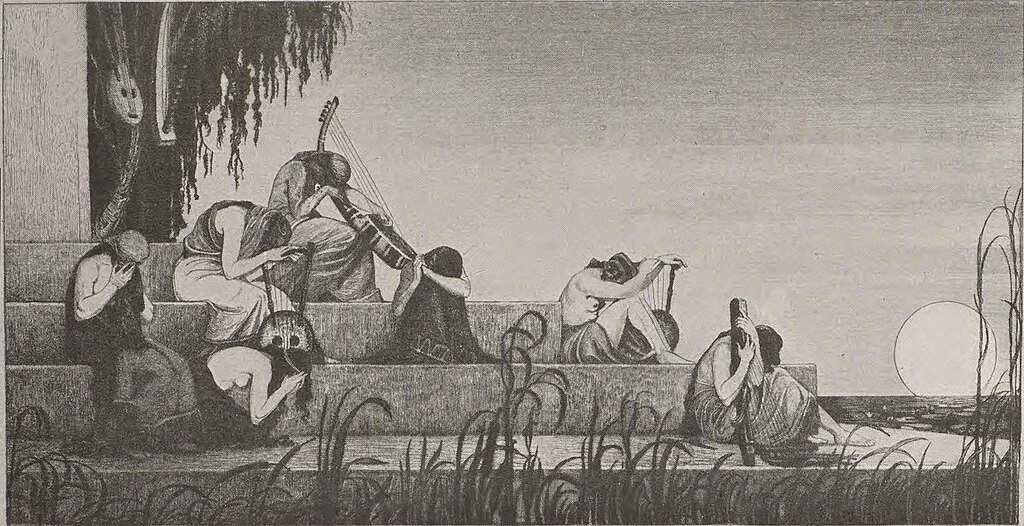
“By the Rivers of Babylon,” Ephraim Moses Lilien, 1910. (Wikimedia Commons)
Adam Seelig: The last lines of Chapter 4, which you’ll soon hear, are among my favourite in all of Finnegans Wake. I hope you find them as beautiful and evocative as I. It helps that Joyce chose as inspiration for these last lines one of the most beautiful and evocative moments in the King James Bible — the opening of Psalm 137:
By the rivers of Babylon, there we sat down, yea, we wept, when we remembered Zion. We hanged our harps upon the willows in the midst thereof.
What the Wake does with this is nothing short of breathtaking.
“The rivers of Babylon” become “the waters of babalong” (103:11), connoting the babble of a brook, the babble of a baby, the length of a river, and the babel of the Wake’s dream language which manages, like the Biblical Tower of Babel, both to unify many languages into one while dividing its singular language into many.
The “harps” of the psalm will become “hearts” in the Wake. And the “willows” of the Bible, known for their weeping, will become “trees” and “stones” in the Wake, anticipating the metamorphoses of the two Washerwomen we’ll meet in Chapter 8, known for their wagging, their gossiping, their babbling by the river of Dublin.
The Babylon of exile is here, too. “How shall we sing the Lord’s song in a strange land?” the same psalm goes on to ask. The note-perfect end of Chapter 4, to my ear, is the answer.
Today’s excerpt marks a major transition in the Wake. Chapters 2, 3 and 4 focused on Humphrey Chimpden Earwicker, or HCE — that trilogy of chapters is sometimes referred to as the ‘Humphriad’. The end of Chapter 4 shifts our attention to Anna Livia Plurabelle, or ALP, and the following chapter, Chapter 5, will focus on her as river, as spouse, and as author of the famous letter that promises to rehabilitate HCE’s reputation.
We are moving away from land and Dublin city as personified by our male protagonist HCE toward water and River Liffey as personified by HCE’s wife, our female protagonist, ALP. We are, in the language heard earlier this chapter, moving “backtowards motherwaters” (84:30, Ep017). Tide is turning. Hence Chapter 4 ends at Island Bridge, on the Liffey. Edmund Epstein in his Guide Through Finnegans Wake explains:
Anna Livia is tidal. Twice a day, following the ebbing ocean tide, she slips downstream through Dublin city and to the mouth of Dublin Bay, where she runs into the Irish Sea. Then, with the turn of the tide, she is borne upstream by the incoming flow, through Dublin Bay and Dublin city back to the weir at Island Bridge. Then the tide turns again, and Liffey begins to move once more toward the sea. (12–13)
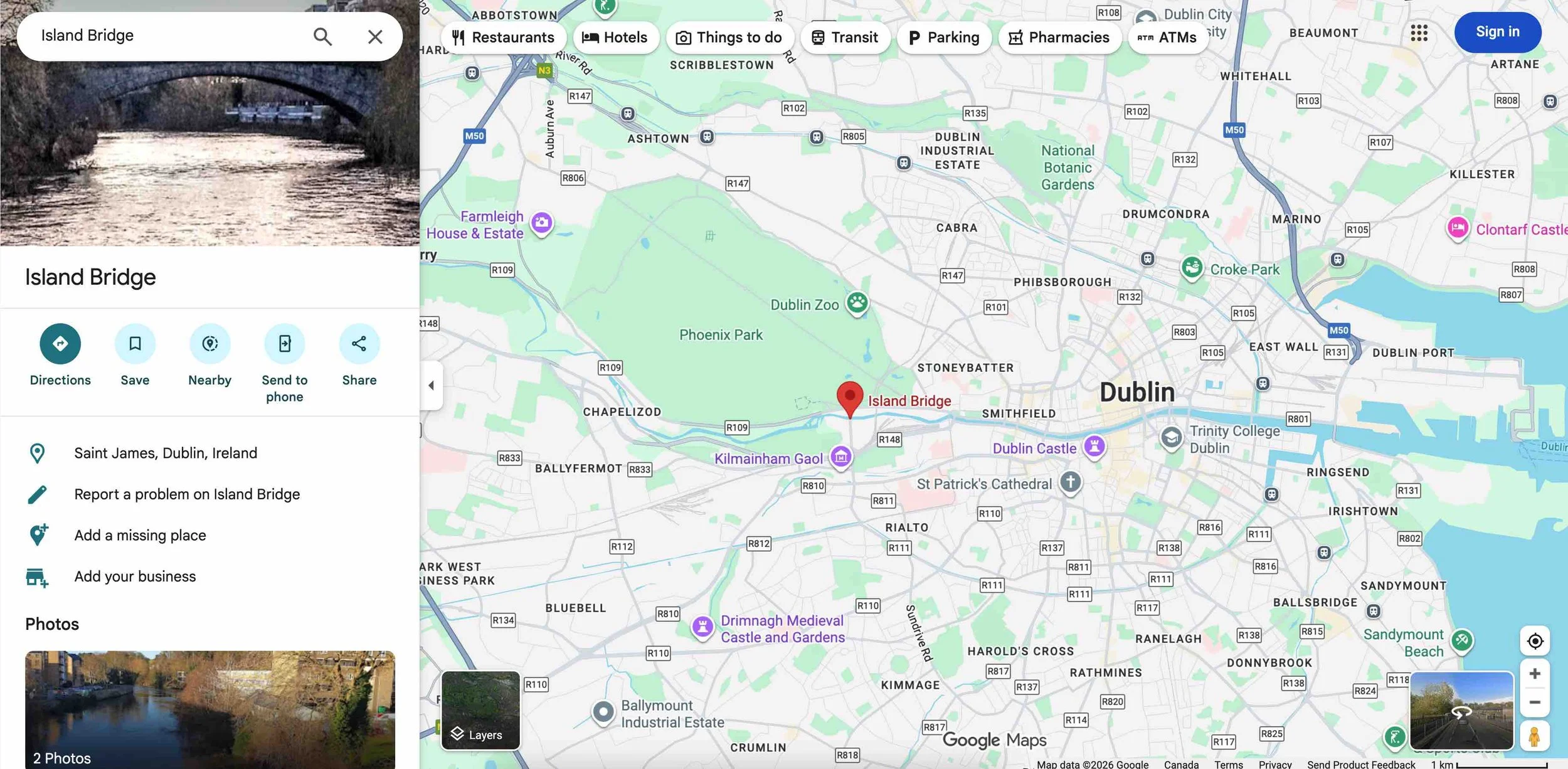
These tidal patterns at Island Bridge, located beside Phoenix Park, are explicitly invoked on the last page of Chapter 4:
At Island Bridge she met her tide.
Attabom, attabom, attabombomboom! (103:1-2)
But before we reach this last page of Chapter 4, here’s what happens in today’s excerpt in sequence.

“Achtung Baby” album, U2, 1991.(Wikipedia)
We begin with a German-sounding warning, when the typical call to attention, Achtung!, with a ‘T,’ gets schmeared with a bit of feces, becoming “Achdung!” with a ‘D.’ This opening Teutonic passage (or maybe I should say Doo-doo-donic passage) translates into something like: “Attention! The Viking King visits beautiful young girls. Three somebodies adventure with the giant foreigner in Phoenix Park.”
What we have here is a remix of HCE’s alleged, sexually suggestive sins in Phoenix Park. Early on this same chapter mentioned “the Serpentine in Phornix Park” (80:6), harking back, way back, to the serpent in the Garden of Eden and the sinfulness of Adam and Eve — fornix is a brothel in Latin, giving us a current word for sinful sex, fornication. So Dublin’s Phoenix Park is the site of original sin and the consequent fall of humanity.

Smoke at the Vatican. (Rorate Cæli)
But what falls down in the Wake must rise up, like the Phoenix that gives the park its name, or like the genitalia of HCE in the sex scene of the following paragraph, which, hilariously, subversively, combines papal and sexual language and imagery. Making their appearance in this passage are the smoke that shoots from he Sistine Chapel, a Vatican climax if ever there was, alongside words like ‘snake’ (there’s that original sin again), ‘beaver,’ an ‘exuding amber liquid’ and, perhaps most creatively, and certainly most phallically, a “porphyroid buttertower” (100:17), with “porphyroid” conjuring something purplish and hard as a rock.
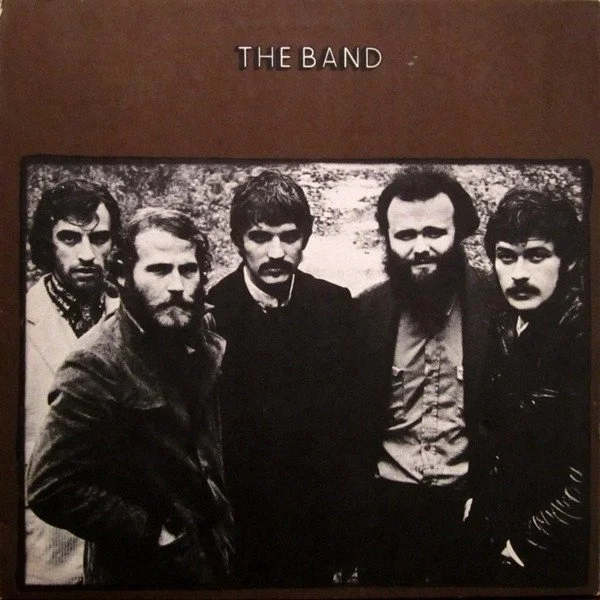
“The Band” album, 1969. (Discogs)
Now all eyes are on ALP. Women are wondering, “Was she fast?” (101:1) And the questions accumulate from there: “why or whether… who… what… whence… what… which…” etc. (101). What we discover is that ALP gave HCE 111 children and somehow still finds the energy to defend her beleaguered spouse. If anyone will save HCE from his alleged sins and the salacious claims that have hounded him mercilessly from the moment we met him back in Chapter 2, it’s ALP. She reminds me of Bessie in Robbie Robertson and The Band’s 1969 song “Up on Cripple Creek”:
Up on Cripple Creek, she sends me
If I spring a leak, she mends me
I don't have to speak, she defends me
A drunkard's dream if I ever did see one
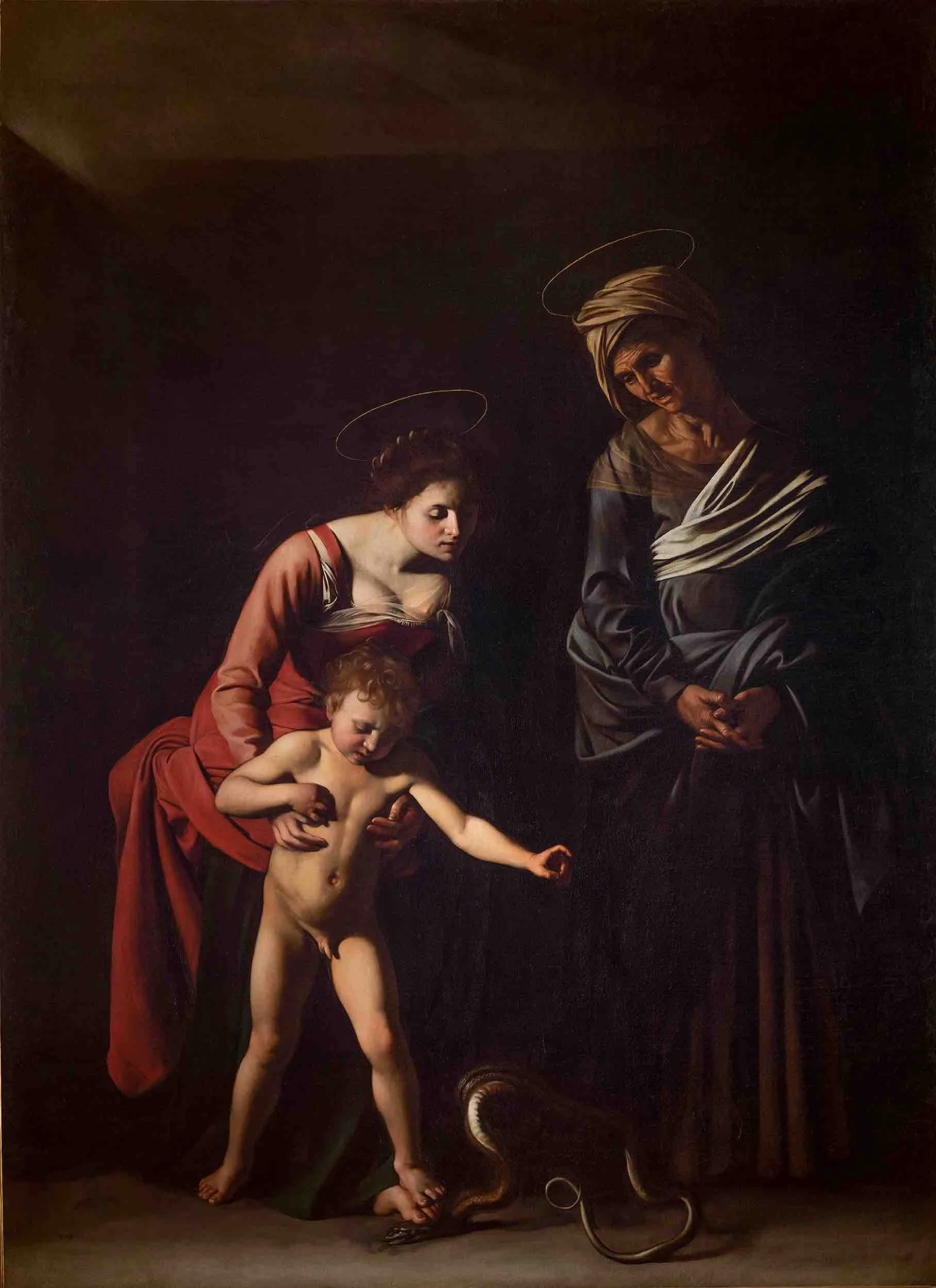
“Madonna and Child with Saint Anne,” Caravaggio, 1606. (Galleria Borghese)
For HCE, ALP is “she who shuttered him after his fall and waked him widowt sparing” (102:1-2), and if need be, she’ll stamp out those who defame her spouse, “to crush the slander’s head” (102:17), much as Mary and Jesus in Caravaggio’s painting “Madonna and Child with Saint Anne” (1606) stomp on the evil serpent’s head. (I’ll link to the painting on One Little Goat’s podcast page for those who want a closer look.)
What accounts for the longevity of ALP and HCE’s relationship is their formula, not uncommon to many couples today, namely: quarrel, make up and endure.
Tifftiff today, kissykissy tonay and agelong pine tomauranna. Then who but Crippled-with-Children would speak up for Dropping-with-Sweat? (102:28-30)
So long-suffering is ALP that her age-long pain dates back to the very genesis of man and womankind. As we heard earlier,
she who shuttered him after his fall and waked him widowt sparing and gave him keen and made him able (102:1-3).

“The First Labours of Adam and Eve,” Alonso Cano, 1652. (Wikimedia Commons / Pollok House, Scotland)
ALP is Eve, saddled with Cain and Abel and, by the sounds of it, another 109 kids; HCE is Adam, working by the sweat of his brow. They are a timeless couple less in love than in the throes of life.
Now it’s time for Richard’s performance of James Joyce’s Finnegans Wake, page 100 line 5 to the end of page 103 for the conclusion of Chapter 4. The performance was filmed and recorded at Type Books on Queen Street West in Toronto on January 22nd, 2024 with a live audience.
[Richard Harte reads Finnegans Wake 100:5-103:11]
[100] Achdung! Pozor! Attenshune! Vikeroy Besights Smucky
Yung Pigeschoolies. Tri Paisdinernes Eventyr Med Lochlanner
Fathach I Fiounnisgehaven. Bannalanna Bangs Ballyhooly Out
Of Her Buddaree Of A Bullavogue.
But, their bright little contemporaries notwithstanding, on
the morrowing morn of the suicidal murder of the unrescued ex-
patriate, aslike as asnake comes sliduant down that oaktree onto
the duke of beavers, (you may have seen some liquidamber exude
exotic from a balsam poplar at Parteen-a-lax Limestone. Road
and cried Abies Magnifica! not, noble fir?) a quarter of nine,
imploring his resipiency, saw the infallible spike of smoke's jutstiff
punctual from the seventh gable of our Quintus Centimachus'
porphyroid buttertower and then thirsty p.m. with oaths upon
his lastingness (En caecos harauspices! Annos longos patimur!) the
lamps of maintenance, beaconsfarafield innerhalf the zuggurat, all
brevetnamed, the wasting wyvern, the tawny of his mane, the
swinglowswaying bluepaw, the outstanding man, the lolllike lady,
being litten for the long (O land, how long!) lifesnight, with
suffusion of fineglass transom and leadlight panes.
Wherefore let it hardly by any being thinking be said either or
thought that the prisoner of that sacred edifice, were he an Ivor
the Boneless or an Olaf the Hide, was at his best a onestone par-
able, a rude breathing on the void of to be, a venter hearing his
own bauchspeech in backwords, or, more strictly, but tristurned
initials, the cluekey to a worldroom beyond the roomwhorld, for
scarce one, or pathetically few of his dode canal sammenlivers
cared seriously or for long to doubt with Kurt Iuld van Dijke
(the gravitational pull perceived by certain fixed residents and
the capture of uncertain comets chancedrifting through our sys-
tem suggesting an authenticitatem of his aliquitudinis) the canoni-
city of his existence as a tesseract. Be still, O quick! Speak him
dumb! Hush ye fronds of Ulma!
[101] Dispersal women wondered. Was she fast?
Do tell us all about. As we want to hear allabout. So tellus tel-
las allabouter. The why or whether she looked alottylike like
ussies and whether he had his wimdop like themses shut? Notes
and queries, tipbids and answers, the laugh and the shout, the
ards and downs. Now listed to one aneither and liss them down
and smoothen out your leaves of rose. The war is o'er. Wimwim
wimwim! Was it Unity Moore or Estella Swifte or Varina Fay
or Quarta Quaedam? Toemaas, mark oom for yor ounckel! Pig-
eys, hold op med yer leg! Who, but who (for second time of
asking) was then the scourge of the parts about folkrich Luca-
lizod it was wont to be asked, as, in ages behind of the Homo
Capite Erectus, what price Peabody's money, or, to put it
bluntly, whence is the herringtons' white cravat, as, in epochs
more cainozoic, who struck Buckley though nowadays as then-
times every schoolfilly of sevenscore moons or more who know-
her intimologies and every colleen bawl aroof and every red-
flammelwaving warwife and widowpeace upon Dublin Wall for
ever knows as yayas is yayas how it was Buckleyself (we need
no blooding paper to tell it neither) who struck and the Russian
generals, da! da!, instead of Buckley who was caddishly struck
by him when be herselves. What fullpried paulpoison in the spy
of three castles or which hatefilled smileyseller? And that such
a vetriol of venom, that queen's head affranchisant, a quiet stink-
ingplaster zeal could cover, prepostered or postpaid! The lounge-
lizards of the pumproom had their nine days' jeer, and pratsch-
kats at their platschpails too and holenpolendom beside, Szpasz-
pas Szpissmas, the zhanyzhonies, when, still believing in her
owenglass, when izarres were twinklins, that the upper reaches
of her mouthless face and her impermanent waves were the better
half of her, one nearer him, dearer than all, first warming creature
of his early morn, bondwoman of the man of the house, and
murrmurr of all the mackavicks, she who had given his eye for
her bed and a tooth for a child till one one and one ten and one
hundred again, O me and O ye! cadet and prim, the hungray and
anngreen (and if she is older now than her teeth she has hair that
[102] is younger than thighne, my dear!) she who shuttered him after
his fall and waked him widowt sparing and gave him keen and
made him able and held adazillahs to each arche of his noes, she
who will not rast her from her running to seek him till, with the
help of the okeamic, some such time that she shall have been after
hiding the crumbends of his enormousness in the areyou looking-
for Pearlfar sea, (ur, uri, uria!) stood forth, burnzburn the gorg-
gony old danworld, in gogor's name, for gagar's sake, dragging
the countryside in her train, finickin here and funickin there,
with her louisequean's brogues and her culunder buzzle and her
little bolero boa and all and two times twenty curlicornies for her
headdress, specks on her eyeux, and spudds on horeilles and a
circusfix riding her Parisienne's cockneze, a vaunt her straddle
from Equerry Egon, when Tinktink in the churchclose clinked
Steploajazzyma Sunday, Sola, with pawns, prelates and pookas
pelotting in her piecebag, for Handiman the Chomp, Esquoro,
biskbask, to crush the slander's head.
Wery weeny wight, plead for Morandmor! Notre Dame de la
Ville, mercy of thy balmheartzyheat! Ogrowdnyk's beyond her-
bata tay, wort of the drogist. Bulk him no bulkis. And let him
rest, thou wayfarre, and take no gravespoil from him! Neither
mar his mound! The bane of Tut is on it. Ware! But there's a
little lady waiting and her name is A.L.P. And you'll agree. She
must be she. For her holden heirheaps hanging down her back.
He spenth his strenth amok haremscarems. Poppy Narancy, Gial-
lia, Chlora, Marinka, Anileen, Parme. And ilk a those dames had
her rainbow huemoures yet for whilko her whims but he coined a
cure. Tifftiff today, kissykissy tonay and agelong pine tomauran-
na. Then who but Crippled-with-Children would speak up for
Dropping-with-Sweat?
Sold him her lease of ninenineninetee,
Tresses undresses so dyedyedaintee,
Goo, the groot gudgeon, gulped it all.
Hoo was the C. O. D.?
Bum!
[103] At Island Bridge she met her tide.
Attabom, attabom, attabombomboom!
The Fin had a flux and his Ebba a ride.
Attabom, attabom, attabombomboom!
We're all up to the years in hues and cribies.
That's what she's done for wee!
Woe!
Nomad may roam with Nabuch but let naaman laugh at Jor-
dan! For we, we have taken our sheet upon her stones where we
have hanged our hearts in her trees; and we list, as she bibs us,
by the waters of babalong.
[End of excerpt]
Adam Seelig: That was Richard Harte reading the concluding pages of Chapter 4 from Finnegans Wake, recorded live at Type Books on Queen Street West in Toronto on January 22nd, 2024.
Join us for Episode 23 when Richard begins Chapter 5 of Finnegans Wake. This podcast series is taking a break between chapters to focus on the film production of future chapters, so please note that the exact date of the next episode’s release is to be determined, and we’ll then resume our fortnightly podcast releases every other Thursday. In the meantime, to be sure you don’t miss the episode, why not follow or subscribe to this podcast?
[Music: Instrumental of “Roll, Jordan, Roll” with Adam Seelig on piano and Brandon Bak on drums, from the film of Finnegans Wake Ch03.]
For more on One Little Goat’s Finnegans Wake project, including transcripts of this podcast and the complete films of Chapters 1, 2 and 3 visit our website at OneLittleGoat.org. And to hear about upcoming performances and screenings, join our mailing list, also on our website.
One Little Goat Theatre Company is a nonprofit, artist-driven, registered charity in the United States and Canada that depends on donations from individuals to make our productions, including this one, possible. If you’re able, please make a tax-deductible donation through our website, www.OneLittleGoat.org
Finnegans Wake is made possible by Friends of One Little Goat Theatre Company and the Emigrant Support Programme of the government of Ireland. Thank you for your support! And thank you to the artists for this episode: Richard Harte; Sound by William Bembridge; Stage Management by Sandi Becker; Directed by yours truly, Adam Seelig. A big thanks to Claire Foster and the staff and owners of Type Books, as well as to our wonderful live audience. Thank you to everyone at the Irish Consulate in Toronto. And thank you to Production Consultants Cathy Murphy, Andrew Moodie and Shai Rotbard-Seelig.
Thank you for listening!
[Music fades out]
[End of Ep022]
Mentioned: King James Bible, Psalm 137, “by the rivers of Babylon,” babble, Babel, transition from HCE to ALP, male to female, land to water, tides, River Liffey, Island Bridge, Phoenix Park, Eve and Adam, serpent, Garden of Eden, original sin, papal and sexual imagery, ALP’s 111 children, ALP’s defence of HCE, formula for longevity of ALP and HCE’s relationship, synopsis.
Resources: Transcript for this episode, including the text of Finnegans Wake.
Finnegans Wake (1939) by James Joyce: there are many free copies of FW to read online or download, e.g. finwake.com
James Joyce Digital Archive, “Chicken Guide” to Finnegans Wake provides a ‘plain English’ paraphrase of each chapter by Danis Rose.
Richard Ellmann’s biography of James Joyce. Oxford University Press, 1982.
Edmund Epstein, A Guide through Finnegans Wake. University Press of Florida, 2009.
Adaline Glasheen, Third Census of Finnegans Wake: An Index of the Characters and Their Roles, University of California Press, 1977.
John Gordon’s annotations on his Finnegans Wake blog.
Roland McHugh, Annotations to Finnegans Wake (4th edition). Johns Hopkins University Press, 2016.
Raphael Slepon, fweet.org
William York Tindall, A Reader’s Guide to Finnegans Wake. Syracuse University Press, 1996.
Cited: Michelangelo Merisi da Caravaggio, “Madonna and Child with Saint Anne,” 1606, Galleria Borghese, Italy.
“Up on Cripple Creek” by The Band, The Band (eponymous), Capitol Records, 1969.