JAMES JOYCE’S FINNEGANS WAKE
Episode 026: SPILL THE TEA, STUDY IN BROWN
PAGE 114:21-119:9 | CHAPTER 5 | 2026-07-16
PODCAST TRANSCRIPT
[Music: Instrumental of “The Alphabet Song (Variation On)” with Tyler Emond on bass, Jinu Isac on drums, Adam Seelig on piano, from the Finnegans Wake film series. Music fades out]
Adam Seelig: Welcome to James Joyce’s divine and delirious comedy, Finnegans Wake. In this episode, number 26, we’ll hear Irish-Canadian actor — and my good friend and colleague — Richard Harte performing pages 114 to 119 from Chapter 5 of Joyce’s last novel. I’m Adam Seelig, the director of the reading you’ll soon hear.
Will you be in Toronto on Tuesday, August 11th? If so, join us at the Winchester Street Theatre for a very special live taping of Book II Chapter 1 of Finnegans Wake. For more details and to reserve a seat, please email One Little Goat Theatre Company at onelittlegoattc@gmail.com (that’s one little goat t-for-for-theatre c-for-company @gmail.com). You can also find the email address on One Little Goat’s website, www.OneLittleGoat.org.
[Music: “Breakfast,” instrumental with Tyler Emond on bass, Jinu Isac on drums, Adam Seelig on piano, from the Finnegans Wake film series.]
Adam Seelig: Finnegans Wake is a production of One Little Goat Theatre Company. One Little Goat is filming and recording all 17 chapters (roughly 30 hours) of Joyce’s Finnegans Wake before live audiences in various locations, screening and releasing them along the way, with the aim of completing the entire book for its 90th birthday, May 4, 2029. One Little Goat Theatre Company is an official charity in Canada and the United States. To help us produce this first-of-its-kind filmed reading series — of which we’ve filmed 8 chapters so far, with 9 more to go — please visit OneLittleGoat.org to make a charitable donation. Your donation enables us to bring this production to audiences and helps support the outstanding artists who make it possible. To be the first to hear about our live tapings, events, and screenings, please join our mailing list, also at OneLittleGoat.org.
[Music fades out]
Adam Seelig: Today’s excerpt from Chapter 5 takes a closer look at that letter scrap found by Belinda the Hen in a heap of litter — the littery letter, as I’ve been calling it, which, if worthy of being called literature, is worthy of analysis. And that analysis, true to the Wake’s multifarious dream language, will be kaleidoscopic, offering us several lenses through which to view The Letter: a Freudian lens, a Marxist one, a Political one, the kinds of theoretical frameworks that many a university student has employed. So for all the art incorporated into Finnegans Wake, the novel now draws on what might be the highest art of them all: the art of bullshitting. Okay, not exactly. If bullshitting is the art of deploying sophisticated language with only a tenuous connection to the truth, that doesn’t quite apply to today’s reading, because, while there may be plenty of magnificent, comical bullshit about The Letter in what you’re about to hear, the voice producing the analysis, the energy driving it is, to my ear, sincere. It truly wants to know and understand everything there is to know and understand about The Letter — the Who-What-Why-When-and-How of it.
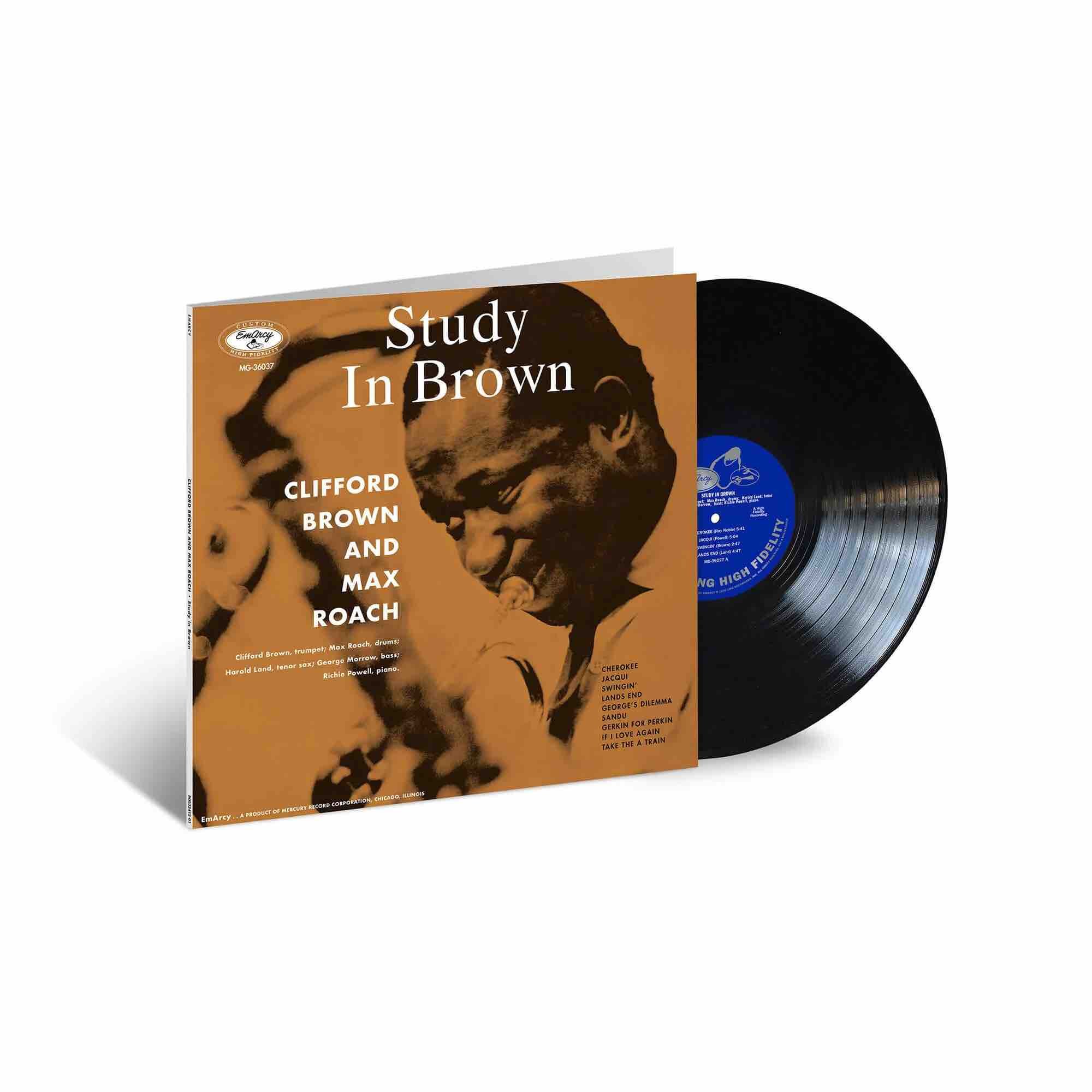
We begin with a closer look at the large tea stain at the end of The Letter that serves as a kind of ‘period’ in the otherwise ‘punctuationless’ missive: “The teatimestained terminal […] is a cosy little brown study all to oneself and, whether it be thumb-print, mademark or just a poor trait of the artless, its importance in establishing the identities in the writer complexus…” (114:29-33). What we have here is a study in brown (the title, incidentally, of a great jazz album by Clifford Brown and Max Roach), or a brown study, that older expression for brooding, all in this case stemming—or spouting, or brewing, if you will—from spilled tea.

Now I know the following, far more recent expression postdates Finnegans Wake by a lot, but to “spill the tea” in today’s parlance is, in the definition of UrbanDictionary.com, “when one tells an especially juicy bit of gossip,” with “tea” defined as “the best kind of gossip, typically shared between friends. it’s a bonding tool for people of all ages. tea is usually about someone you know, but can also extend to celebrities random internet scandals, etc.” If in RuPaul’s Drag Race (the TV show that popularized ‘tea’ as ‘gossip’) the expression “all tea, all shade” signifies brutal honesty, then the Wake’s “all tea, all brown” stain that terminates The Letter represents deeply absorbing gossip. It’s also, coming back to the text, “importan[t] in establishing the identities in the writer complexus,” i.e. this study in brown, this tea stain must tell us something about the writer behind The Letter, a whodunnit mystery, or more precisely, a whowroteit mystery that haunts this chapter right up to the very end.
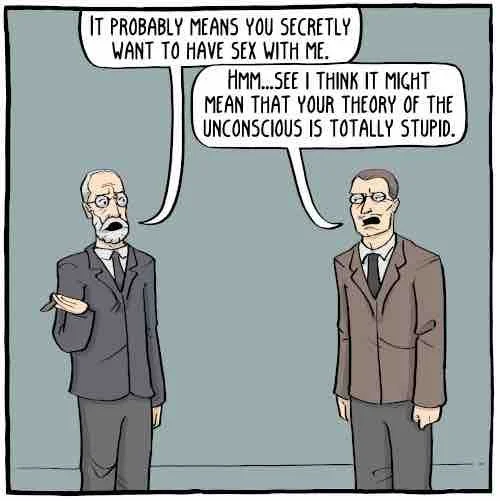
“Freud and Jung Split Over Differences,” Corey Mohler, ExistentialComics.com
The text then offers us “a word of warning” that adult content lies ahead, which is well warranted as the Wake is about to psychoanalyze The Letter, with a nudge and wink to Carl Jung and Sigmund Freud, those sexually obsessed founding fathers of the field: “grisly old Sykos who have done our unsmiling bit on 'alices, when they were yung and easily freudened” (115:21-23). The neurotic and erotic are never far apart. While we’re in this psychosexual zone, Charles Dodgson, aka Lewis Carroll, makes a brief cameo when his Alice from Alice in Wonderland merges with that psychoanalytic watchword, Analysis. And Dodgson’s “camera” is also mentioned soon after, a reminder of his hobby of photographing children in the nude (Ep008 & Ep012), a subject about which plenty of conjectural, psychoanalytic tea has been spilled in the century since.
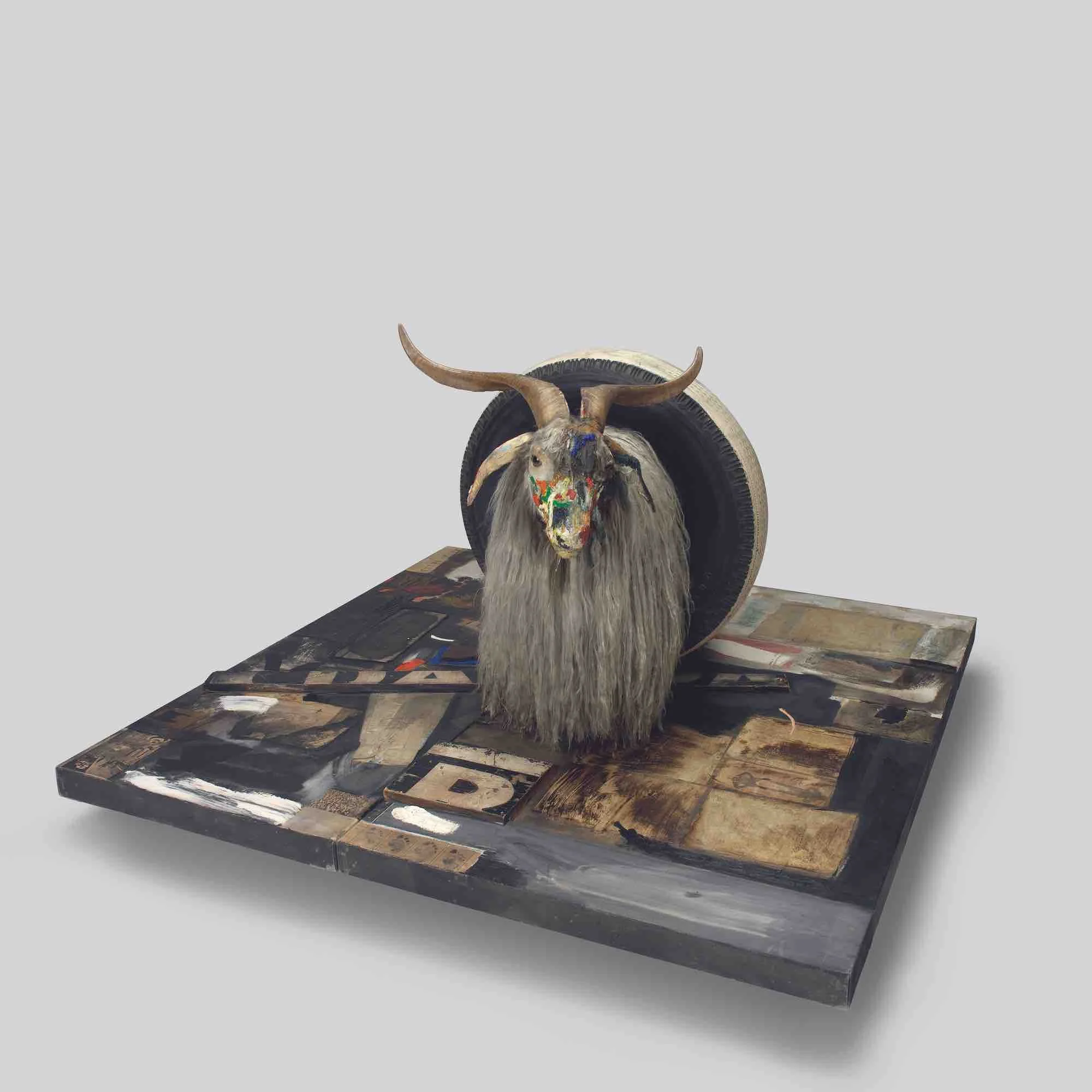
Robert Rauschenberg, “Monogram” (1955-1959)
Thus psychoanalysis spills into salaciousness. This kind of overly sexualized reading of a text reminds me of artist Robert Rauschenberg’s quip about art critics’ overly sexualized interpretations of his famous Combine “Monogram,” a sculpture of a stuffed goat’s head sticking out of a rubber tire. “Do you know that some people still say that tire is a sexual symbol?” Rauschenberg once mused incredulously. “I don't know how anyone could ever cross the street if they feel that way about tires!” Rauschenberg’s goat might have horns, but it need not be horny. As Father Freud himself once quipped, sometimes a cigar is just a cigar. So too The Letter may not be as titillating as all the psychobabble suggests.
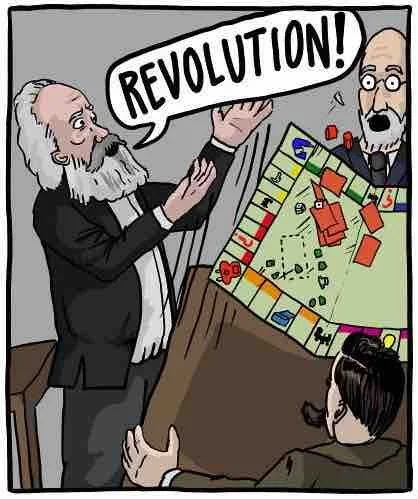
“The Germans Play Monopoly,” Corey Mohler, ExistentialComics.com
Then it’s on to a Marxist reading of the text. Remember how The Letter from Boston, heard in the previous episode (Ep025), is addressed to Maggie, i.e. Margaret, and mentions wedding cakes and offers thanks at one point? Well here’s how the Wake views these details through a Marxist lens: “Margaret is the social revolution while cakes mean the party funds and dear thank you signifies national gratitude.” (116:8-10) As so often happens with overtly political readings, it’s reductive.
Maybe then an expansive view of The Letter will suit us better, treating it as operatic, with a brief appearance by those inspirational lovers, Tristan and Isolde. The so-called high art of their Wagnerian melodies, however, quickly drops to the low art of doggerel — the kind of high-to-low movement that drives so much of Finnegans Wake — leading us from an operatic aria to a silly circular song about another Finnegan:
There was an old man named Michael Finnegan
He had whiskers on his chinnegan
The wind came along and blew them in again
Poor old Michael Finnegan, begin again
There was an old man name Michael Finnegan…
Ultimately, regardless of the theoretical framework applied to The Letter, be it Freudian, Marxist, or even Operatic, someone must have written it. This question about the letter-writer’s identity comes up earlier in Chapter 5, as you might recall, when a no-nonsense heckler asks, “who […] wrote the durn thing anyhow?” (107:36-108:1) (Ep023) Now we receive the outlines of an answer, however vague — as the text puts it, “Anyhow, somehow and somewhere, […] somebody […] wrote it, wrote it all, wrote it all down, and there you are, full stop.” (118:11-14) The “full stop” here is comically emphatic given that The Letter bears nary a period, aside from the now famous brown splotch of tea at the end, if we choose to read it as punctuation.
So our whodunnit/whowroteit hasn’t been solved. Yet, the text urges us, we mustn’t impatiently dismiss it as some nonsensical “riot of blots and blurs and bars and balls and hoops and wriggles and juxtaposed jottings” (118:29-30). Let’s remain grateful that we at least have some part of The Letter in our possession, even if just a fragment, considering the difficult, dirt-filled journey it’s been through: “we ought really to rest thankful that at this deleteful hour of dungflies dawning we have even a written on with dried ink scrap of paper at all to show for ourselves” (118:31-33). And let’s be sure to keep it close and remain optimistic that, in time, we’re bound to reveal the identity of who wrote it; or in the pleading words of the Wake, we must “cling to it as with drowning hands, hoping against hope all the while that, by the light of philophosy […] things will begin to clear up a bit one way or another within the next quarrel of an hour” (119:3-6).
And now for the next quarrel, or quarter, of an hour, it’s time for Richard’s performance of James Joyce’s Finnegans Wake, page 114 line 21 to 119 line 9 of Chapter 5. The performance was filmed and recorded at the Thomas Fisher Rare Book Library, University of Toronto on October 21st, 2024 with a live audience.
Today’s excerpt opens with music I wrote for piano trio with Tyler Emond on bass and Jinu Isac on drums. With its languid haze of overlapping time signatures, the interlude pays homage to the dream language and world of the Wake.
[Music: “Freud (Ch05),” instrumental with Tyler Emond on bass, Jinu Isac on drums, Adam Seelig on piano, from the Finnegans Wake film series.]
[Richard Harte reads Finnegans Wake 114:21-119:9]
[114] Another point, in addition to the original sand, pounce pow-
der, drunkard paper or soft rag used (any vet or inhanger in
ous sot's social can see the seen for seemself, a wee ftofty od
room, the cheery spluttered on the one karrig, a darka disheen
of voos from Dalbania, any gotsquantity of racky, a portogal
and some buk setting out on the sofer, you remember the
sort of softball sucker motru used to tell us when we were all
biribiyas or nippies and messas) it has acquired accretions of
terricious matter whilst loitering in the past. The teatimestained
terminal (say not the tag, mummer, or our show's a failure!) is a
cosy little brown study all to oneself and, whether it be thumb-
print, mademark or just a poor trait of the artless, its importance
in establishing the identities in the writer complexus (for if the
hand was one, the minds of active and agitated were more than
so) will be best appreciated by never forgetting that both before
and after the battle of the Boyne it was a habit not to sign letters
[115] always. Tip. And it is surely a lesser ignorance to write a word
with every consonant too few than to add all too many. The
end? Say it with missiles then and thus arabesque the page. You
have your cup of scalding Souchong, your taper's waxen drop,
your cat's paw, the clove or coffinnail you chewed or champed
as you worded it, your lark in clear air. So why, pray, sign any-
thing as long as every word, letter, penstroke, paperspace is a
perfect signature of its own? A true friend is known much more
easily, and better into the bargain, by his personal touch, habits
of full or undress, movements, response to appeals for charity
than by his footwear, say. And, speaking anent Tiberias and other
incestuish salacities among gerontophils, a word of warning
about the tenderloined passion hinted at. Some softnosed per-
user might mayhem take it up erogenously as the usual case of
spoons, prostituta in herba plus dinky pinks deliberatively summer-
saulting off her bisexycle, at the main entrance of curate's per-
petual soutane suit with her one to see and awoh! who picks her
up as gingerly as any balmbearer would to feel whereupon the
virgin was most hurt and nicely asking: whyre have you been so
grace a mauling and where were you chaste me child? Be who,
farther potential? and so wider but we grisly old Sykos who have
done our unsmiling bit on 'alices, when they were yung and
easily freudened, in the penumbra of the procuring room and
what oracular comepression we have had apply to them! could
(did we care to sell our feebought silence in camera) tell our very
moistnostrilled one that father in such virgated contexts is not
always that undemonstrative relative (often held up to our con-
tumacy) who settles our hashbill for us and what an innocent all-
abroad's adverb such as Michaelly looks like can be suggestive
of under the pudendascope and, finally, what a neurasthene nym-
pholept, endocrine-pineal typus, of inverted parentage with a
prepossessing drauma present in her past and a priapic urge for
congress with agnates before cognates fundamentally is feeling
for under her lubricitous meiosis when she refers with liking to
some feeler she fancie's face. And Mm. We could. Yet what need
to say? 'Tis as human a little story as paper could well carry, in
[116] affect, as singsing so Salaman susuing to swittvitles while as un-
bluffingly blurtubruskblunt as an Esra, the cat, the cat's meeter,
the meeter's cat's wife, the meeter's cat's wife's half better, the
meeter's cat's wife's half better's meeter, and so back to our
horses, for we also know, what we have perused from the pages
of I Was A Gemral, that Showting up of Bulsklivism by 'Schot-
tenboum', that Father Michael about this red time of the white
terror equals the old regime and Margaret is the social revolution
while cakes mean the party funds and dear thank you signifies
national gratitude. In fine, we have heard, as it happened, of
Spartacus intercellular. We are not corknered yet, dead hand!
We can recall, with voluntears, the froggy jew, and sweeter far
'twere now westhinks in Dumbil's fair city ere one more year is
o'er. We tourned our coasts to the good gay tunes. When from
down swords the sea merged the oldowth guns and answer made
the bold O' Dwyer. But. Est modest in verbos. Let a prostitute
be whoso stands before a door and winks or parks herself in the
fornix near a makeussin wall (sinsin! sinsin!) and the curate one
who brings strong waters (gingin! gingin!), but also, and dinna
forget, that there is many asleeps between someathome's first
and moreinausland's last and that the beautiful presence of wait-
ing kates will until life's (!) be more than enough to make any
milkmike in the language of sweet tarts punch hell's hate into his
twin nicky and that Maggy's tea, or your majesty, if heard as a
boost from a born gentleman is (?). For if the lingo gasped between
kicksheets, however basically English, were to be preached from
the mouths of wickerchurchwardens and metaphysicians in the
row and advokaatoes, allvoyous, demivoyelles, languoaths, les-
biels, dentelles, gutterhowls and furtz, where would their prac-
tice be or where the human race itself were the Pythagorean ses-
quipedalia of the panepistemion, however apically Volapucky,
grunted and gromwelled, ichabod, habakuk, opanoff, uggamyg,
hapaxle, gomenon, ppppfff, over country stiles, behind slated
dwellinghouses, down blind lanes, or, when all fruit fails, under
some sacking left on a coarse cart?
So hath been, love: tis tis: and will be: till wears and tears and
[117] ages. Thief us the night, steal we the air, shawl thiner liefest,
mine! Here, Ohere, insult the fair! Traitor, bad hearer, brave!
The lightning look, the birding cry, awe from the grave, ever-
flowing on the times. Feueragusaria iordenwater; now godsun
shine on menday's daughter; a good clap, a fore marriage, a bad
wake, tell hell's well; such is manowife's lot of lose and win again,
like he's gruen quhiskers on who's chin again, she plucketed them
out but they grown in again. So what are you going to do about
it? O dear!
If juness she saved! Ah ho! And if yulone he pouved! The ol-
old stoliolum! From quiqui quinet to michemiche chelet and a
jambebatiste to a brulobrulo! It is told in sounds in utter that, in
signs so adds to, in universal, in polygluttural, in each auxiliary
neutral idiom, sordomutics, florilingua, sheltafocal, flayflutter, a
con's cubane, a pro's tutute, strassarab, ereperse and anythongue
athall. Since nozzy Nanette tripped palmyways with Highho
Harry there's a spurtfire turf a'kind o'kindling when oft as the
souffsouff blows her peaties up and a claypot wet for thee, my
Sitys, and talkatalka tell Tibbs has eve: and whathough (revilous
life proving aye the death of ronaldses when winpower wine has
bucked the kick on poor won man) billiousness has been billious-
ness during milliums of millenions and our mixed racings have
been giving two hoots or three jeers for the grape, vine and brew
and Pieter's in Nieuw Amsteldam and Paoli's where the poules
go and rum smelt his end for him and he dined off sooth ameri-
can (it would give one the frier even were one a normal Kettle-
licker) this oldworld epistola of their weatherings and their
marryings and their buryings and their natural selections has
combled tumbled down to us fersch and made-at-all-hours like
an ould cup on tay. As I was hottin me souser. Haha! And as
you was caldin your dutchy hovel. Hoho! She tole the tail or
her toon. Huhu!
Now, kapnimancy and infusionism may both fit as tight as
two trivets but while we in our wee free state, holding to that
prestatute in our charter, may have our irremovable doubts as
to the whole sense of the lot, the interpretation of any phrase in
[118] the whole, the meaning of every word of a phrase so far de-
ciphered out of it, however unfettered our Irish daily indepen-
dence, we must vaunt no idle dubiosity as to its genuine author-
ship and holusbolus authoritativeness. And let us bringtheecease
to beakerings on that clink, olmond bottler! On the face of it,
to volt back to our desultory horses, and for your roughshod
mind, bafflelost bull, the affair is a thing once for all done and
there you are somewhere and finished in a certain time, be it a
day or a year or even supposing, it should eventually turn out
to be a serial number of goodness gracious alone knows how
many days or years. Anyhow, somehow and somewhere, before
the bookflood or after her ebb, somebody mentioned by name in
his telephone directory, Coccolanius or Gallotaurus, wrote it,
wrote it all, wrote it all down, and there you are, full stop. O,
undoubtedly yes, and very potably so, but one who deeper thinks
will always bear in the baccbuccus of his mind that this down-
right there you are and there it is is only all in his eye. Why?
Because, Soferim Bebel, if it goes to that, (and dormerwindow
gossip will cry it from the housetops no surelier than the writing
on the wall will hue it to the mod of men that mote in the main
street) every person, place and thing in the chaosmos of Alle
anyway connected with the gobblydumped turkery was moving
and changing every part of the time: the travelling inkhorn
(possibly pot), the hare and turtle pen and paper, the continually
more and less intermisunderstanding minds of the anticollabora-
tors, the as time went on as it will variously inflected, differently
pronounced, otherwise spelled, changeably meaning vocable
scriptsigns. No, so holp me Petault, it is not a miseffectual why-
acinthinous riot of blots and blurs and bars and balls and hoops
and wriggles and juxtaposed jottings linked by spurts of speed:
it only looks as like it as damn it; and, sure, we ought really to
rest thankful that at this deleteful hour of dungflies dawning we
have even a written on with dried ink scrap of paper at all to show
for ourselves, tare it or leaf it, (and we are lufted to ourselves as
the soulfisher when he led the cat out of the bout) after all that
we lost and plundered of it even to the hidmost coignings of the
[119] earth and all it has gone through and by all means, after a good
ground kiss to Terracussa and for wars luck our lefftoff's flung
over our home homoplate, cling to it as with drowning hands,
hoping against hope all the while that, by the light of philo-
phosy, (and may she never folsage us!) things will begin to clear
up a bit one way or another within the next quarrel of an hour
and be hanged to them as ten to one they will too, please the pigs,
as they ought to categorically, as, stricly between ourselves, there
is a limit to all things so this will never do.
[End of excerpt]
Adam Seelig: That was Richard Harte reading pages 114 to 119 from Chapter 5 of Finnegans Wake, recorded live at the Fisher Rare Book Library in Toronto on October 21st, 2024. Join us for Episode 27 in a fortnight for Richard Harte’s continuation of Chapter 5. In the meantime, to be sure you don’t miss the episode, why not follow or subscribe to this podcast?
[Music: “Closing Credits (Ch05),” instrumental with Tyler Emond on bass, Jinu Isac on drums, Adam Seelig on piano, from the Finnegans Wake film series.]
For more on One Little Goat’s Finnegans Wake project, including transcripts of this podcast and the complete films of Chapters 1, 2 and 3 visit our website at OneLittleGoat.org. And to hear about upcoming performances and screenings, join our mailing list, also on our website. One Little Goat Theatre Company is a nonprofit, artist-driven, registered charity in the United States and Canada that depends on donations from individuals to make our productions, including this one, possible. If you’re able, please make a tax-deductible donation through our website, www.OneLittleGoat.org Finnegans Wake is made possible by Friends of One Little Goat Theatre Company and the Emigrant Support Programme of the government of Ireland. Thank you for your support! And thank you to the artists for this episode: Richard Harte; Sound by William Bembridge; Stage Management by Sandi Becker; Directed by yours truly, Adam Seelig; Music arranged and performed on the piano by me, with Tyler Emond on bass and Jinu Isac on drums, recorded at Ghost Town Studio in Toronto. A big thanks to John Shoesmith, Special Collections Librarian, to David Fernández, Head of Rare Books and Special Collections, and to their colleagues at the Fisher Rare Book Library at the University of Toronto, as well as to our wonderful live audience. Thank you to the team at the Irish Consulate in Toronto. And thank you to Production Consultants Cathy Murphy and Andrew Moodie. Thank you for listening!
[Music fades out] [End of Ep026]
Mentioned: Littery letter, Freudian and Marxist interpretations of The Letter, art of bullshitting, tea stain, study in brown, “spill the tea,” tea as gossip, RuPaul’s Drag Race, whodunnit/whowroteit mystery, psychoanalysis, Jung, Lewis Carroll, Alice in Wonderland, psychosexual readings, Robert Rauschenberg “Monogram,” opera, Tristan and Isolde, Michael Finnegan folk song, “cling to” The Letter, synopsis.
Resources: Transcript for this episode, including the text of Finnegans Wake.
Finnegans Wake (1939) by James Joyce: there are many free copies of FW to read online or download, e.g. finwake.com
James Joyce Digital Archive, “Chicken Guide” to Finnegans Wake provides a ‘plain English’ paraphrase of each chapter by Danis Rose.
Richard Ellmann’s biography of James Joyce. Oxford University Press, 1982.
Edmund Epstein, A Guide through Finnegans Wake. University Press of Florida, 2009.
Adaline Glasheen, Third Census of Finnegans Wake: An Index of the Characters and Their Roles, University of California Press, 1977.
John Gordon’s annotations on his Finnegans Wake blog.
Roland McHugh, Annotations to Finnegans Wake (4th edition). Johns Hopkins University Press, 2016.
Raphael Slepon, fweet.org
William York Tindall, A Reader’s Guide to Finnegans Wake. Syracuse University Press, 1996.
Cited: “Rauschenberg’s Cultural Canvas,” by Hank Burchard, Washington Post, 1991-05-12.