JAMES JOYCE’S FINNEGANS WAKE
Episode 028: CSI: DUBLIN
PAGE 123:11-125:23 | END OF CHAPTER 5 | 2026-08-13
PODCAST TRANSCRIPT
[Music: Instrumental of “The Alphabet Song (Variation On)” with Tyler Emond on bass, Jinu Isac on drums, Adam Seelig on piano, from the Finnegans Wake film series. Music fades out]
Adam Seelig: Welcome to James Joyce’s divine and delirious comedy, Finnegans Wake. In this episode, number 28, we’ll hear Irish-Canadian actor — and my good friend and colleague — Richard Harte performing pages 123 to 125 to conclude Chapter 5 of Joyce’s last novel. I’m Adam Seelig, the director of the reading you’ll soon hear.
[Music: “Breakfast,” instrumental with Tyler Emond on bass, Jinu Isac on drums, Adam Seelig on piano, from the Finnegans Wake film series.]
Adam Seelig: Finnegans Wake is a production of One Little Goat Theatre Company. One Little Goat is filming and recording all 17 chapters (roughly 30 hours) of Joyce’s Finnegans Wake before live audiences in various locations, screening and releasing them along the way, with the aim of completing the entire book for its 90th birthday, May 4, 2029. One Little Goat Theatre Company is an official charity in Canada and the United States. To help us produce this first-of-its-kind filmed reading series — of which we’ve filmed 8 chapters so far, with 9 more to go — please visit OneLittleGoat.org to make a charitable donation. Your donation enables us to bring this production to audiences and helps support the outstanding artists who make it possible. To be the first to hear about our live tapings, events, and screenings, please join our mailing list, also at OneLittleGoat.org.
[Music fades out]
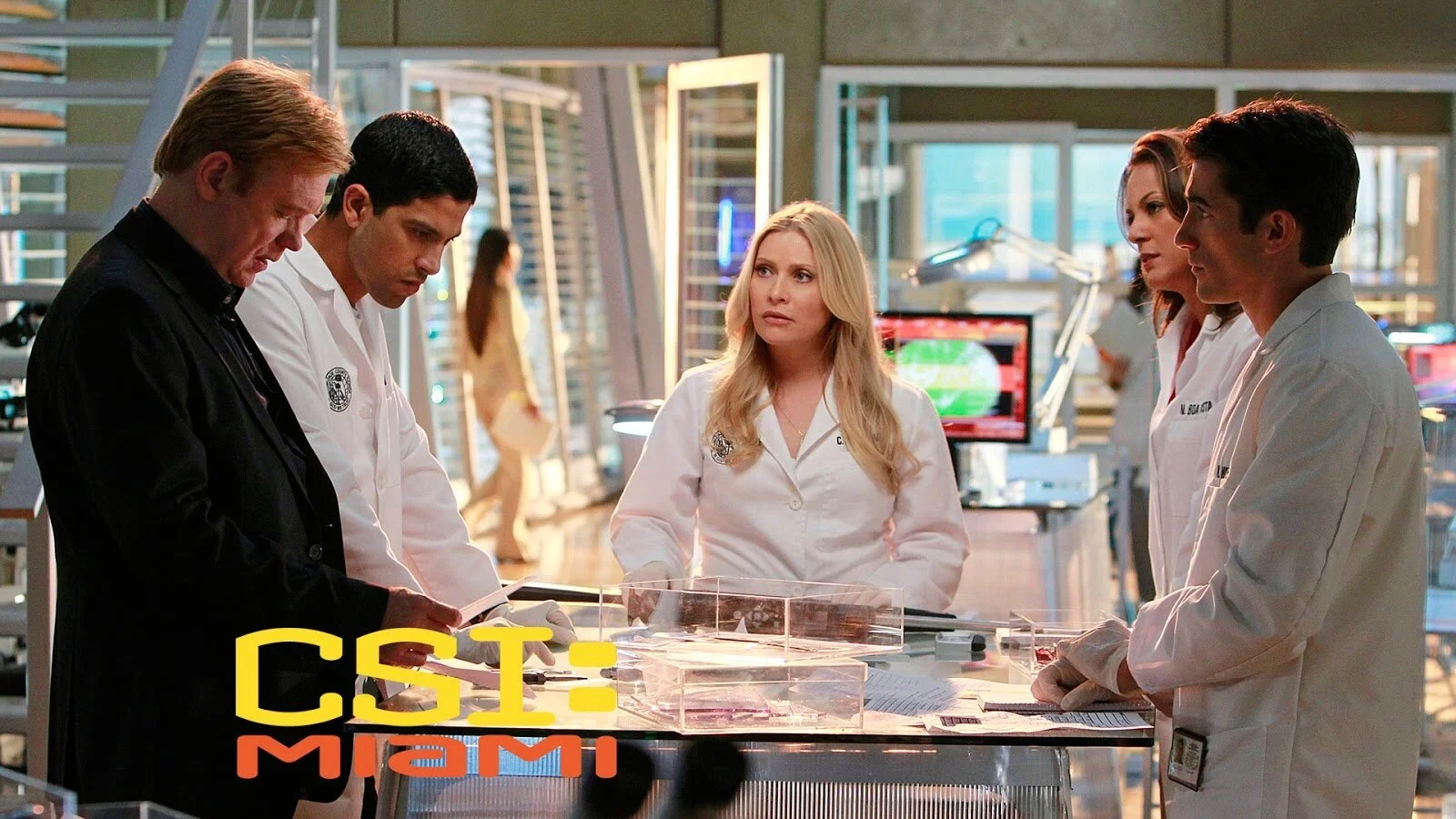
Adam Seelig: The popular TV series CSI: Crime Scene Investigation has franchises in several cities, including CSI: New York and CSI: Miami. Now Prepare to add CSI: Dublin to your watchlist because in today’s concluding excerpt from Chapter 5 of Finnegans Wake we open with a highly technical, microscopic, forensic analysis of The Letter on par with the police-procedural lab montages of CSI, for which the show is so famous (and so famously mocked). In lieu of CSI: Miami’s Horatio Caine and his laboratory of forensic scientists, today’s excerpt gives us the fictional critic Duff-Muggli and his ludicrous “dectroscophonious photosensition under suprasonic light control […] at a millicentime the microamp” (123:12-15). Duff-Muggli’s forensic examination of The Letter is not exactly helped by the psychosexual analysis of “Tung-Toyd” (123:20), suggesting Jung and Freud, also mentioned earlier in the chapter (Ep026), who may be as tongue-tied as Duff-Muggli is deaf-mute.
And yet we’re getting closer to solving the mystery at the heart of Chapter 5; that is, the mystery of who in fact wrote The Letter. “The unmistaken identity of the persons in the Tiberiast duplex came to light in the most devious of ways.” (123:30-31) Hold on: “persons” who wrote The Letter, plural; not “person” who wrote The Letter, singular? Let’s read on: “The original document was in what is known as Hanno O'Nonhanno's unbrookable script, that is to say, it showed no signs of punctuation of any sort.” (123:31-34) This is true. The Letter back on page 111, as we heard in our podcast episode about “The Letter from Boston” (Ep025), is indeed punctuationless, aside from the big brown tea stain at the end. And while it was written in what may appear like an unbreakable code or “unbrookable script”, we’re about to decode it by holding it up to light, in this case the light of a candle or “a lit rush” (123:34) — a ‘rushlight’ is an improvised candle made by dipping a rush in grease; it’s also older English slang for cheap liquor or moonshine.

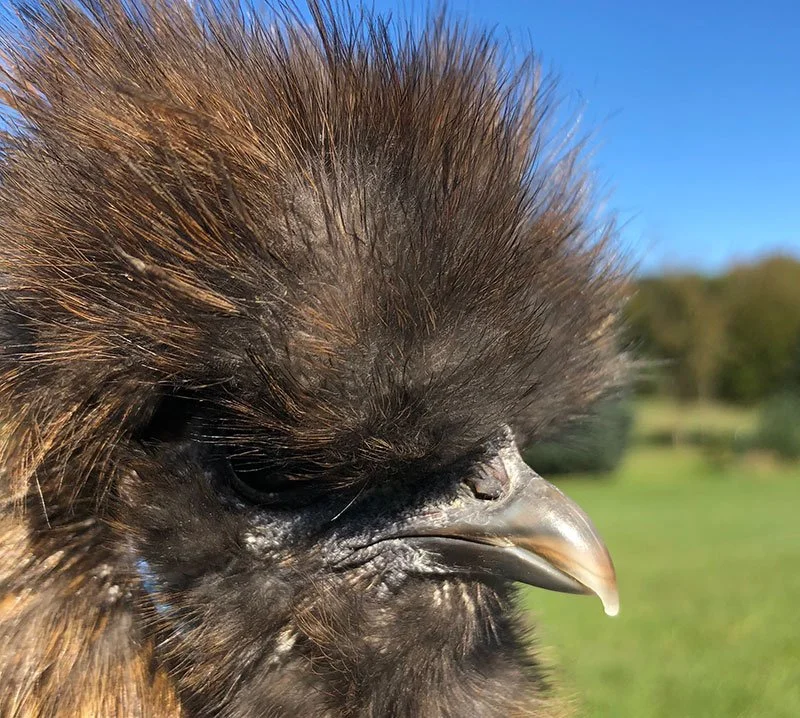
So while the Wake’s techniques for analyzing The Letter are a century behind the fancy forensic lamps of CSI that find the invisible evidence of body fluids, hairs and fibers, holding The Letter up to a primitive light source still leads to a breakthrough in our investigation, revealing four holes “made by a pronged instrument.” (124:2-3) A four-pronged instrument: sounds like a fork. Perhaps the fork of a professor, “Brotfressor Prenderguest” (124:15), poking at the letter paper with his fork at the breakfast table. But the professor is a “deeply religious” man (124:12); he wouldn’t harm The Letter. So perhaps the four punctures are from the beak of Belinda the Hen who plucked out The Letter from the litter.

The Professor at the Breakfast Table, O.W.Holmes, 1903 (Fisher Library)
Spoiler alert: if you do not want the identity of The Letter-Writer revealed until the very last line of today’s excerpt, please jump ahead to Richard’s reading and then feel free to come back. For the rest of you who are fine to solve the mystery now or already know it, I’ll carry on.
The beginning and middle of Chapter 5 attribute The Letter to the Wake’s female protagonist, Anna Livia Plurabelle, a woman, wife of HCEarwick, mother of Shaun, Shem and Issy. The opening describes “her untitled mamafesta”, a mother-wife’s defense of her much maligned husband (104:4). The middle of Chapter 5, on page 111, gives us The Letter itself, albeit strangely unpunctuated and unsigned, and it too appears to be the product of a woman: it’s addressed to another woman named Maggie or Margaret; it includes details like “wedding cakes” that typically (and certainly last century) fall within a woman’s purview; and two pages later we hear commentary about what she writes, or “schwrites”, in The Letter, culminating in a 100-letter thunderword focused on Women and Literature. But now, at the end of Chapter 5, attributing The Letter to ALP seems increasingly doubtful. Our previous episode’s excerpt, for example, concluded by asking, provocatively, if “the vaulting feminine libido” of The Letter was perhaps “sternly controlled and easily repersuaded by the uniform matteroffactness of a meandering male fist?” (123:8-10) And if so, perhaps that male is one of ALP’s sons: “Formelly confounded with amother.” (125:11-12) But that son couldn’t possibly be the do-gooder Shaun; it would have to be the good-for-nothing Shem: “a sigh for shyme (O, the petty-bonny rouge!)” (124:27-28) He sounds not only devious, but, in his rougey redness, devilish — precisely the kind of character capable of epistolary deception. No wonder The Letter wasn’t signed. It’s the work of a fraud, and Shem is far from faithful. As we’ll hear today: “he remains years most fainfully” (124:31-32).

Shem is “the Penman” behind The Letter, much to the disgust of the Wake, which can’t help but spit invective on him at mere mention of his name: “kak, pfooi, bosh” (125:22-23).
Thus The Letter of Chapter 5, ostensibly written by ALP in defense of HCE, is actually penned by their disreputable son, Shem. Our chapter, which began with an Eve in defense of Adam — “Annah the Allmaziful, the Everliving, the Bringer of Plurabilities, haloed be her eve” (104:1-2) — ultimately ends with Cain. (Not, mind you, Horatio Caine of CSI: Miami, but his biblical forebear.)
We’ve reached a turning point in our novel: the next two chapters, 6 and 7, will focus on the relationship and, in the spirit of Cain and Abel, conflict of brothers Shem and Shaun.
Now it’s time for Richard’s performance of James Joyce’s Finnegans Wake, page 123 line 11 to the end of page 125 for the conclusion of Chapter 5. The performance was filmed and recorded at the Thomas Fisher Rare Book Library, University of Toronto on October 21st, 2024 with a live audience. We’ll open with a musical introduction, which I wrote for piano trio with Tyler Emond on bass and Jinu Isac on drums. The title of this short piece is “Breakfast”.
[Music: “Breakfast,” instrumental with Tyler Emond on bass, Jinu Isac on drums, Adam Seelig on piano, from the Finnegans Wake film series.]
[Richard Harte reads Finnegans Wake 123:11-125:23]
[123] Duff-Muggli, who now may be quoted by very kind arrange-
ment (his dectroscophonious photosensition under suprasonic
light control may be logged for by our none too distant futures
as soon astone values can be turned out from Chromophilomos,
Limited at a millicentime the microamp), first called this kind of
paddygoeasy partnership the ulykkhean or tetrachiric or quad-
rumane or ducks and drakes or debts and dishes perplex (v. Some
Forestallings over that Studium of Sexophonologistic Schizophre-
nesis, vol. xxiv, pp. 2-555) after the wellinformed observation,
made miles apart from the Master by Tung-Toyd (cf. Later
Frustrations amengst the Neomugglian Teachings abaft the Semi-
unconscience, passim) that in the case of the littleknown periplic
bestteller popularly associated with the names of the wretched
mariner (trianforan deffwedoff our plumsucked pattern shape-
keeper) a Punic admiralty report, From MacPerson's Oshean
Round By the Tides of Jason's Cruise, had been cleverly capsized
and saucily republished as a dodecanesian baedeker of the every-
tale-a-treat-in-itself variety which could hope satisfactorily to
tickle me gander as game as your goose.
The unmistaken identity of the persons in the Tiberiast du-
plex came to light in the most devious of ways. The original
document was in what is known as Hanno O'Nonhanno's un-
brookable script, that is to say, it showed no signs of punctua-
tion of any sort. Yet on holding the verso against a lit rush this
new book of Morses responded most remarkably to the silent
query of our world's oldest light and its recto let out the piquant
[124] fact that it was but pierced butnot punctured (in the university
sense of the term) by numerous stabs and foliated gashes made
by a pronged instrument. These paper wounds, four in type,
were gradually and correctly understood to mean stop, please
stop, do please stop, and O do please stop respectively, and
following up their one true clue, the circumflexuous wall of a
singleminded men's asylum, accentuated by bi tso fb rok engl
a ssan dspl itch ina, — Yard inquiries pointed out ——> that they
ad bîn "provoked" ay ∧ fork, of à grave Brofèsor; àth é's Brèak
— fast — table; ; acùtely profèššionally piquèd, to = introdùce a
notion of time [ùpon à plane (?) sù ' ' fàç'e'] by pùnct! ingh oles
(sic) in iSpace?! Deeply religious by nature and position, and
warmly attached to Thee, and smearbread and better and Him
and newlaidills, it was rightly suspected that such ire could not
have been visited by him Brotfressor Prenderguest even under-
wittingly, upon the ancestral pneuma of one whom, with rheuma,
he venerated shamelessly at least once a week at Cockspur Com-
mon as his apple in his eye and her first boys' best friend and,
though plain English for a married lady misled heaps by the way,
yet when some peerer or peeress detected that the fourleaved
shamrock or quadrifoil jab was more recurrent wherever the
script was clear and the term terse and that these two were the
selfsame spots naturally selected for her perforations by Dame
Partlet on her dungheap, thinkers all put grown in waterung-
spillfull Pratiland only and a playful fowl and musical me and
not you in any case, two and two together, and, with a swarm
of bisses honeyhunting after, a sigh for shyme (O, the petty-
bonny rouge!) separated modest mouths. So be it. And it was.
The lettermaking of the explots of Fjorgn Camhelsson when he
was in the Kvinnes country with Soldru's men. With acknow-
ledgment of our fervour of the first instant he remains years most
fainfully. For postscrapt see spoils. Though not yet had the sailor
sipped that sup nor the humphar foamed to the fill. And fox and
geese still kept the peace around L'Auberge du Père Adam.
Small need after that, old Jeromesolem, old Huffsnuff, old
Andycox, old Olecasandrum, for quizzing your weekenders come
[125] to the R.Q. with: shoots off in a hiss, muddles up in a mussmass
and his whole's a dismantled noondrunkard's son. Howbeit we
heard not a son of sons to leave by him to oceanic society in his
old man without a thing in his ignorance, Tulko MacHooley.
And it was thus he was at every time, that son, and the other
time, the day was in it and after the morrow Diremood is the
name is on the writing chap of the psalter, the juxtajunctor of a
dearmate and he passing out of one desire into its fellow. The
daughters are after going and loojing for him, Torba's nice-
lookers of the fair neck. Wanted for millinary servance to
olderly's person by the Totty Askinses. Formelly confounded
with amother. Maybe growing a moustache, did you say, with
an adorable look of amuzement? And uses noclass billiardhalls
with an upandown ladder? Not Hans the Curier though had he
had have only had some little laughings and some less of cheeks
and were he not so warried by his bulb of persecussion he could
have, ay, and would have, as true as Essex bridge. And not Go-
pheph go gossip, I declare to man! Noe! To all's much relief
one's half hypothesis of that jabberjaw ape amok the showering
jestnuts of Bruisanose was hotly dropped and his room taken up
by that odious and still today insufficiently malestimated note-
snatcher (kak, pfooi, bosh and fiety, much earny, Gus, poteen?
Sez you!) Shem the Penman.
[End of excerpt]
Adam Seelig: That was Richard Harte reading the concluding pages of Chapter 5 from Finnegans Wake, recorded live at the Fisher Rare Book Library in Toronto on October 21st, 2024.
Join us for Episode 29 when Richard begins Chapter 6 of Finnegans Wake. This podcast series is taking a break between chapters to focus on the film production and editing of future chapters, so please note that the exact date of the next episode’s release is to be determined, and we’ll then resume our fortnightly podcast releases every other Thursday. In the meantime, to be sure you don’t miss the episode, why not follow or subscribe to this podcast?
[Music: “Closing Credits (Ch05),” instrumental with Tyler Emond on bass, Jinu Isac on drums, Adam Seelig on piano, from the Finnegans Wake film series.]
For more on One Little Goat’s Finnegans Wake project, including transcripts of this podcast and the complete films of Chapters 1, 2 and 3 visit our website at OneLittleGoat.org. And to hear about upcoming performances and screenings, join our mailing list, also on our website. One Little Goat Theatre Company is a nonprofit, artist-driven, registered charity in the United States and Canada that depends on donations from individuals to make our productions, including this one, possible. If you’re able, please make a tax-deductible donation through our website, www.OneLittleGoat.org. Finnegans Wake is made possible by Friends of One Little Goat Theatre Company and the Emigrant Support Programme of the government of Ireland. Thank you for your support! And thank you to the artists for this episode: Richard Harte; Sound by William Bembridge; Stage Management by Sandi Becker; Directed by yours truly, Adam Seelig; Music arranged and performed on the piano by me, with Tyler Emond on bass and Jinu Isac on drums, recorded at Ghost Town Studio in Toronto. A big thanks to John Shoesmith, Special Collections Librarian, to David Fernández, Head of Rare Books and Special Collections, and to their colleagues at the Fisher Rare Book Library at the University of Toronto, as well as to our wonderful live audience. Thank you to the team at the Irish Consulate in Toronto. And thank you to Production Consultants Cathy Murphy and Andrew Moodie. Thank you for listening!
[Music fades out] [End of Ep028]
Mentioned: CSI: Dublin, forensics of The Letter, Duff-Muggli, Jung and Freud, rushlight, four holes in The Letter “made by a pronged instrument”, fork, beak of the hen, The Letter as written by ALP (female), The Letter as forged by one of her sons (male), do-gooder Shaun vs. good-for-nothing Shem, Shem the Penman, ALP/Eve in defense of HCE/Adam, Shaun/Abel and Shem/Cain, turning point in novel, transition to relationship and conflict of brothers, synopsis.
Resources: Transcript for this episode, including the text of Finnegans Wake.
Finnegans Wake (1939) by James Joyce: there are many free copies of FW to read online or download, e.g. finwake.com
James Joyce Digital Archive, “Chicken Guide” to Finnegans Wake provides a ‘plain English’ paraphrase of each chapter by Danis Rose.
Richard Ellmann’s biography of James Joyce. Oxford University Press, 1982.
Edmund Epstein, A Guide through Finnegans Wake. University Press of Florida, 2009.
Adaline Glasheen, Third Census of Finnegans Wake: An Index of the Characters and Their Roles, University of California Press, 1977.
John Gordon’s annotations on his Finnegans Wake blog.
Roland McHugh, Annotations to Finnegans Wake (4th edition). Johns Hopkins University Press, 2016.
Raphael Slepon, fweet.org
William York Tindall, A Reader’s Guide to Finnegans Wake. Syracuse University Press, 1996.