Episode 025: Letter from Boston, Thunderword #5 (109:1-114:20)

JAMES JOYCE’S FINNEGANS WAKE
Episode 025:
Letter from boston, thunderword #5

PAGE 109:1-114:20 | CHAPTER 5 | 2026-07-02

PODCAST TRANSCRIPT

[Music: Instrumental of “The Alphabet Song (Variation On)” with Tyler Emond on bass, Jinu Isac on drums, Adam Seelig on piano, from the Finnegans Wake film series. Music fades out]

Adam Seelig: Welcome to James Joyce’s divine and delirious comedy, Finnegans Wake. In this episode, number 25, we’ll hear Irish-Canadian actor — and my good friend and colleague — Richard Harte performing pages 109 to 114 from Chapter 5 of Joyce’s last novel. I’m Adam Seelig, the director of the reading you’ll soon hear. This episode is releasing on July the 2nd of 2026, so I’d like to wish all the Canadian listeners out there a Happy belated Canada Day; and to the Americans, a Happy early Fourth of July.
[Music: “Breakfast,” instrumental with Tyler Emond on bass, Jinu Isac on drums, Adam Seelig on piano, from the Finnegans Wake film series.]

Adam Seelig: Finnegans Wake is a production of One Little Goat Theatre Company. One Little Goat is filming and recording all 17 chapters (roughly 30 hours) of Joyce’s Finnegans Wake before live audiences in various locations, screening and releasing them along the way, with the aim of completing the entire book for its 90th birthday, May 4, 2029. One Little Goat Theatre Company is an official charity in Canada and the United States. To help us produce this first-of-its-kind filmed reading series — of which we’ve filmed 8 chapters so far, with 9 more to go — please visit OneLittleGoat.org to make a charitable donation. Your donation enables us to bring this production to audiences and helps support the outstanding artists who make it possible. To be the first to hear about our live tapings, events, and screenings, please join our mailing list, also at OneLittleGoat.org. [Music fades out]

Adam Seelig: Boston, Massachusetts is the birthplace of the Irish American folk song that gives Finnegans Wake its title. It’s also the origin of the letter at the heart of Chapter 5 and of today’s excerpt — the letter written by ALP that will, she hopes, clear the name of her publicly maligned spouse, HCE. But was it in fact written by ALP? This mystery will continue to haunt Chapter 5 right up to the chapter’s very last line.

Today’s excerpt begins by focusing on The Envelope of The Letter, asking us if anyone has ever “looked sufficiently longly at a quite everydaylooking stamped addressed envelope?” Well if you haven’t, you’re about to, because, as the text tells us, an envelope is to a letter what underwear is to the naked body. It’s far more suggestive than you may have thought.

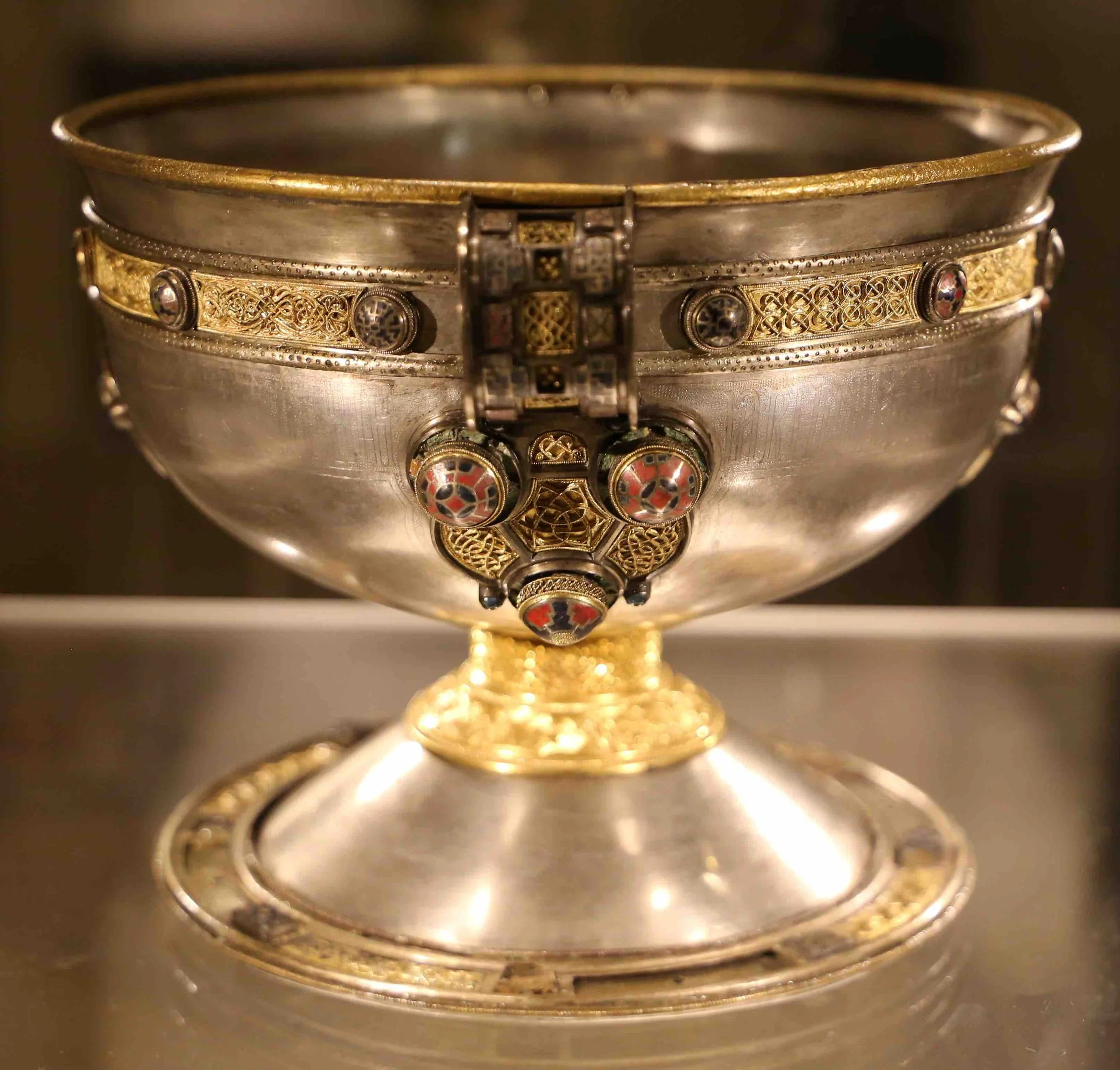
Ardagh Chalice, 8th Century CE (National Museum of Ireland)

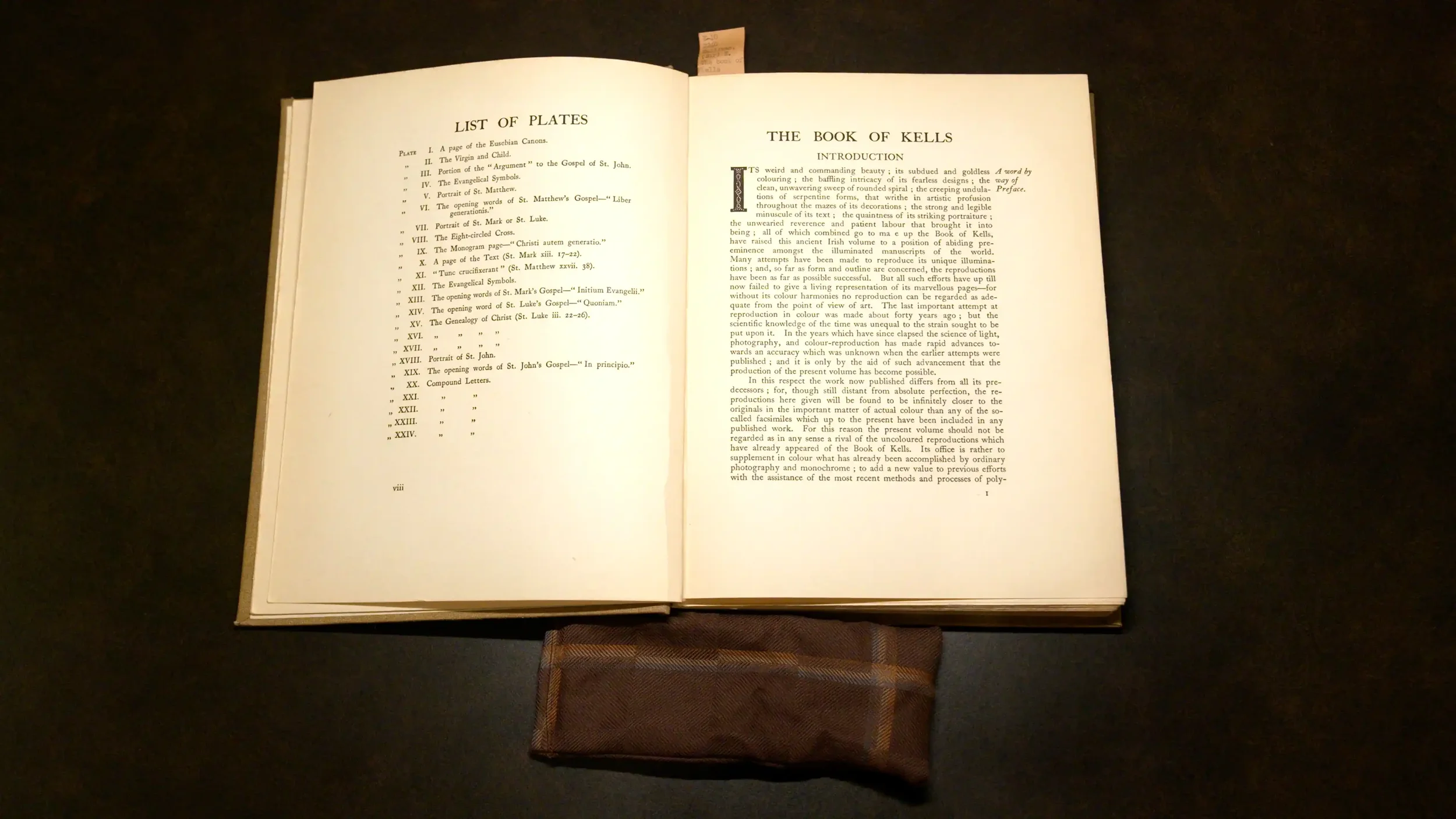
We then return to our trusted hen, Belinda, who has pecked and picked out The Letter from a dump of litter; a littery letter that might even hold up as literature. Remember (and if you don’t, Finnegans Wake now reminds us), some of Ireland’s greatest treasures were discovered in even muckier contexts, like the Ardagh Chalice, the 1,100-year-old gold-silver-bronze-brass-and-pewter cup discovered accidentally in 1868 by two boys, Jim Quin and Paddy Flanagan, who were simply digging in the dirt for potatoes. So too the Book of Kells, Ireland’s extraordinary literary treasure, was discovered a thousand years ago hidden under — you guessed it — a pile of dirt. The Book of Kells will come up later in this chapter in more detail, and I’ve posted in the transcript for this podcast episode an image of the Ardagh Chalice; the real thing is on display at the National Museum of Ireland.

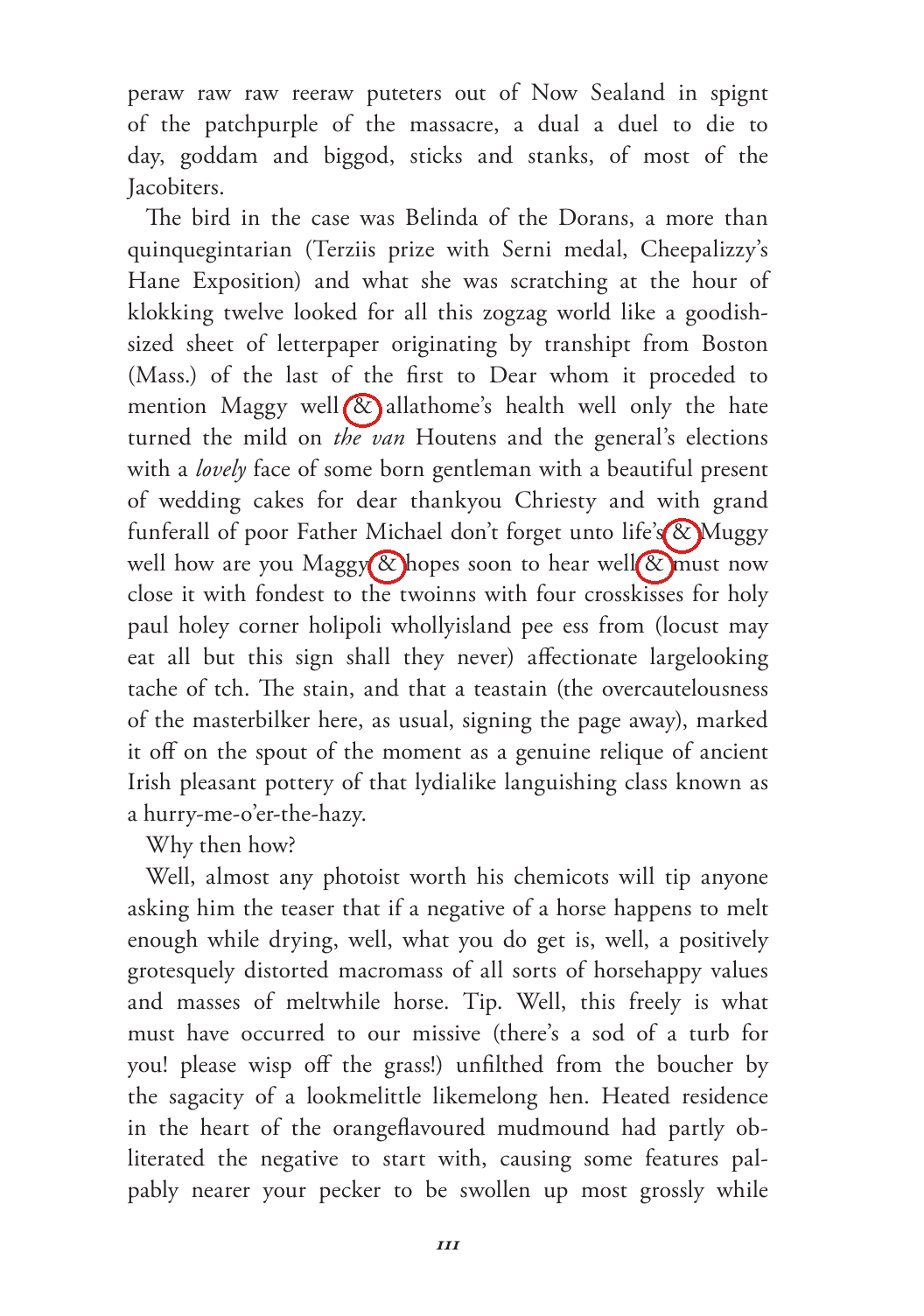
Now, on page 111, we get to hear The Letter itself. Like most letters, it was mailed from somewhere; in this case, “Boston (Mass.)”. Like most letters, it is dated; in this case, “the last of the first,” or the last day of the first month, i.e. the 31st of January. And like most letters, it begins with the word “Dear”. But who is the addressee? Here’s where the dream language of the Wake, true to form, becomes playfully elusive: “Dear whom it proceded to mention”. Based on these first words, the addressee appears to be nameless. But the very next word is the name “Maggy”. “Dear whom it proceded to mention Maggy”. So is the letter written to “Maggy”? Well, the very next words give us: “Dear whom it proceded to mention Maggy well & allathome's health well…” etc.

If The Letter had any commas, we could have determined to whom it’s addressed. But as it flows punctuationlessly, we can only guess at where its first comma might have gone. Was ALP’s intention — if indeed ALP wrote the letter — was her intention?:
“Dear whom it proceded to mention [COMMA,] Maggy well & allathome's health well…” etc.
Or was the intention?:
“Dear whom it proceded to mention Maggy [COMMA,] well & allathome's health well…” etc.

Without that vital comma, the Wake, always open to possibilities, ever rich in ambiguity, keeps its options open. Here’s a quick preview of Richard Harte setting up and reading The Letter in today’s excerpt:

…a goodish-sized sheet of letterpaper originating by transhipt from Boston (Mass.) of the last of the first to Dear whom it proceded to mention Maggy well & allathome's health well only the hate turned the mild on the van Houtens and the general's elections with a lovely face of some born gentleman with a beautiful present of wedding cakes for dear thankyou Chriesty and with grand funferall of poor Father Michael… (111:8-15)

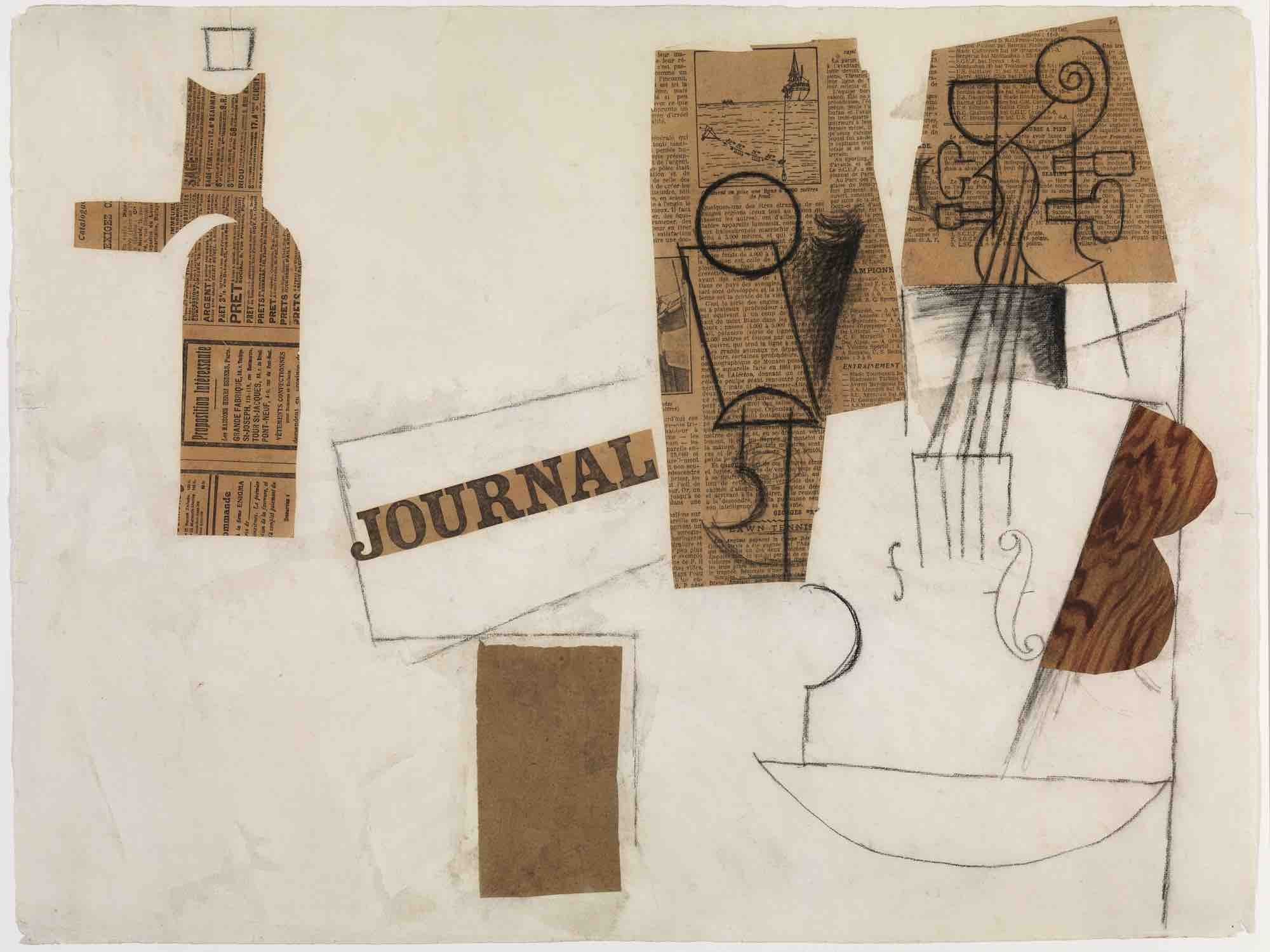
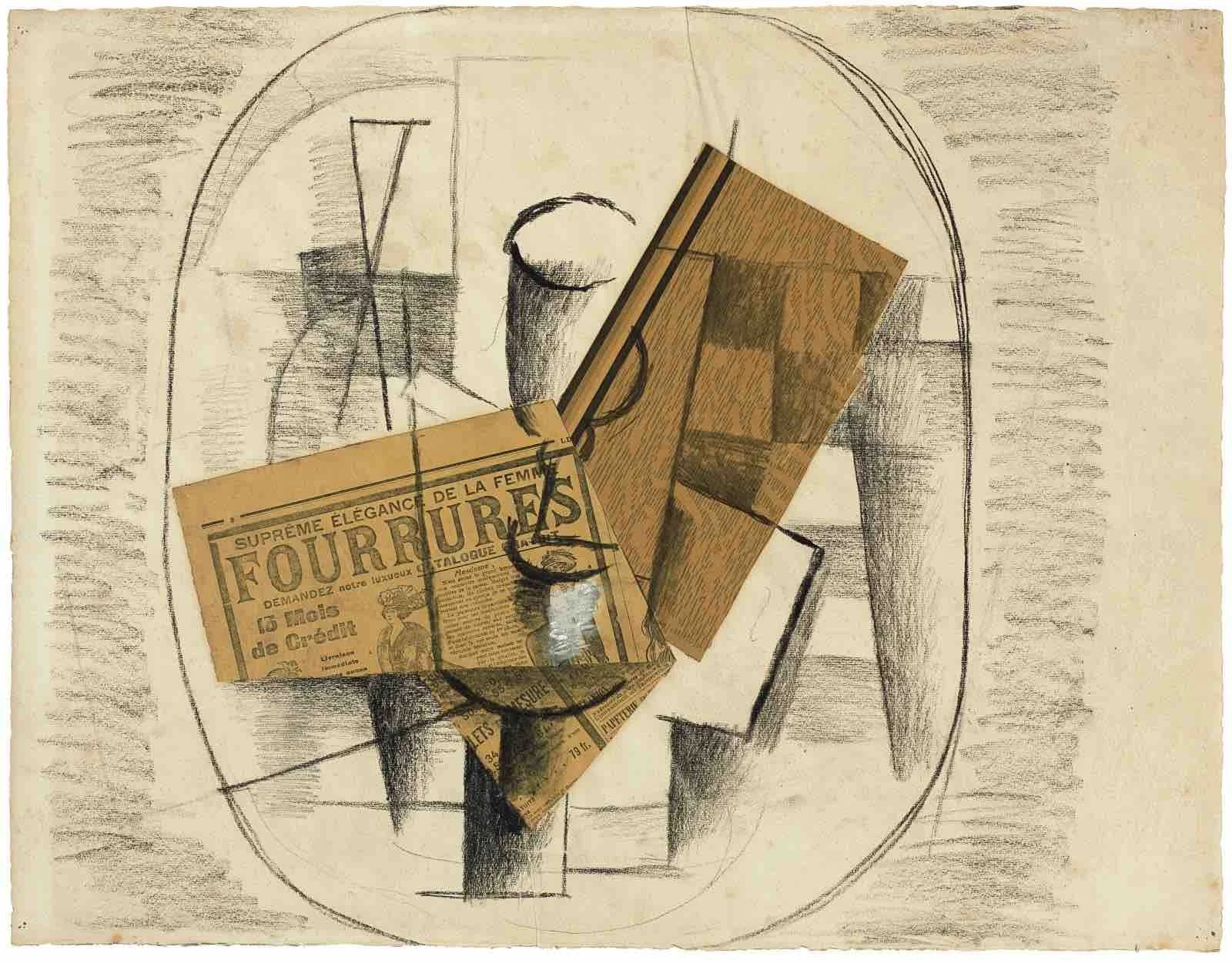
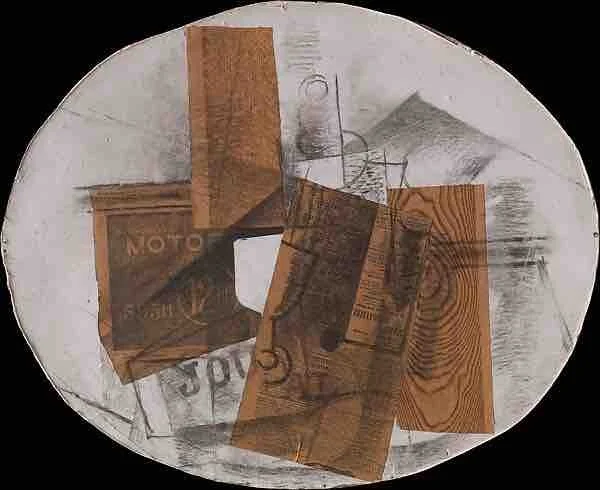
I’ll save the rest so you can hear it all in context, but what you can probably already gather from this sample is that The Letter — perhaps reflecting the pile of litter in which Belinda the Hen found it — is a jumble of epistolary tropes, including news from home with reports on the weather, people’s health, current events, a wedding, a funeral (or in the language of the Wake, a “funferall”, echoing Tim Finnegan’s funeral in the Irish American folk song, “Lots of fun at Finnegan’s Wake”). For me, The Letter is an auditory equivalent of the cubist paintings and collages of Picasso and Braque, especially those that include scattered snippets of newspaper text (I’ll post some of these images in the podcast transcript). Picasso and Braque’s cubist works never give us a whole, autonomous story from Le Journal, but they certainly convey the experience of taking in the newspaper in bits and pieces. Similarly, The Letter of the Wake may not give us a whole, autonomous story from Boston, but it certainly conveys, through collage, the personal experience of writing and receiving news from Irish America. Collage, cubism, bricolage, composite — there are numerous ways to describe the style of The Letter, but perhaps pastiche comes closest, because Joyce felt it fitting once in his own personal correspondence (which, perhaps disappointingly, includes proper punctuation) to describe himself as a ‘cut-and-paste’ author: “I am quite content to go down to posterity as a scissors and paste man for that seems to me a harsh but not unjust description.” (Ellmann 626)

Above, clockwise from top left: Pablo Picasso “La bouteille de Suze” (1912); “Siphon, Glass, Newspaper, and Violin (1912); Georges Braque, “Verres et bouteilles (Fourrures)” (1914); “Bottle, Glass, Newspaper” (1914).

And while Picasso and Braque’s works often picture a bottle of wine or beer near their newspapers, the Wake prefers tea, choosing to put it on the very letter itself — quite literally, the only punctuation mark in The Letter is at the end, where, in lieu of a conventional period, we find a big tea stain, or in the language of the Wake, a “largelooking tache of tch. The stain, and that a teastain…”

For all my comparisons of The Letter to cubism, the Wake itself, in the next paragraph, likens it to viewing a photograph of a horse whose negative melted while under development. Blurry, in other words, and hard to make out, likely because of the time The Letter spent buried under sod.

We’re then treated to a brief cameo by the recurring character, Kate, who, as HCE and ALP’s charwoman, is well accustomed to dealing with muck. Kate made her first of many appearances back in Chapter 1 as the mock tour guide of the Museyroom (Ep003), and you’ll quickly recognize her in today’s excerpt when you hear her single-syllable signature, “Tip” (112:2), a word that also resonates with the pile of trash in which The Letter turned up.

Barack Obama (right) endorsing Kamala Harris for President in 2024

The following paragraph opens with a short, rousing sentence: “Lead, kindly fowl!” and goes on to champion womankind, reminding us that women have always led the way for men. Coincidentally, 10 days before we filmed and recorded this reading of Chapter 5 back in October of 2024, former American President Barack Obama, during the fierce presidential election between Donald Trump (a man) and Kamala Harris (a woman), urged black American males to vote for Harris in a way that meshed perfectly with this paragraph in the Wake. As Obama put it, “Women in our lives have been getting our backs this entire time. When we get in trouble and the system isn’t working for us, they’re the ones out there marching and protesting.” Sounds a lot like ALP coming to HCE’s defence.

The next paragraph focuses on ALP’s writing of her letter, telling us repeatedly about what “schwrites” (113), or ‘what she writes’. And this epistolary paragraph includes the fifth of the Wake’s 10 thunderwords — those extraordinary 100-letter words comprised of multilingual phonemes. But this thunderword differs from the others in two significant ways.

(1) Unlike the previous four thunderwords, this one occurs not at the end of the paragraph as an emphatic and dramatic exclamation, but in the middle as part of the paragraph’s ongoing flow. You almost wouldn’t notice it’s a thunderword, so little attention does it call to itself. In this sense, it draws more on ALP’s work behind-the-scenes than on HCE’s all too publicized activities. And by not ending the paragraph, as the previous thunderwords did, this very different thunderword draws on ALP’s continuously flowing nature, her riverrunning character.

(2) The previous thunderwords centred on one word or concept and mashed together various polylingual phonemes that related to it. Thunderwords 1 & 2 are comprised of words and phonemes meaning “thunder”. Thunderwords 3 & 4 mostly centre on words and phonemes for “shit” and “whore”, respectively. Today’s thunderword, on the other hand, Thunderword #5, seems more narrative than conceptual, more open to interpretation than singularly focused, more out-for-a-walk than rooted-in-place, more rolling, gentle, spread out thunder (if you will) than sharp, shocking crack.

Let’s take a look at it — but first, since my tongue gets too twisted, here’s a preview of Richard Harte reading it from today’s excerpt:

Thingcrooklyexineverypasturesixdixlikencehimaroundhersthemaggerbykinkinkankanwithdownmindlookingated. (113:9-11)

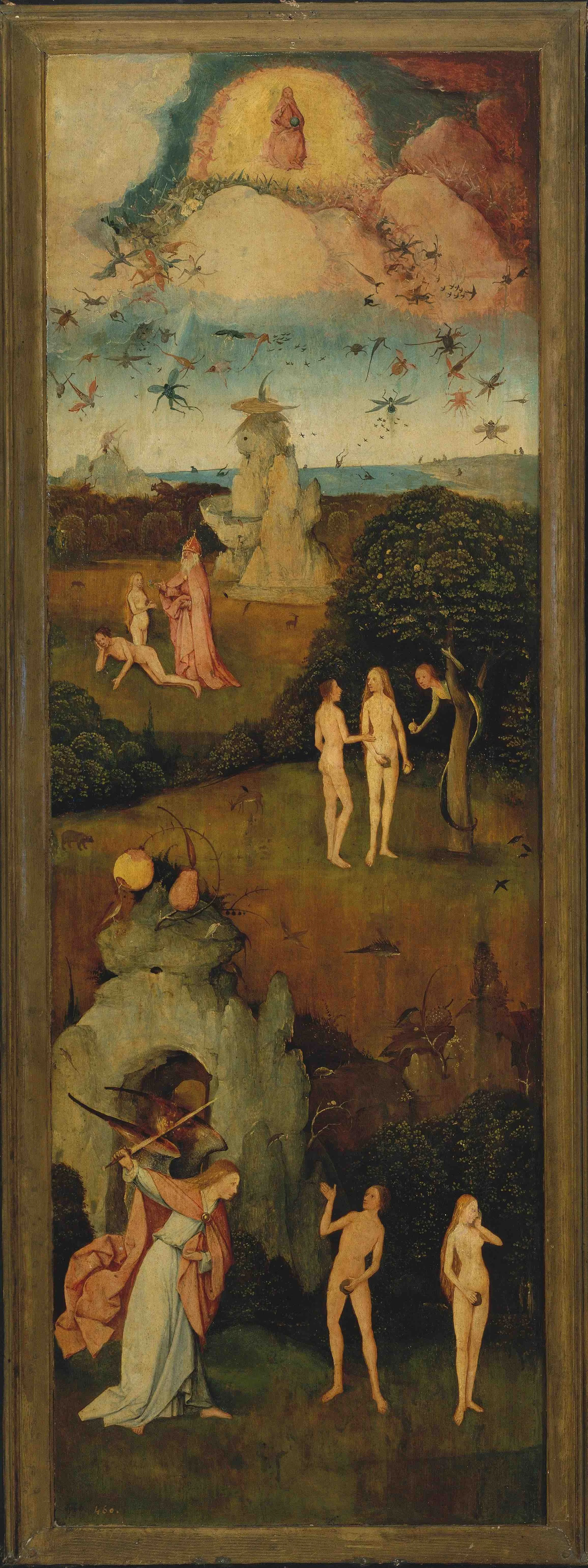
“…downmindlookingated” — Hieronymus Bosch, left panel of “Haywain Triptych” (1515)

As with everything in Finnegans Wake, there are many ways to interpret this thunderword. For example, Women and Literature are two themes that emerge here, especially in light of this paragraph’s recurring motif, she writes, or “schwrites”, i.e. She, for Women; and Writes, for Literature.

For women, we can tease out phonemes and words like “hin” for hen; “eve” for womankind’s Biblical forebear; “hers”; “magger” for Maggie; “kankan” for the energetic female dance.

For literature, we can tease out “ingcr” for ink; “crookly” for the Norwegian trykke, meaning print; “exi” for essay; “past” for post, i.e. mailing letters; “sthem” for Shem the Penman, ALP’s writer son, whom we’ll see more of as the Wake continues; “magger” for magazine; “inkink” for, well, ink and more ink; “loo” for lu, which is French for reading; “ated” for edit. (And I want to give a shoutout for these literary interpretations to The Role of Thunder in Finnegans Wake by son of Marshall McLuhan, Eric McLuhan, whose own son, incidentally, attended the reading you’re about to hear.)

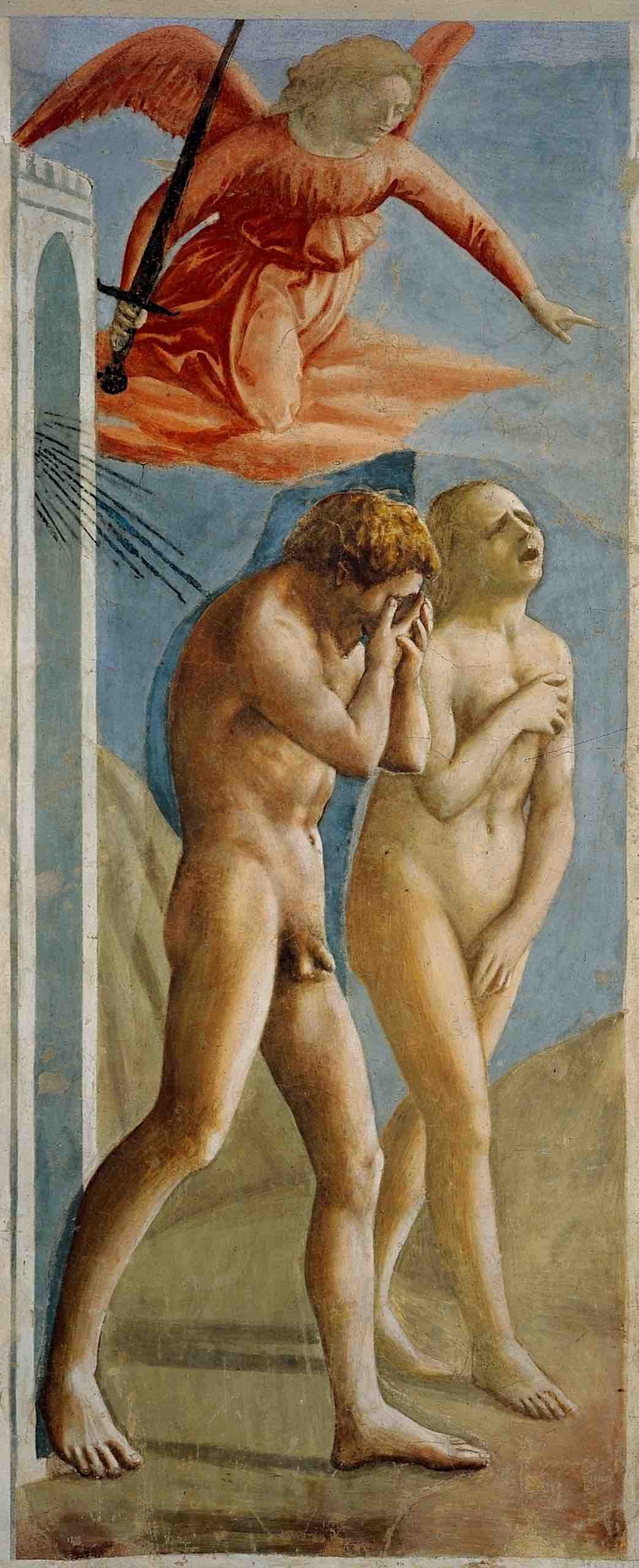
“…downmindlookingated” — Masaccio, from “The Expulsion from the Garden of Eden” fresco (1425)

In this female epistolary thunderword I also see elements of Eve and Adam, whom we met in the opening line of Finnegans Wake, and the sneaky serpent, to whom we owe humanity’s loss of paradise, our fall, our original sin of sex. Through this lens of ALP and HCE as our imperfect Biblical ancestors Eve and Adam, we can tease out “Thingcrooklyex” for the crooked, sexual snake; “eve” for Eve, naturally; “rypast” for Eve’s first repast, i.e. the forbidden fruit commonly depicted as an apple; “pasture” for the Garden of Eden; and “downmindlookingated” for Eve and Adam, having fallen, now locked out of Paradise, looking down — perhaps as painted by Renaissance artists Masaccio or Hieronymus Bosch (whose images I’ll include in the transcript). This suggestion of humanity’s sexual fall also helps account for the “dix” in this 100-letter word. So Chapter 5 of Finnegans Wake isn’t all hen, it’s also cock.

Now it’s time for Richard’s performance of James Joyce’s Finnegans Wake, page 109 line 1 to page 114 line 20 of Chapter 5. The performance was filmed and recorded at the Thomas Fisher Rare Book Library, University of Toronto on October 21st, 2024 with a live audience. And since today’s excerpt could easily be titled “The Letter,” the brief opening music you’ll hear, which I wrote for piano trio with Tyler Emond on bass and Jinu Isac on drums, loosely quotes Joe Cocker’s 1970 hit “The Letter”.

[Music: “Boston, Tea, Letter (Ch05),” instrumental with Tyler Emond on bass, Jinu Isac on drums, Adam Seelig on piano, from the Finnegans Wake film series.] [Richard Harte reads Finnegans Wake 109:1-114:20]

[109]        Luckily there is another cant to the questy. Has any fellow, of
the dime a dozen type, it might with some profit some dull even-
ing quietly be hinted — has any usual sort of ornery josser, flat-
chested fortyish, faintly flatulent and given to ratiocination by
syncopation in the elucidation of complications, of his greatest
Fung Yang dynasdescendanced, only another the son of, in fact,
ever looked sufficiently longly at a quite everydaylooking stamped
addressed envelope? Admittedly it is an outer husk: its face, in
all its featureful perfection of imperfection, is its fortune: it ex-
hibits only the civil or military clothing of whatever passion-
pallid nudity or plaguepurple nakedness may happen to tuck it-
self under its flap. Yet to concentrate solely on the literal sense or
even the psychological content of any document to the sore
neglect of the enveloping facts themselves circumstantiating it is
just as hurtful to sound sense (and let it be added to the truest
taste) as were some fellow in the act of perhaps getting an intro
from another fellow turning out to be a friend in need of his, say,
to a lady of the latter's acquaintance, engaged in performing the
elaborative antecistral ceremony of upstheres, straightaway to run
off and vision her plump and plain in her natural altogether, pre-
ferring to close his blinkhard's eyes to the ethiquethical fact that
she was, after all, wearing for the space of the time being some
definite articles of evolutionary clothing, inharmonious creations,
a captious critic might describe them as, or not strictly necessary
or a trifle irritating here and there, but for all that suddenly full
of local colour and personal perfume and suggestive, too, of so
very much more and capable of being stretched, filled out, if need
or wish were, of having their surprisingly like coincidental parts
separated don't they now, for better survey by the deft hand of
an expert, don't you know? Who in his heart doubts either that
the facts of feminine clothiering are there all the time or that the
feminine fiction, stranger than the facts, is there also at the same
time, only a little to the rere? Or that one may be separated from
the other? Or that both may then be contemplated simultaneously?
Or that each may be taken up and considered in turn apart from
the other?

[110]    Here let a few artifacts fend in their own favour. The river felt
she wanted salt. That was just where Brien came in. The country
asked for bearspaw for dindin! And boundin aboundin it got it
surly. We who live under heaven, we of the clovery kingdom,
we middlesins people have often watched the sky overreaching
the land. We suddenly have. Our isle is Sainge. The place. That
stern chuckler Mayhappy Mayhapnot, once said to repeation
in that lutran conservatory way of his that Isitachapel-Asitalukin
was the one place, ult aut nult, in this madh vaal of tares (whose
verdhure's yellowed therever Phaiton parks his car while its
tamelised tay is the drame of Drainophilias) where the possible
was the improbable and the improbable the inevitable. If the pro-
verbial bishop of our holy and undivided with this me ken or no
me ken Zot is the Quiztune havvermashed had his twoe nails
on the head we are in for a sequentiality of improbable possibles
though possibly nobody after having grubbed up a lock of cwold
cworn aboove his subject probably in Harrystotalies or the vivle
will go out of his way to applaud him on the onboiassed back of
his remark for utterly impossible as are all these events they are
probably as like those which may have taken place as any others
which never took person at all are ever likely to be. Ahahn!
    About that original hen. Midwinter (fruur or kuur?) was in the
offing and Premver a promise of a pril when, as kischabrigies sang
life's old sahatsong, an iceclad shiverer, merest of bantlings ob-
served a cold fowl behaviourising strangely on that fatal midden
or chip factory or comicalbottomed copsjute (dump for short)
afterwards changed into the orangery when in the course of
deeper demolition unexpectedly one bushman's holiday its limon
threw up a few spontaneous fragments of orangepeel, the last
remains of an outdoor meal by some unknown sunseeker or place-
hider illico way back in his mistridden past. What child of a strand-
looper but keepy little Kevin in the despondful surrounding of
such sneezing cold would ever have trouved up on a strate that
was called strete a motive for future saintity by euchring the
finding of the Ardagh chalice by another heily innocent and
beachwalker whilst trying with pious clamour to wheedle Tip-

[111] peraw raw raw reeraw puteters out of Now Sealand in spignt
of the patchpurple of the massacre, a dual a duel to die to
day, goddam and biggod, sticks and stanks, of most of the
Jacobiters.
    The bird in the case was Belinda of the Dorans, a more than
quinquegintarian (Terziis prize with Serni medal, Cheepalizzy's
Hane Exposition) and what she was scratching at the hour of
klokking twelve looked for all this zogzag world like a goodish-
sized sheet of letterpaper originating by transhipt from Boston
(Mass.) of the last of the first to Dear whom it proceded to
mention Maggy well & allathome's health well only the hate
turned the mild on the van Houtens and the general's elections
with a lovely face of some born gentleman with a beautiful present
of wedding cakes for dear thankyou Chriesty and with grand
funferall of poor Father Michael don't forget unto life's & Muggy
well how are you Maggy & hopes soon to hear well & must now
close it with fondest to the twoinns with four crosskisses for holy
paul holey comer holipoli whollyisland pee ess from (locust may
eat all but this sign shall they never) affectionate largelooking
tache of tch. The stain, and that a teastain (the overcautelousness
of the masterbilker here, as usual, signing the page away), marked
it off on the spout of the moment as a genuine relique of ancient
Irish pleasant pottery of that lydialike languishing class known as
a hurry-me-o'er-the-hazy.
    Why then how?
    Well, almost any photoist worth his chemicots will tip anyone
asking him the teaser that if a negative of a horse happens to melt
enough while drying, well, what you do get is, well, a positively
grotesquely distorted macromass of all sorts of horsehappy values
and masses of meltwhile horse. Tip. Well, this freely is what
must have occurred to our missive (there's a sod of a turb for
you! please wisp off the grass!) unfilthed from the boucher by
the sagacity of a lookmelittle likemelong hen. Heated residence
in the heart of the orangeflavoured mudmound had partly ob-
literated the negative to start with, causing some features pal-
pably nearer your pecker to be swollen up most grossly while

[112] the farther back we manage to wiggle the more we need the loan
of a lens to see as much as the hen saw. Tip.
    You is feeling like you was lost in the bush, boy? You says:
It is a puling sample jungle of woods. You most shouts out:
Bethicket me for a stump of a beech if I have the poultriest no-
tions what the farest he all means. Gee up, girly! The quad gos-
pellers may own the targum but any of the Zingari shoolerim
may pick a peck of kindlings yet from the sack of auld hensyne.
    Lead, kindly fowl! They always did: ask the ages. What bird
has done yesterday man may do next year, be it fly, be it moult,
be it hatch, be it agreement in the nest. For her socioscientific
sense is sound as a bell, sir, her volucrine automutativeness right
on normalcy: she knows, she just feels she was kind of born to
lay and love eggs (trust her to propagate the species and hoosh
her fluffballs safe through din and danger!); lastly but mostly, in
her genesic field it is all game and no gammon; she is ladylike in
everything she does and plays the gentleman's part every time.
Let us auspice it! Yes, before all this has time to end the golden
age must return with its vengeance. Man will become dirigible,
Ague will be rejuvenated, woman with her ridiculous white bur-
den will reach by one step sublime incubation, the manewanting
human lioness with her dishorned discipular manram will lie
down together publicly flank upon fleece. No, assuredly, they are
not justified, those gloompourers who grouse that letters have
never been quite their old selves again since that weird weekday
in bleak Janiveer (yet how palmy date in a waste's oasis!) when
to the shock of both, Biddy Doran looked at literature.
    And. She may be a mere marcella, this midget madgetcy,
Misthress of Arths. But. It is not a hear or say of some anomo-
rous letter, signed Toga Girilis, (teasy dear). We have a cop of
her fist right against our nosibos. We note the paper with her
jotty young watermark: Notre Dame du Bon Marché. And she
has a heart of Arin! What lumililts as she fols with her falli-
mineers and her nadianods. As a strow will shaw she does the
wind blague, recting to show the rudess of a robur curling and
shewing the fansaties of a frizette. But how many of her readers

[113] realise that she is not out to dizzledazzle with a graith uncouthre-
ment of postmantuam glasseries from the lapins and the grigs.
Nuttings on her wilelife! Grabar gooden grandy for old almea-
nium adamologists like Dariaumaurius and Zovotrimaserov-
meravmerouvian; (dmzn!); she feel plain plate one flat fact thing
and if, lastways firdstwise, a man alones sine anyon anyons
utharas has no rates to done a kik at with anyon anakars about
tutus milking fores and the rereres on the outerrand asikin the
tutus to be forrarder. Thingcrooklyexineverypasturesixdix-
likencehimaroundhersthemaggerbykinkinkankanwithdownmind-
lookingated. Mesdaims, Marmouselles, Mescerfs! Silvapais! All
schwants (schwrites) ischt tell the cock's trootabout him. Ka-
pak kapuk. No minzies matter. He had to see life foully the
plak and the smut, (schwrites). There were three men in him
(schwrites). Dancings (schwrites) was his only ttoo feebles.
With apple harlottes. And a little mollvogels. Spissially (schwrites)
when they peaches. Honeys wore camelia paints. Yours very
truthful. Add dapple inn. Yet is it but an old story, the tale of
a Treestone with one Ysold, of a Mons held by tentpegs and his
pal whatholoosed on the run, what Cadman could but Badman
wouldn't, any Genoaman against any Venis, and why Kate takes
charge of the waxworks.
    Let us now, weather, health, dangers, public orders and other
circumstances permitting, of perfectly convenient, if you police,
after you, policepolice, pardoning mein, ich beam so fresch, bey?
drop this jiggerypokery and talk straight turkey meet to mate, for
while the ear, be we mikealls or nicholists, may sometimes be in-
clined to believe others the eye, whether browned or nolensed,
find it devilish hard now and again even to believe itself. Habes
aures et num videbis? Habes oculos ac mannepalpabuat?
Tip! Draw-
ing nearer to take our slant at it (since after all it has met with
misfortune while all underground), let us see all there may remain
to be seen.
    I am a worker, a tombstone mason, anxious to pleace avery-
buries and jully glad when Christmas comes his once ayear. You
are a poorjoist, unctuous to polise nopebobbies and tunnibelly

[114] soully when 'tis thime took o'er home, gin. We cannot say aye
to aye. We cannot smile noes from noes. Still. One cannot help
noticing that rather more than half of the lines run north-south
in the Nemzes and Bukarahast directions while the others go
west-east in search from Maliziies with Bulgarad for, tiny tot
though it looks when schtschupnistling alongside other incuna-
bula, it has its cardinal points for all that. These ruled barriers
along which the traced words, run, march, halt, walk, stumble
at doubtful points, stumble up again in comparative safety seem
to have been drawn first of all in a pretty checker with lamp-
black and blackthorn. Such crossing is antechristian of course,
but the use of the homeborn shillelagh as an aid to calligraphy
shows a distinct advance from savagery to barbarism. It is
seriously believed by some that the intention may have been
geodetic, or, in the view of the cannier, domestic economical.
But by writing thithaways end to end and turning, turning and
end to end hithaways writing and with lines of litters slittering
up and louds of latters slettering down, the old semetomyplace
and jupetbackagain from tham Let Rise till Hum Lit. Sleep,
where in the waste is the wisdom?
[End of excerpt]

Adam Seelig: That was Richard Harte reading pages 109 to 114 from Chapter 5 of Finnegans Wake, recorded live at the Fisher Rare Book Library in Toronto on October 21st, 2024. Join us for Episode 26 in a fortnight for Richard Harte’s continuation of Chapter 5. In the meantime, to be sure you don’t miss the episode, why not follow or subscribe to this podcast?

[Music: “Closing Credits (Ch05),” instrumental with Tyler Emond on bass, Jinu Isac on drums, Adam Seelig on piano, from the Finnegans Wake film series.]

For more on One Little Goat’s Finnegans Wake project, including transcripts of this podcast and the complete films of Chapters 1, 2 and 3 visit our website at OneLittleGoat.org. And to hear about upcoming performances and screenings, join our mailing list, also on our website. One Little Goat Theatre Company is a nonprofit, artist-driven, registered charity in the United States and Canada that depends on donations from individuals to make our productions, including this one, possible. If you’re able, please make a tax-deductible donation through our website, www.OneLittleGoat.org

Finnegans Wake is made possible by Friends of One Little Goat Theatre Company and the Emigrant Support Programme of the government of Ireland. Thank you for your support! And thank you to the artists for this episode: Richard Harte; Sound by William Bembridge; Stage Management by Sandi Becker; Directed by yours truly, Adam Seelig; Music arranged and performed on the piano by me, with Tyler Emond on bass and Jinu Isac on drums, recorded at Ghost Town Studio in Toronto. A big thanks to John Shoesmith, Special Collections Librarian, to David Fernández, Head of Rare Books and Special Collections, and to their colleagues at the Fisher Rare Book Library at the University of Toronto, as well as to our wonderful live audience. Thank you to the team at the Irish Consulate in Toronto. And thank you to Production Consultants Cathy Murphy and Andrew Moodie. Thank you for listening! [Music fades out]

[End of Ep025]

Mentioned: Boston, Massachusetts, ALP, The Letter, suggestive envelope, Belinda the Hen, The Letter and treasure found in muck, Ardagh Chalice, Book of Kells, punctuationless letter, epistolary tropes, Picasso and Braque’s cubism, tea stain, blurry photography, Kate, “Lead, kindly fowl!”, championing womankind, Obama cheers on Harris, she writes, thunderword #5, Women and Literature, Eve and Adam and snake, synopsis.

Resources: Transcript for this episode, including the text of Finnegans Wake.
Finnegans Wake (1939) by James Joyce: there are many free copies of FW to read online or download, e.g. finwake.com
James Joyce Digital Archive, “Chicken Guide” to Finnegans Wake provides a ‘plain English’ paraphrase of each chapter by Danis Rose.
Richard Ellmann’s biography of James Joyce. Oxford University Press, 1982.
Edmund Epstein, A Guide through Finnegans Wake. University Press of Florida, 2009.
Adaline Glasheen, Third Census of Finnegans Wake: An Index of the Characters and Their Roles, University of California Press, 1977.
John Gordon’s annotations on his Finnegans Wake blog.
Roland McHugh, Annotations to Finnegans Wake (4th edition). Johns Hopkins University Press, 2016.
Raphael Slepon, fweet.org
William York Tindall, A Reader’s Guide to Finnegans Wake. Syracuse University Press, 1996. 

Cited: “Obama, in blunt terms, tells Black men to get over their reluctance to support Harris,” NPR, 2024-10-10.
Eric McLuhan. The Role of Thunder in Finnegans Wake. . University of Toronto Press, 1997.

Episode 024: Special: Interview with Nina Beguš on Finnegans Wake in AI

JAMES JOYCE’S FINNEGANS WAKE
SPECIAL: INTERVIEW WITH NINA BEGUŠ ON FINNEGANS WAKE IN AI

2026-06-18

PODCAST TRANSCRIPT

[Music: Instrumental of “The Alphabet Song (Variation On)” with Tyler Emond on bass, Jinu Isac on drums, Adam Seelig on piano, from the Finnegans Wake film series. Music fades out]

Adam Seelig: Welcome to James Joyce’s divine and delirious comedy, Finnegans Wake. This episode, number 24, is a special one because joining us from Berkeley, California will be scholar Nina Beguš, who is using Finnegans Wake to shape an unusual AI named “FinneGAN.” Hi, I’m Adam Seelig, and I’m the director of the Finnegans Wake film series produced by One Little Goat Theatre Company.

Digital Humanities Scholar Nina Beguš, University of California Berkeley

Thank you to those of you who joined us in Hudson, New York, recently on June 11th at Time and Space Limited for “Joyce / Cage,” an evening featuring excerpts from One Little Goat’s Finnegans Wake film series paired with Wake-inspired songs by John Cage. And thank you to those of you in Dublin who attended our all day screening of Finnegans Wake Chapter 4 at the James Joyce Centre for the Bloomsday Film Festival on Bloomsday, June 16th.

[Music: “Breakfast,” instrumental with Tyler Emond on bass, Jinu Isac on drums, Adam Seelig on piano, from the Finnegans Wake film series.]
Adam Seelig: Finnegans Wake is a production of One Little Goat Theatre Company. One Little Goat is filming and recording all 17 chapters (roughly 30 hours) of Joyce’s Finnegans Wake before live audiences in various locations, screening and releasing them along the way, with the aim of completing the entire book for its 90th birthday, May 4, 2029. One Little Goat Theatre Company is an official charity in Canada and the United States. To help us produce this first-of-its-kind filmed reading series — of which we’ve filmed 8 chapters so far, with 9 more to go — please visit OneLittleGoat.org to make a charitable donation. Your donation enables us to bring this production to audiences and helps support the outstanding artists who make it possible. To be the first to hear about our live tapings, events, and screenings, please join our mailing list, also at OneLittleGoat.org.
[Music fades out]
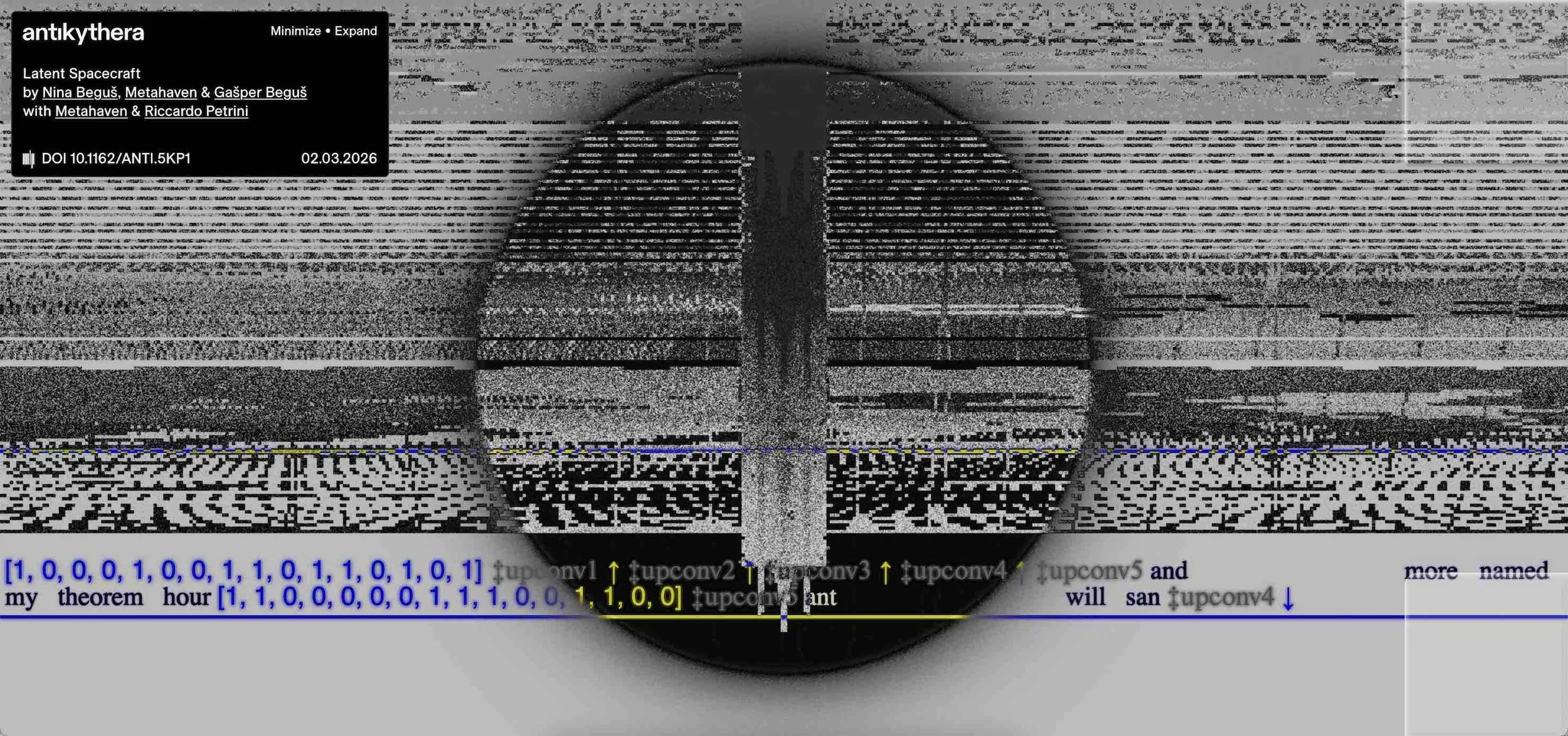
Adam Seelig: Earlier this year, several people sent me an online article published by Harvard’s Graduate School of Arts and Sciences titled “What Finnegans Wake Teaches Us about AI“ (Paul Massari, February 26, 2026). This was my introduction to the fascinating work of scholar Nina Beguš and the special AI she helped train named FinneGAN. Nina’s research focuses on the oft overlooked innerworkings of Artificial Intelligence, known as “latent spaces,” which she compares to the unusual dream language of Joyce’s last novel. In the process, she’s also coined a term that combines imagination with imitation through a creative process she calls “imagitation.” Brilliant.

Nina is the author most recently of Artificial Humanities: A Fictional Perspective on Language in AI, published by University of Michigan Press, and she joins me right now from her office at the University of California Berkeley. And allow me to just add two quick comments…
(1) as a Stanford University alumnus, and therefore, automatically, a Berkeley rival, I have set aside my anti-Cal prejudices to conduct this interview today with Nina — it took a lot of work for me to do that. And
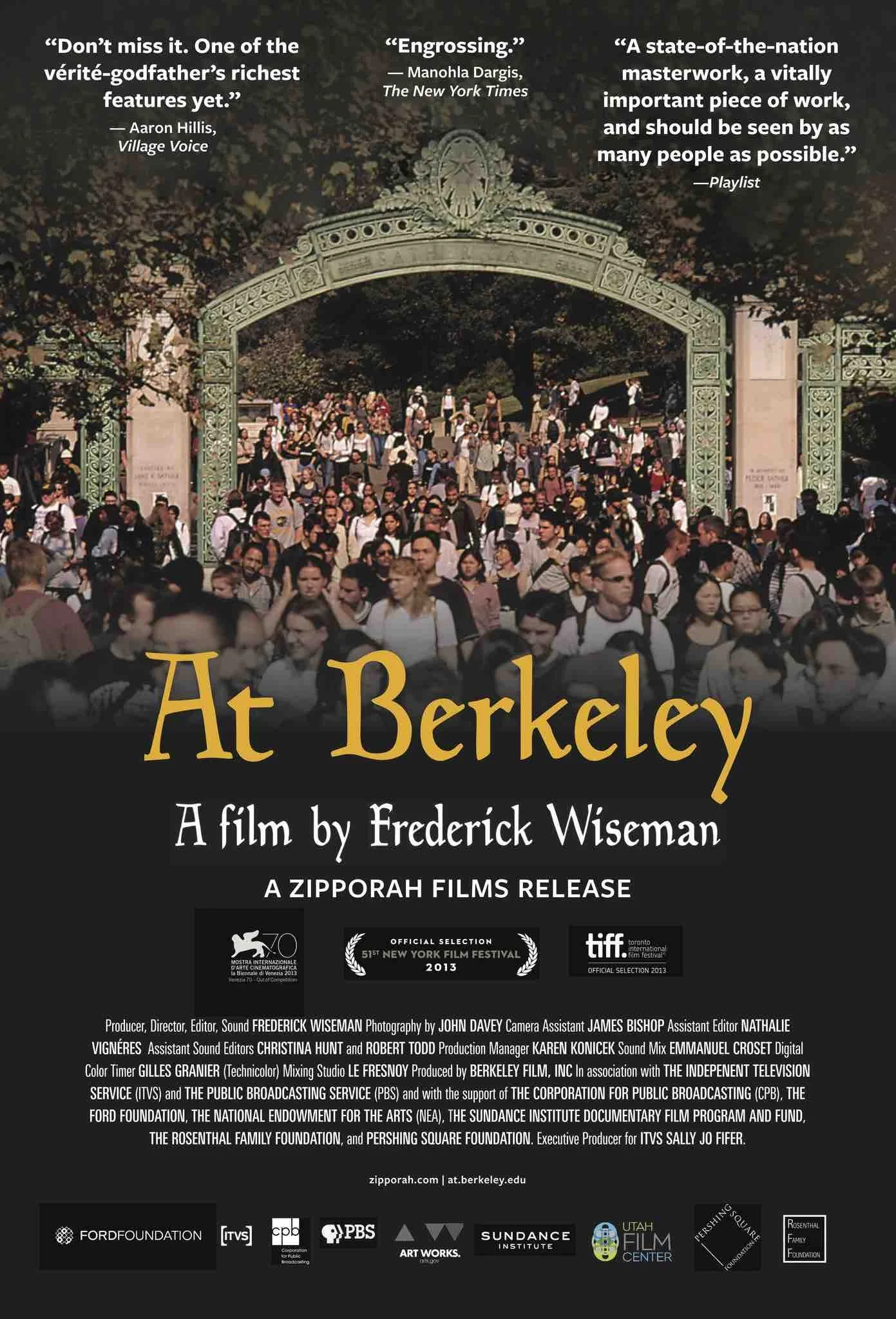
(2), more seriously, I’m taking a moment to note the recent death of Frederick Wiseman, whose cinematic style is a model and inspiration for the Finnegans Wake film series I’m now directing with One Little Goat Theatre Company. All of Wiseman’s movies are amazing, but if I had to choose a favourite, it would be At Berkeley, his four-hour film of the illustrious university where we now find Nina.

Nina Beguš, welcome, and thank you so much for joining me!

Nina Beguš: Hi, Adam and everyone! I’m so glad to be here.

Adam Seelig: Wow — there is so much for us to discuss. Let’s get into it.

In your AI research I’m seeing a thorough understanding of and appreciation for the arts, and you’re a clear champion for the humanities. To quote you back to yourself, “Humanities are co-cartographers of AI’s interior, bringing literary, philosophical, and architectural tools into spaces that engineering alone cannot fully describe or design.” In the Harvard article, you mentioned wanting to bring your work in Artificial Intelligence and Digital Humanities to a wider audience, including artistic communities. So this might be a case of ‘careful what you wish for’ because, as part of artistic communities myself, I’m eager to know more about your work, particularly your work with Joyce’s last novel and AI, which focuses on latent space. What is latent space?

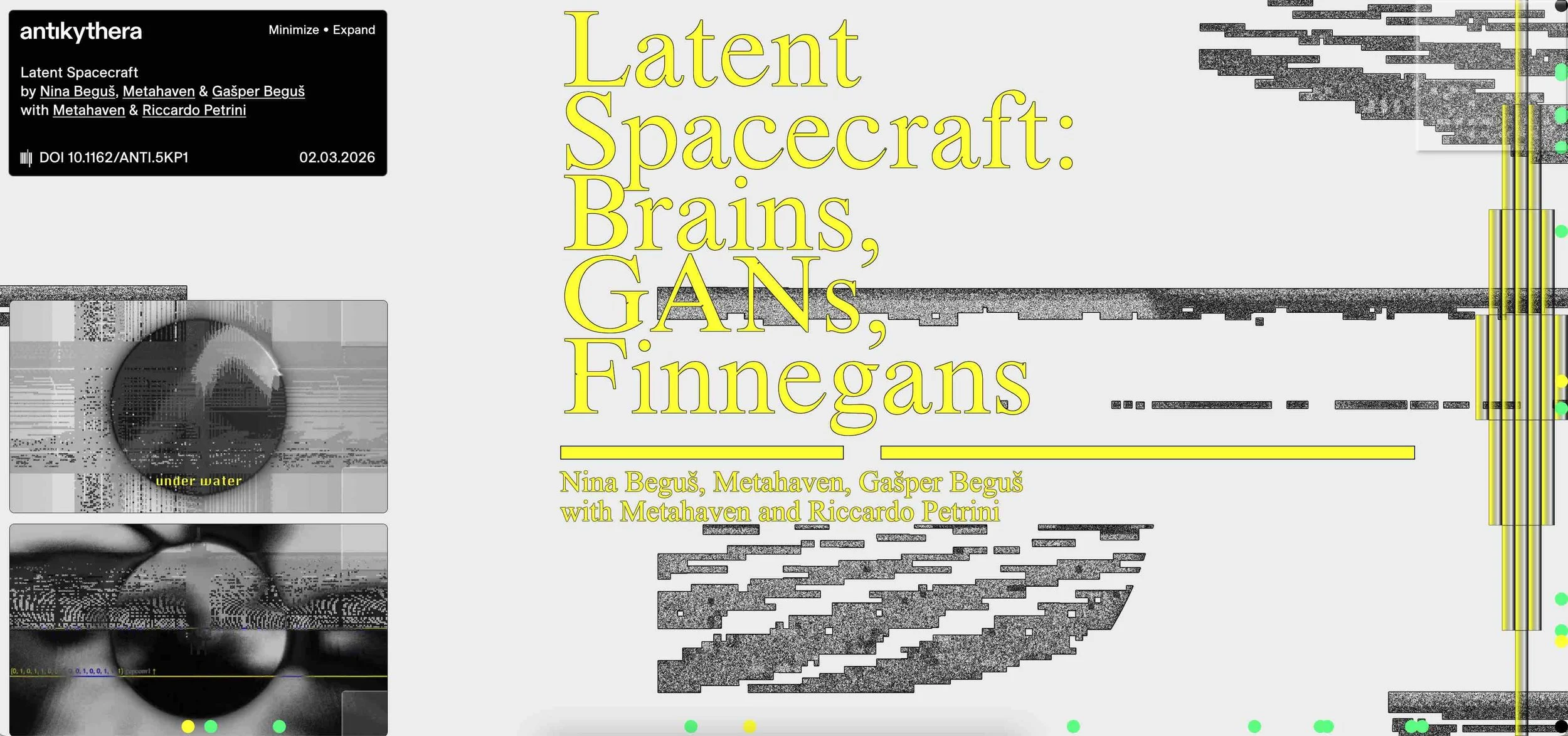
Nina Beguš: Yes, latent spaces — the term is more popular with humanists than with technologists, I must say, first of all. Latent spaces are these hidden layers that are doing all the work behind what any AI model that we have today is doing. So basically, they are these black boxes that we have a really hard time interpreting, because the latent spaces are basically mathematical categories. They are the structures of vectors with hundreds or thousands of dimensions. And in that way, they are invisible to us humans and unimaginable to us humans. But we have techniques that can help us try to visualize them and understand them, although they are radically invisible and inaccessible. And some of these techniques we’re using in this very technical field of interpretability, trying to see what the models are doing inside. And then in this paper that you mentioned, “Latent Spacecraft” (“Latent Spacecraft Brains GANs Finnegans“ 2026) and in our work that we exhibited in the art world, we’ve shown that you could also use humanistic interpretability. You can use humanistic techniques, methods, such as comparison, interpretation, reading, metaphorical, spatial thinking, to navigate these interiors of machine learning models.

Adam Seelig: There were two terms that I didn’t know until I encountered your work. One is this latent space, which you’ve described wonderfully. And maybe I could echo it back to you as a kind of interior of every AI model that we’ve been working with. Is that fair to say, that it’s kind of one layer back from the surface?

Nina Beguš: Yes. Yes. The latency is crucial.

Adam Seelig: And there’s this other term, G.A.N. Could you tell us what that is, please?

Nina Beguš: So we call them GANs. This is just an abbreviation for Generative Adversarial Networks. It’s an architecture of an AI model. It’s very different from what people usually know, which is large language models (LLMs) that are built on transformer architecture. This architecture, it’s called “generative” because these networks are very productive. You give them just a little bit of data and they figure it out on their own. We gave them just eight words of English and they figured out the whole phonology of the English language, for example. So here’s the first difference with large language models: they need a lot — humongous amounts of data. GANs need very little to be able to produce something. “Adversarial” in their name is really about having two neural networks within this architecture — there are two networks that train each other. I often describe them as Higgins, Dr. Higgins and Eliza from Shaw’s Pygmalion, because one network sees the data, knows what the data is. And the other one doesn’t. And I think GANs are actually the only architecture that never sees the data — this generator that needs to produce it, that needs to produce fake data, this generator basically starts from scratch, starts with complete noise. It doesn’t know what the other network is going to offer as data. So it only learns from its feedback. It could be pixels. It could be text. It could be sound. It could be anything. And so it starts with complete noise, and then slowly through feedback and through trying out different options, it gets to more and more structure and eventually to a word in our case, because we gave them words as input data. And this all happens without human intervention.

Adam Seelig: Incredible. So the only part that you have contributed is the vocabulary. And in your case, your vocabulary that you’re describing was under eight words. Now, I believe that your GAN learned to say “start” or something that was somewhat comprehensible or almost comprehensible to us. What was that experiment?

Nina Beguš: So those are the basic GANs. The ones where we just teach them how English language looks like. So we gave them eight words, such as “greasy,” “suit” —very basic, random words. And they would start producing new words. One of the first words, if not the first word, was actually “start.” And it was a combination of the words that they were fed, but it wasn’t in the training data. So this is what we call “imagitation,” because they don’t just imitate, they don’t produce just “greasy greasy greasy,” because they’ve seen “greasy.” But from those few words, they’re able to come up with new words — new words of English or possible words of English.

Adam Seelig: So I have the list of words here from that experiment. The words were: ask, carry, dark, greasy, like, suit, water, & year. And you say here that from that, the model could produce “start” — a plausible word that follows English phonology, but isn’t in our vocabulary. So — and I’m quoting you here — “they don’t produce non-plausible words. They figure out the rules quickly.” One of the many things that is fascinating about the work that you’re doing is that your GANs are behaving like children who are acquiring language. Yes?

Nina Beguš: Yes. They are much closer to how us humans acquire language than, for example, large language models, which obviously learn on text, which is not how any human learns how to speak, and also need an immense amount of data. So the way it works with GANs is they learn from their environment. This is how our children learn too. They have, you know, basic imitation — a child learning from parents, just working with the principles that they are introduced to in their environment. And then they are able to push further into novel combinations. Sometimes kids would come up with a new word that doesn’t really exist. And there’s this aspect of playfulness in this.

Adam Seelig: I love that, the playfulness is so key. As a parent myself, when my kids were much younger — this is now years ago — my eldest at one point drew a picture of a bunny rabbit and a window, and then he described what was going on. He said, “This bunny is eyes-ing on the window.” There’s no such thing as “eyes-ing” in that sense, as we all know, and maybe it was “looking through” or “looking at” or what have you, but he invented it. The younger one at one point came up with one that we still use to this day, which he invented: “carrot on the cob.” So kids are just amazing with figuring it out, playing with it, making themselves known, and sometimes maybe just pure invention. And that’s what I love about this term that you’ve coined — imitation + imagination = imagitation.

And let’s get to Joyce now, because you are claiming that Joyce — let me paraphrase, and you can tell me if I’m out of line here — was a pioneer in exploring this latent space or this childlike playfulness that bent the rules of conventional syntax?

Nina Beguš: Yes. I mean, as with many things with Joyce, he kind of anticipates what happens in computing decades before anything like that is a possibility. So in the history of computing and Joyce and this conversation that’s been happening, a lot of computing returns to Joyce. So it’s not a coincidence that we did too, because it’s just so interesting how he manages to chart this latency of language. You know, what he was trying to do — he called it “the writing of the night.” He said there are other registers of language. Language is sometimes given in a state which doesn’t really work during the day. It’s not orderly. He called it “wide-awake language.” He said, This is not what I’m going after — not plot and “cut-and-dry grammar.” He said, I want to try to see how the writing of the night looks like. So basically going into this latency of language — what’s happening with language when it’s not completely externalized, because he really tried to express how things are in the night, in different stages: the conscious, unconscious, semi-conscious. He’s talking about that to his editor in his letters when he’s writing Finnegans Wake. That was his pursuit.

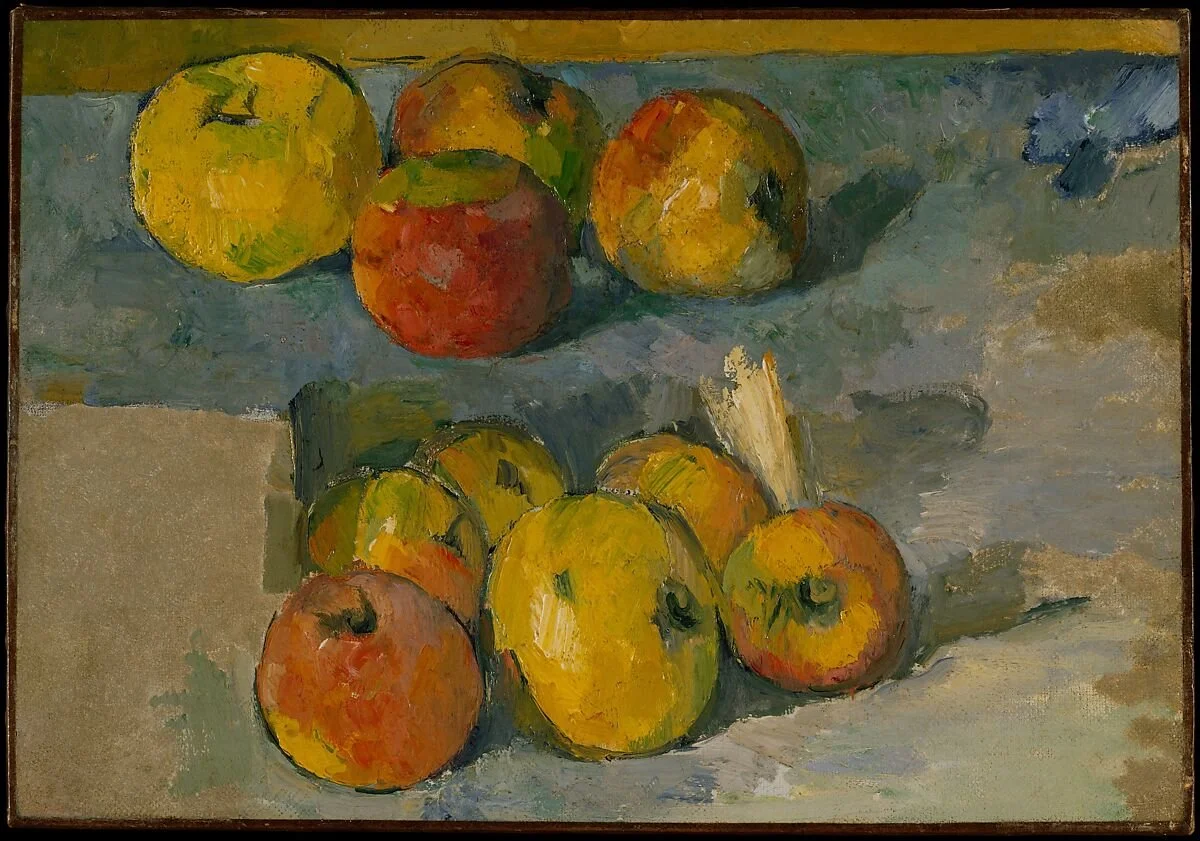
“Apples” (oil on canvas, 1878), Paul Cézanne. Not all red, but not so bad. (Metropolitan Museum of Art)

I think the easiest way to imagine this is for me to ask you: try to imagine a red apple. And as I ask you this, do you see it in your brain? Can you imagine it?

Adam Seelig: I do. It’s also a dangerous question to ask of someone named Adam, but go on.

Nina Beguš: [Laugh] So most people will be able to imagine this, visualize the red apple in a sort of low definition. It’s not completely clear the way your vision can render it if you don’t try, right? And this is how language is as well. You can hear me speak now in clear sentences, but the way language works in my internal layers, in my biological neural networks, in my brain, is more compressed, has this low definition to it. And this is why Joyce is so informative of what we found in our AI models, in GANs. Because when you listen to GANs, you will also hear they have this kind of old-school, gritty sound. It was very important for us to be able to publish these models, for people to just access them and play with them and hear them and see how they work.

Adam Seelig: How is it that the GAN has that kind of voice? What determined the voice of your GAN? In Finnegans Wake, the voice of the narrative often adheres, however lightly, to whoever might be in the scene. If it’s Anna Livia Plurabelle, then that voice might be more flowing and river-like because she is a river. And if it’s Earwicker, then it might take on some of his pub-keeping kinds of sounds and consciousness. And this narrative kind of floats throughout Finnegans Wake and takes on these different — literally hundreds of different voices, languages, and so on, depending on what’s happening in that zone. How did your GAN get its voice? And I should also really highlight the name of your GAN, which is “FinneGAN.”

Gašper Beguš and Nina Beguš (Photo: Matevž Granda)

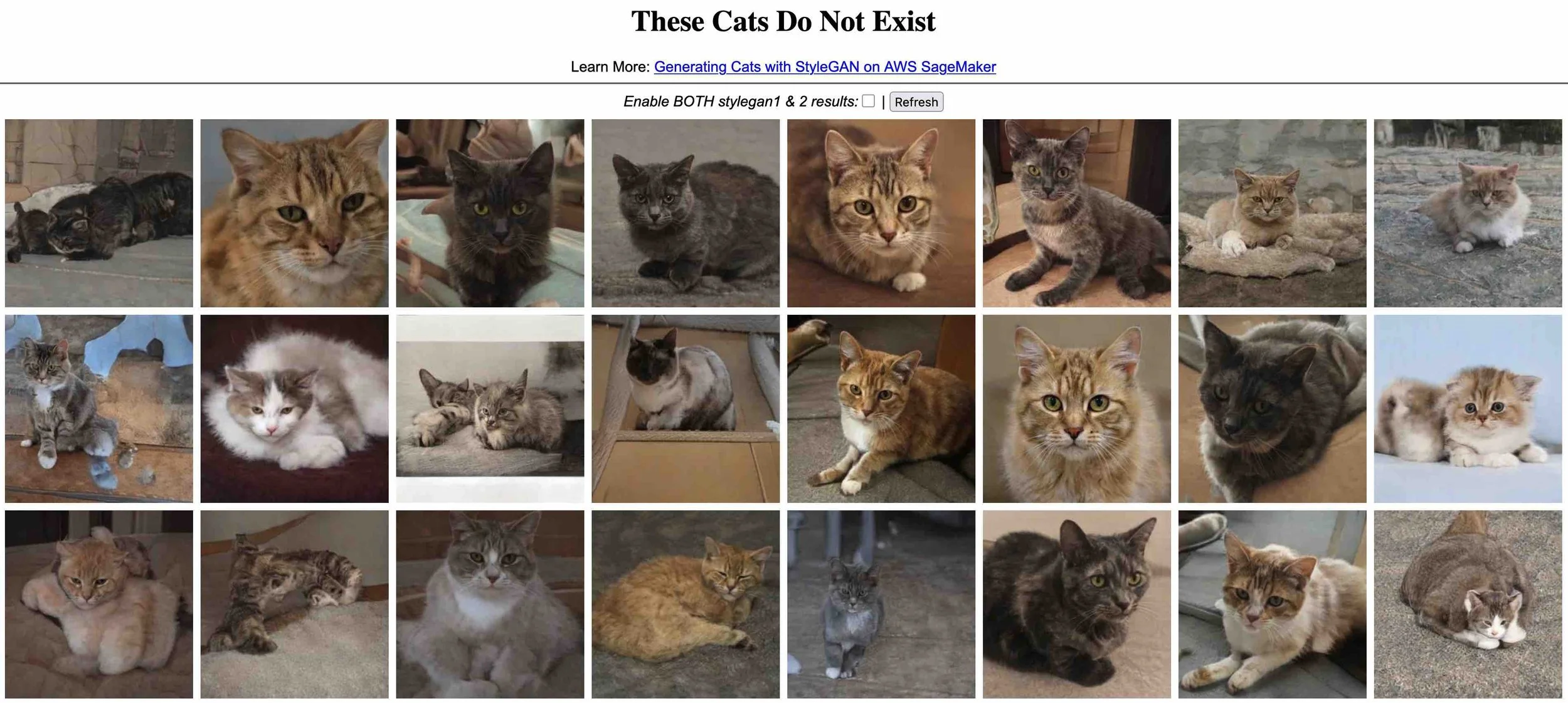
Nina Beguš: Yeah, that’s a different GAN. So we created one that’s just words of English. And then we trained another one from scratch, simply on Finnegans Wake. So this other model, FinneGAN, as we call him, never really saw actual English words, does not know how our English looks like — only knows the world of Finnegans Wake. And what’s interesting about this voice or sound is —so the engineering part, Gašper Beguš, who made these models in his lab here at Berkeley, the engineering part is not very involved. You don’t really know what will come out of it. Gašper also trained these models on whale clicks because he’s studying whale communication. And you can pretty much train them on anything. I mean, GANs were initially, about ten years ago, famous for the deep fakes of cats, right? This is how it all started. Now, do they have a distinct voice? They have this imitative power, of course. But we really wanted to publish them because in general, in mainstream AI, people only interact with large language models that are very polished. They have these glib exteriors, right? Language is very smooth — it’s this world of perfect Newtonian physics where the apple falls beautifully down from the tree.

Feline “deep fakes” at www.thesecatsdonotexist.com

Adam Seelig: There’s that apple again, yes.

Nina Beguš: There’s the apple. But with GANs it’s not. It’s like listening to a radio that doesn’t have a clean frequency yet.

Adam Seelig: Very nice. And that’s where Finnegans Wake plays in so nicely into what you’re doing as a literary model for that in-between, night-languagey, children’s language, pre-verbal, post-verbal, can’t-quite-put-your-finger-on-it kind of quality — the dreamlike quality. That was one thing I wanted to ask you about too, is that there’s a lot of focus on children’s acquisition or child acquisition of language and of the childlike play in GANs. And one of the things I wanted to mention in that regard is dreams. I feel like through the dream language of Finnegans Wake, there’s a collapse of the conscious and rational and a kind of unconscious return to that pre-conscious or young, playful kind of zone of speech. And so maybe when we sleep at night, we are going back to a childlike place.

Nina Beguš: I love this comparison. Yes. When we started working on this project — so this was with Gašper Beguš, who built the models, and then with Metahaven, this wonderful artistic collective that helped us think through this, and visualized the models together with Ricardo Petrini. When we started talking about it, we said, isn’t it funny how all these terms — subconscious, deep learning, embedding — they suggest that all cognitive structures have this depth. And it seems like there’s this spatial metaphor about how we think of latency and making the invisible spaces visible, which is really what we’re trying to do here. And this is why we called it Latent Spacecraft, because latent spacecraft is really about navigating. It’s a craft of approaching spaces that are not navigable in a way. And our choice was to navigate them through language, because we know a lot about human language. Linguists have studied it for a long time. Cognitive scientists, right? We know a lot about literature. So this was our way in. It was through language acquisition and through literary experiments such as Finnegans Wake. And I love the dream comparison, because dreams make sense, right, when you’re in them, even though rationally they might not. But there’s this world that is being held together and it’s not in high definition again. It’s about this noisiness that GANs also produced when they try to get to a structure. So when they go from noise to a signal, from noise to a word, they produce a structure that’s clearer and clearer. And this is also how we presented the model — you look at the model and it goes from noise and then into upper and upper and upper layer. And you can see the structure coming together. And at the end, you sort of hear a sentence that you kind of think you know what it might mean, but it’s not completely externalized language yet. It’s like peeking into this dreamlike world where structures are formed in these cloud-like formations, in these soft, condensed formations.

Adam Seelig: I want to point our listeners to — in the transcript of this episode that we’re doing right now — they’re going to find a link to this FinneGAN that you have online. I think there are two GANs there. One is FinneGAN and the other one combines words.

Nina Beguš: Yes.

Adam Seelig: But people who are listening who don’t have patience to go online and find that can just Google “Latent Spacecraft Brains GANs Finnegans.” And I’m on that site right now and looking at this, and as promised, we’re coming back to this. I want to understand what’s going on here. I’m seeing — for those of you who are as old as I am — a kind of foggy TV test-pattern-like image, mostly in black and white, and some interesting patterns that are unfolding. And so this almost Rorschach-like thing that I’m looking at, that has a circle in the middle and then some clouds all around it — it’s very evocative. What happens when I go there?

Nina Beguš: Well, basically every time you open this website with the model, the model produces a new sentence from scratch — a sentence that I have never heard or anybody else has ever heard. It’s unique every single time because the model is actually working and producing it for you.

Adam Seelig: Incredible. Do you think that we could — when we’re done with our interview today — do you think that I could borrow some or have some audio of what that sounds like, and we can maybe put some of that into this episode so people can hear a couple of sentences?

Nina Beguš: Absolutely. I think — you might have to explain that they won’t necessarily understand what it is saying. Sometimes the words are close to intelligible, and online we put a transcriptor that’s trying to make sense of what’s being said, but sometimes it’s not very accurate.

Adam Seelig: So those who are reading Finnegans Wake well know that we’re spending a lot of time with the equivalent of your transcriptor, trying to figure out what’s happening here in this latent space of a novel that James Joyce has created. And maybe what we’ll do is I’m going to share a couple — a little bit of Joyce’s background in, let’s say, experimenting or exploring children and their approach to sound, speech, experience, and how important that was to his work, especially in Finnegans Wake. And then maybe you could provide a sentence or two you’ve heard or that have surprised you from your FinneGAN. Would that be an okay approach right now?

Nina Beguš: Oh, absolutely. I often — I mean, I can already do it right now. In the article itself, we put a sentence. Yes. “Right, we inhabit a locked hole, but can we use it?”

Adam Seelig: [recorded after the interview] I’m recording this after the interview and want to thank Nina for providing me with her original audio recordings of FinneGAN to share with you all. Here’s how that phrase sounded when FinneGAN’s voice, so to speak, spoke these words in the first place. And let me just add — and perhaps this is my Finnegans Wake brain accustomed to cyclical themes of falling and rising in the novel — but where Nina’s lab transcription has “right, we inhabit a locked hole,” I swear I can hear FinneGAN saying “rise, we inhabit a locked hole.” Okay, here’s the recording.

FinneGAN: “Right, we inhabit a locked hole, but can we use it?”

Adam Seelig: That was one of the sentences. I love that one.

Nina Beguš: Yeah. So even in the locked hole sentence, you can hear that the model actually says “holee,” it doesn’t say “hole.” But the transcriptor is modern. So it will put some things in there that have not existed in Joyce’s time. It doesn’t have a sense of history.

Adam Seelig: Mm-hmm. So maybe we can let our listeners hear a couple of those, and I’ll find a way to get that audio, and you yourselves can hear a couple of those sentences.

Adam Seelig: [recorded after the interview] And indeed, following the interview, Nina generously sent me some more of FinneGAN’s eccentric phrases, beginning with the second one mentioned in her article, “Latent Spacecraft: Brains, GANs, Finnegans,” which her lab, using Whisper speech recognition software, transcribed as: “Power of Motsunoshi Station Lettuce Wait a ti-i-i-i-i-i-i-i-i-i-i-i-i-i-i-i-i-i-i-i-i-i-i-i-i-i-i-i-i-i-i-i-i.” Here’s how Finnegan said it originally.

FinneGAN: Power of Motsunoshi Station Lettuce Wait a ti-i-i-i-i-i-i-i-i-i-i-i-i-i-i-i-i-i-i-i-i-i-i-i-i-i-i-i-i-i-i-i-i.

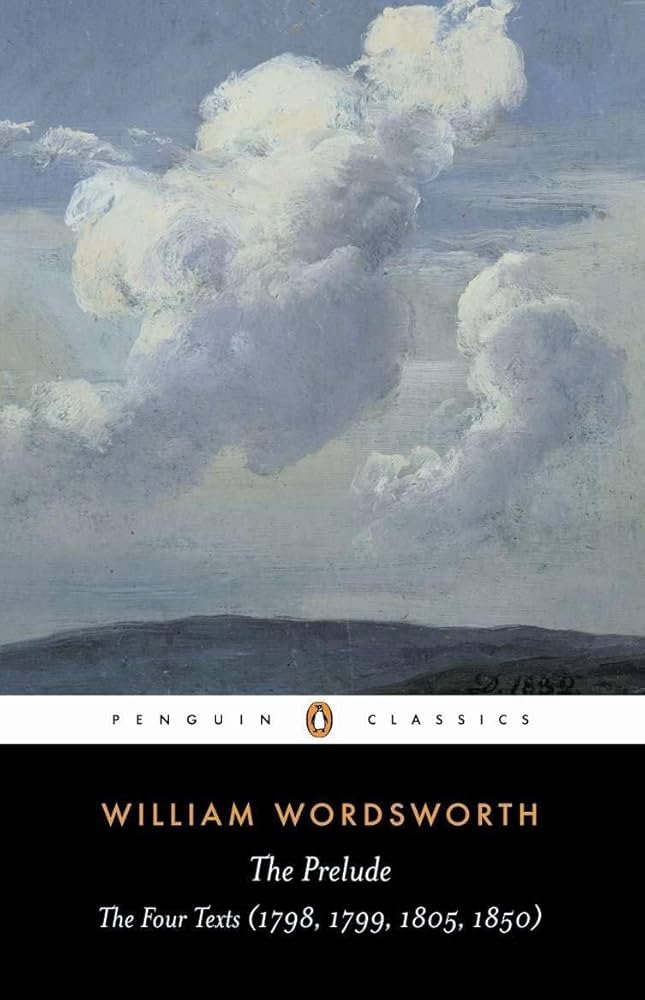
Adam Seelig: Have there been any other sentences that have stood out for you? I’ll let you think about that while I share some sentences from Joyce — or even just quickly, a quick background on children in literature and how really they were ignored for so long. And in my mind, at least in English literature, it’s William Wordsworth who really champions children’s experience. And he even in The Prelude talked about the poetic spirit, and claims that everyone is born with the poetic spirit. He calls it “the first poetic spirit of our human life” (Book II, “School-Time (continued),” 275-76). And all are born with it, but only some remember it. Of course, those who remember it are (self-congratulatory, as always, I imagine) the poets. And poets hold on to that. So we all have that. I’m thinking, analogously — it seems like the large language models are the adults who have forgotten that poetic spirit, whereas your GAN is the child that has maintained that poetic spirit.

Nina Beguš: I love that you say that because when we were working with the transcriptor, we said, “Oh, it’s like the adult trying to make sense of what the kid is saying.”

Adam Seelig: Terrific.

Nina Beguš: And sometimes not recognizing it. I mean, I had this experience myself. My oldest child is named Tomaž, and he could not pronounce his name when he was an infant. And so he would always say “mm-bah mm-bah mm-bah,” and we had no idea what that means until many months later. [Laugh] We deciphered it.

Adam Seelig: Yes. And he knew all along and he was making himself known, and it was us who took a little more time to figure it out. But eventually the penny will drop.

In Joyce’s work, he’s already from Dubliners, a young protagonist says — and I’m quoting here — “Every night as I gazed up at the window I said softly to myself the word paralysis. It had always sounded strangely in my ears, like the word gnomon in the Euclid and the word simony in the catechism.”

Then we have Portrait, he goes on to the novel, which famously opens with a kind of children’s story: “Once upon a time and a very good time it was there was a moocow coming down along the road and this moocow that was coming down along the road met a nicens little boy named baby tuckoo...” I mean, this is really getting at these early sounds.

In Ulysses, there’s the chapter “Oxen of the Sun,” where Joyce is exploring the liminal, embryonic, unconscious speech. It opens with these words that I can barely even pronounce — much as your son was unable to pronounce his own name early on and finding some other form of speech. And so it’s kind of early pregnancy of language that he’s exploring there.

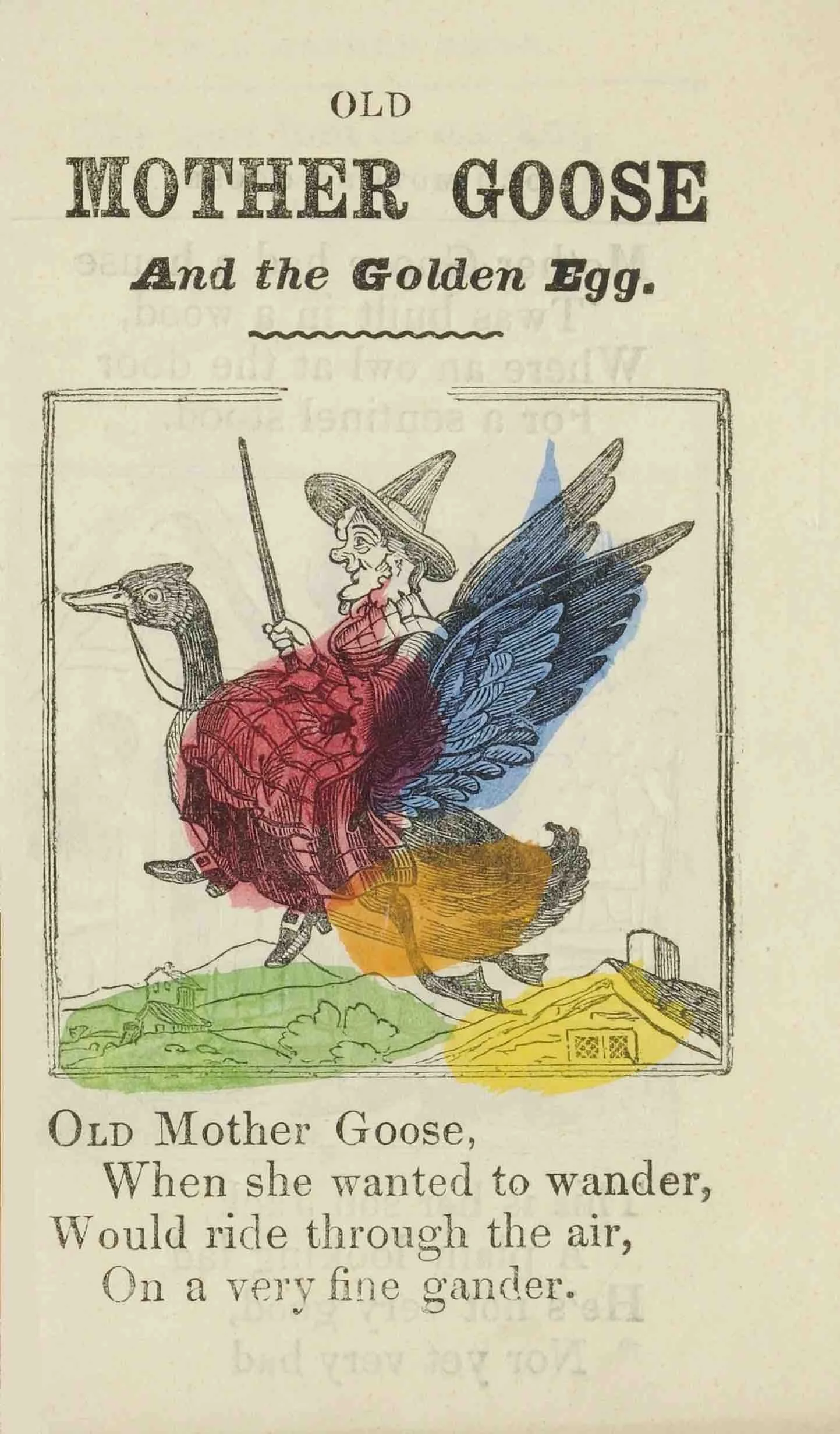
And then I would say when we get to Finnegans Wake — perhaps the greatest influence on the entire novel (and people will argue otherwise for sure) might be Mother Goose. On page one, we already have Humpty Dumpty, and this is from the first page of Finnegans Wake: “The great fall of the offwall entailed at such short notice the pftjschute of Finnegan, erse solid man, that the humptyhillhead of humself prumptly sends an unquiring one well to the west in quest of his tumptytumtoes” (3:18-21). So there we have Humpty Dumpty from the start.

Humpty Dumpty “Cruncheez” spelled à la Joyce.

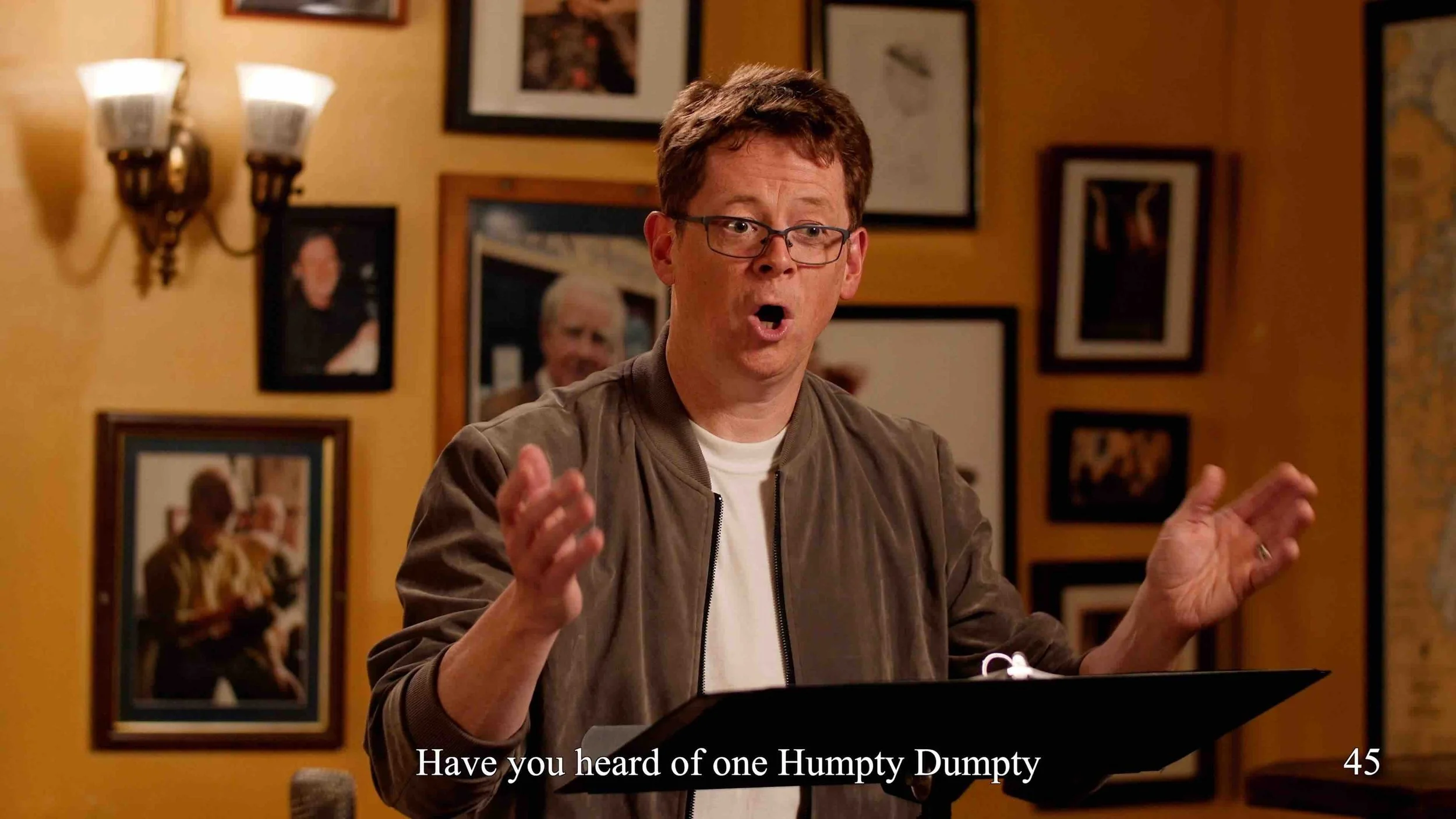
Richard Harte sings the Ballad of Persse O’Reilly (“Have you heard of one Humpty Dumpty…”) in One Little Goat’s film of Finnegans Wake, Chapter 2.

So we know we have someone who is taking “unserious” (I put in quotes) literature for children, and songs and games and so on, and taking them very, very seriously, and mining them and playing with them and stretching them. The first chapter of Book II, which is the chapter I’m rehearsing with Richard Harte now, is all children’s games, children’s dances, children’s songs, children’s rhymes. So the importance of childhood in this work and the playfulness that it brings is so essential.

And so now I want to turn to you one more time and hear maybe some play from your FinneGAN — another sentence or two that it’s played with or invented.

Nina Beguš: Yeah. I mean, approaching this pre-verbal world, I think, is the right identity to it. I’m trying to see what other sentences I’ve written down. Some were actually quite obscene. I’m looking at my folder right now to find them.

Adam Seelig: We want to hear the obscene ones. This is, of course, James Joyce’s world that we’re dealing with.

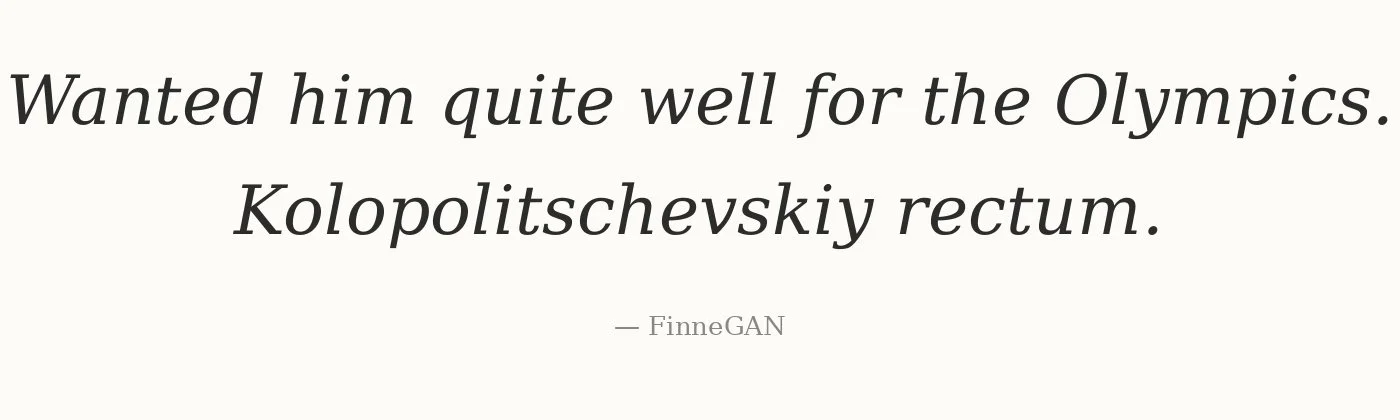
Adam Seelig: [recorded after the interview] After the interview, Nina successfully dug up the phrase she was thinking of, which her lab transcribed as, “Wanted him quite well for the Olympics. Kolopolitschevskiy rectum.” Here’s how FinneGAN’s original utterance sounded:

FinneGAN: Wanted him quite well for the Olympics. Kolopolitschevskiy rectum.

Adam Seelig: [recorded after the interview] And here’s another FinneGAN expression, transcribed as, “This is a gag out of I’m-a-slaughtering-to-you-with-a-sauce-and-a-stubber-ultra-meat.”

FinneGAN: This is a gag out of I’m-a-slaughtering-to-you-with-a-sauce-and-a-stubber-ultra-meat.

Adam Seelig: [recorded after the interview] And here’s one last phrase from FinneGAN, transcribed by Nina’s lab via speech recognition software as, “Boris’s tower. This round moves completely into my Abu Dhabi city.”

FinneGAN: “Boris’s tower. This round moves completely into my Abu Dhabi city.”

Adam Seelig: You’ve provided some examples of the expression, and we talked about the voice. And this is maybe a little bit strange, but — music and tone. Is that something that is going to play into FinneGAN?

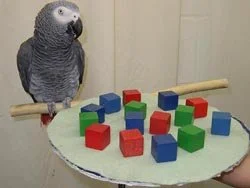
Alex the Parrot (1976-2007)

Nina Beguš: Well, we’re continuing this project with a second iteration, because we started talking about this all also in relation to animals, because there are, you know, machines have acquired human language. But there were some animals that have learned the rudiments of it, like parrots. And they would do imagitation in some sort of way where, you know, this Einstein parrot named Alex, by Irene Pepperberg — he didn’t know the word “apple.” We’re back with apples. But he knew “banana” and “cherry.” So he called the apple “banerry.”

Adam Seelig: Incredible.

Nina Beguš: And this is still so unexplored. And I mentioned already that Gašper works on deciphering whale communication, so we’ve been thinking about sound across humans and machines and also animals — just looking at these underlying principles that maybe work across neural networks, both biological and artificial. But we’ve also been wondering, you know, what’s the original sound? What was the first sound on Earth? Have we always had sound or speech? And I think when you describe now Joyce playing and going back to these childlike operations, approaching the pre-linguistic, pre-verbal word, world — this is really hard to do for an artist. Even if you look at visual artists, for example, right? They become really good in realism and then they go into some other style. And sometimes, you know, at the age of three and four and five, our children create masterpieces. I have a full house of just my kids’ paintings because sometimes they are just so good that you actually have to frame them. And as an artist, you’re kind of trying to go back to that unbounded exploration that you had as a child, that you could afford as a child because you did not know the rules. You did not know limitations, right? This is how it is with language. You’re just exploring it. We’ve all gone through these nursery rhymes and through these tales and stories because this is how you learn how to reason and how to think. So yeah, going all the way back to this — I think it’s more and more important because science has been completely separated from arts. But now, especially with AI, I think it’s becoming more important to have them together. And that hasn’t been always a case that they’ve been separated. I just read Lamarck’s biography and, you know, back in the day scientists would be inspired by a poem during their research process. So I think what we’re really trying to push for here is to have this more interdisciplinary approach to exploring what we see as pure technicality, as this technology.

Adam Seelig: I have a question for you about the GANs. Now you’re working with I imagine several — just for this purpose, let me narrow it down to two. Let me narrow it down to FinneGAN and the other one where you had eight words and then it invented the word — or imagitated the word — “start,” or something that was close to something we recognize and is almost — and even is — intelligible to us. And I’m asking about the difference between the two, because the one where you fed eight words — well, that’s not a lot. But the FinneGAN — did you feed the FinneGAN over 600 pages of text? Because that is obviously drastically more. And how did the limit of one influence that GAN versus the abundance of the other?

Nina Beguš: Yes. So there’s much more data. They are both very small models, but there’s much more data with the FinneGAN. And the way we did it is we use the audio for GANs, not text. So this is a novel that’s meant to be read aloud. I mean, in the paper, I think we put a reading from Sweny’s — where, you know, an actual place in Ireland where people still gather to read Ulysses and other works, because it’s a reference in the novel. So this sound aspect of Joyce is primary, right? Especially with Finnegans Wake.

Adam Seelig: Absolutely. I concur 100% — as someone who’s involved with filming and recording Richard Harte and Pip Dwyer reading all of this material, I couldn’t agree more. Yes, sorry, go on.

Nina Beguš: So the two models — the FinneGAN, because it is trained on four-second audios, I think, then produces sentences. But the concatenation GAN, the one that’s only trained on words, pretty much produces only words, although it has become so good that it started — basically rudimentary syntax — it started to place them one after another. So it would say “water, underwater,” or “Andrei, hi Andrei,” things like that. So it’s already, you know, evolving in that direction where it’s going from just words towards composing them. That’s why we call it the concatenation GAN.

Adam Seelig: And of course, when I say that the FinneGAN is much larger, that’s just a relative term. Of course, compared to any large language model, it is a drop in the bucket. And so that is fundamentally something very different in what you’re doing here from most of the artificial intelligence, AI, that most of us have had exposure to now — even on a daily basis in internet searches and so on.

Nina Beguš: Yeah. I mean, we did train an LLM also on Finnegans Wake — we just didn’t publish it here in this paper, but new papers are coming and it’s already accessible online. We just wanted to see the difference and how good the model is with imagitating words, with creating nonce words — words that could be words, but are not — like “tonard,” “least,” “castank,” right? What Joyce does. And the model is really good at it, turns out.

Adam Seelig: Fantastic. And if you’re ever open one day to training FinneGAN on our audio from our Finnegans Wake film series, we would be very open to that.

Nina Beguš: Wonderful.

Adam Seelig: I am wondering about that: is the audio that you shared or brought or trained, what have you, for your FinneGAN — is that audio read by a human or is it read out loud by a machine?

Nina Beguš: It’s read out loud by a machine. We didn’t want to get into a copyright issue. We were considering — I know there’s beautiful audio readings by, you know, Irish actors — we were considering using that. I’m sure it would have a different tone to it if we had.

Adam Seelig: Well if you ever wanted to do that, I know a couple of Irish actors who have been reading Finnegans Wake a lot. [Laugh] So talk to me and we’re very happy to share. And I think it’s just an extraordinary project that you’ve got going on here — that you have drawn this comparison between a kind of machine learning, a sort of infancy of machine learning, and the importance of infancy and pre-verbal / post-verbal / dream-verbal world of Finnegans Wake. It’s really, I think, an inspired connection that you’ve made. And this term that you’ve created is one that I anticipate I’ll be using in future, which is imagitation, this imitation plus imagination that is so actively a part of the GANs and, of course, so actively a part of the Finnegans Wake world.

Nina, thank you very much for joining us here, telling us about what you’re working on, telling us about your FinneGAN. And I look forward to future conversations in person and maybe in this format again in future.

Nina Beguš: Yes, that would be wonderful. Thanks so much for having me. It was a pleasure.

[End of interview]

­Adam Seelig: That was my interview with Berkeley scholar Nina Beguš. Together with her colleagues Gašper Beguš, Metahaven and Riccardo Petrini, Nina is the author of “Latent Spacecraft: Brains, GANs, Finnegans,” to which you’ll find a link in the transcript for this podcast on One Little Goat Theatre Company’s website, www.OneLittleGoat.org. Join us in a fortnight for Episode 25 when Richard Harte continues Chapter 5 of Finnegans Wake. In the meantime, to be sure you don’t miss the episode, why not follow or subscribe to this podcast?

[Music: “Closing Credits (Ch05),” instrumental with Tyler Emond on bass, Jinu Isac on drums, Adam Seelig on piano, from the Finnegans Wake film series.]
For more on One Little Goat’s Finnegans Wake project, including transcripts of this podcast and the complete films of Chapters 1, 2 and 3 visit our website at OneLittleGoat.org. And to hear about upcoming performances and screenings, join our mailing list, also on our website.

One Little Goat Theatre Company is a nonprofit, artist-driven, registered charity in the United States and Canada that depends on donations from individuals to make our productions, including this one, possible. If you’re able, please make a tax-deductible donation through our website, www.OneLittleGoat.org Finnegans Wake is made possible by Friends of One Little Goat Theatre Company and the Emigrant Support Programme of the government of Ireland. Thank you for your support! Music for this episode was arranged and performed on the piano by yours truly, Adam Seelig, with Tyler Emond on bass and Jinu Isac on drums, recorded at Ghost Town Studio in Toronto. A big thank you once again to special guest Nina Beguš. Thank you as ever to the team at the Irish Consulate in Toronto. And thank you to Production Consultants Cathy Murphy and Andrew Moodie. Thank you for listening!
[Music fades out]
[End of Ep024]

Mentioned: Nina Beguš, Artificial Intelligence (AI), Digital Humanities, Stanford vs Cal (Berkeley), Frederick Wiseman, “At Berkeley” (film), FinneGAN, “imagitation,” latent spaces, GANs (Generative Adversarial Networks), large language models (LLMs), “What Finnegans Wake Teaches Us about AI,” “Latent Spacecraft Brains GANs Finnegans,” humanistic interpretability, eight-word experiment, whale communication, nonce words, child language acquisition and invention, children and language in Joyce (Dubliners, A Portrait of the Artist as a Young Man, Ulysses “Oxen of the Sun”, Finnegans Wake), Mother Goose, Humpty Dumpty, “the writing of the night,” dream language, pre-verbal language, Metahaven, Ricardo Petrini, Gašper Beguš, University of California Berkeley, Whisper speech recognition, deep fakes (of cats), “We inhabit a locked hole but can we use it?”, William Wordsworth’s “poetic spirit” in children, Shaw’s Pygmalion, Irene Pepperberg’s Alex the parrot, Richard Harte, Pip Dwyer, Sweny’s Pharmacy Dublin, interdisciplinary science and arts.

Resources: Transcript for this episode, including the text of Finnegans Wake.

Cited: What Finnegans Wake Teaches Us about AI,” Paul Massari, Harvard Graduate School of Arts and Sciences, 2026-02-26.
Latent Spacecraft Brains GANs Finnegans,” Nina Beguš, Gašper Beguš, Metahaven, Ricardo Petrini; Antikythera, https://latentspacecraft.antikythera.org/, 2026-03-02.

Episode 023: In the name of Annah (104:1-108:36, Begin Ch05)

JAMES JOYCE’S FINNEGANS WAKE
Episode 023:
IN THE NAME OF ANNAH

PAGE 104:1-108:36 | BEGIN CHAPTER 5 | 2026-06-04

PODCAST AUDIO

PODCAST TRANSCRIPT

[Music: Instrumental of “The Alphabet Song (Variation On)” with Tyler Emond on bass, Jinu Isac on drums, Adam Seelig on piano, from the Finnegans Wake film series. Music fades out]

Adam Seelig: Welcome to James Joyce’s divine and delirious comedy, Finnegans Wake. In this episode, number 23, we’ll hear Irish-Canadian actor — and my good friend and colleague — Richard Harte performing pages 104 to 108 to begin Chapter 5 of Joyce’s last novel. I’m Adam Seelig, the director of the reading you’ll soon hear.

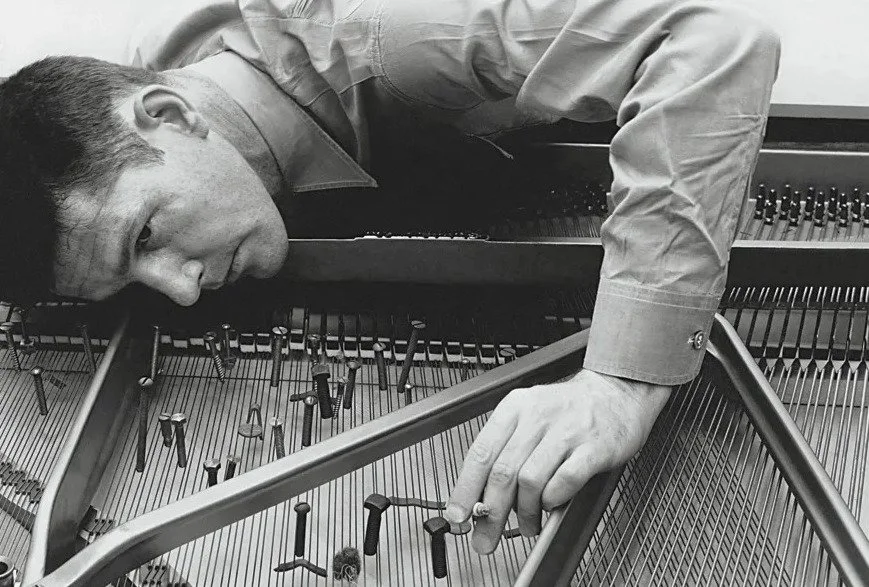
John Cage prepares his piano (photo: Irving Penn, 1947)

For those of you in New York, join me on Thursday, June 11th at Time and Space Limited in Hudson, New York for “Joyce / Cage,” an evening featuring excerpts from One Little Goat’s Finnegans Wake film series paired with Wake-inspired songs by John Cage. The songs will be performed live by soprano Jaclyn Hopping, accompanied by John Cage Trust Executive Director Jeffrey Lependorf, who will also join me in conversation. It promises to be a great night, so come if you can. For information on and tickets to this event, please visit One Little Goat Theatre Company’s website.

And for those of you around Dublin on Tuesday, June 16th, the Bloomsday Film Festival will be screening our complete film of Finnegans Wake Chapter 4 at the James Joyce Centre. For details and links, please visit the Bloomsday Film Festival website or www.OneLittleGoat.org.

[Music: “Breakfast,” instrumental with Tyler Emond on bass, Jinu Isac on drums, Adam Seelig on piano, from the Finnegans Wake film series.]

Adam Seelig: Finnegans Wake is a production of One Little Goat Theatre Company. One Little Goat is filming and recording all 17 chapters (roughly 30 hours) of Joyce’s Finnegans Wake before live audiences in various locations, screening and releasing them along the way, with the aim of completing the entire book for its 90th birthday, May 4, 2029. One Little Goat Theatre Company is an official charity in Canada and the United States. To help us produce this first-of-its-kind filmed reading series — of which we’ve filmed 8 chapters so far, with 9 more to go — please visit OneLittleGoat.org to make a charitable donation. Your donation enables us to bring this production to audiences and helps support the outstanding artists who make it possible. To be the first to hear about our live tapings, events, and screenings, please join our mailing list, also at OneLittleGoat.org.

[Music fades out]

Adam Seelig: Chapter 5 of Finnegans Wake turns to the female protagonist of the novel, Anna Livia Plurabelle, or ALP, focusing on her as river (the River Liffey), as spouse (of HCEarwicker), and as author of a consequential letter that promises to rehabilitate HCE’s much maligned reputation. It’s ‘Anna to the rescue,’ or in the words of the previous chapter, “The solid man saved by his sillied woman.” (94:3)

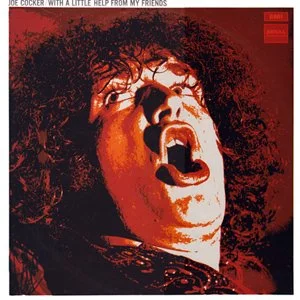
Joe Cocker (1944-2014)

If I had to give this chapter a title — and if the title hadn’t already been taken by Joe Cocker, that ‘roostery’ English blues singer — I’d call it “The Letter.” And if I went a step further to give the chapter subheadings, they would be “The Paper of the Letter,” “The Envelope of the Letter,” “The Message of the Letter,” “The Letters of the Letter,” etc.

This famous letter is found by a Hen named Belinda, and she finds it in a litter, a dump, in dirt, under sod, or to bring back that word we often heard in Chapter 1, in a ‘tip,’ i.e. a trash heap. This littery letter appears to be written by Anna. But even that, as so often happens in the Wake, is open to debate, because there’s a mystery that haunts this chapter, right up to its conclusion, and that is: Who wrote the letter? Was it in fact Anna? And if not her, who?

Vik Muniz’s trash/art (New York Times 2010-10-24)

Chapter 5 opens with a glorious and playful invocation of Anna Livia Plurabelle that merges the Quran with the Bible. Every sura in the Quran begins with, “In the name of Allah the all merciful,” and the Lord’s Prayer, one of the Bible’s greatest hits, goes like this: “Our Father which art in heaven, Hallowed be thy name. Thy kingdom come. Thy will be done in earth, as it is in heaven.” (Matthew 6:9-10)) Chapter 5’s opening line combines them: “In the name of Annah the Allmaziful, the Everliving, the Bringer of Plurabilities, haloed be her eve, her singtime sung, her rill be run, unhemmed as it is uneven!” (104:1-3)

The chapter then introduces us to Anna’s famous letter. Although it’s described as “her untitled mamafesta,” the letter in fact has gone by hundreds of different names at many different times. Edmund Epstein counts 312 of them in total, with most referring to the love and marriage of our flawed hero, HCE, and his long-suffering spouse, ALP. One thing that Richard Harte and I regularly look for in the Wake — especially when approaching an epic catalog like this one — is a rising and falling movement in any given phrase, sentence and paragraph because Finnegans Wake itself is, as we’ve seen over several chapters, a sublime and ridiculous evocation of the cyclical rise and fall of humanity.

Here, for example, is one of the names for the letter appearing early in the list: “Knickle Down Duddy Gunne and Arishe Sir Cannon,” with the downward motion (“Knickle Down”) followed naturally by the upward (“Arishe Sir Cannon”), in this case suggesting investiture or a knighthood ceremony in which the subject kneels (or ‘knickles’) down in order to receive honour — paradoxically lowering himself to become exalted. The name immediately preceding this one lifts us up: “Anna Stessa’s Rise to Notice” (104:8-9). And these are just two of the 312 inventive names for Anna’s manifesto, of which I’ll point out just a few more…

From the Rise of the Dudge Pupublick to the Fall of the Potstille” (105:22-23) — another up and down, in this case contrasting the rise of the Dutch Republic with the fall of the Bastille, mixed with a healthy dose of alcoholic terms in light of HCE and ALP’s identity (one of their many identities) as publicans of the Mullingar Inn in Chapelizod; hence “Pupublick,” which also hints at HCE’s sin-tinged stutter, and “Postille,” echoing a “pot still” for distilling whisky.

Several names for the letter call out HCE and ALP’s initials, for example:
       — “He Can Explain”, which gives us HCE (105:14), and
       — “Allolosha Popofetts”, which yields ALP (106:22-23).

A simple, three-word name, “The Suspended Sentence,” (106:13-14) could refer to the suspended judicial sentence for HCE’s alleged sins, while also applying to Finnegans Wake itself, given that the novel suspends a sentence between the end and the beginning, famously ending mid-sentence and beginning with its continuation — the “r” in the novel’s opening word, “riverrun,” remains uncapitalized for good reason. For more observations on this evocative name for the letter, I will link in the transcript for this episode to a terrific Finnegans Wake blog called, fittingly, “The Suspended Sentence”.

And while you may end up with your own favourite name-for-the-letter in this inventive list, I’ll share mine: “Of the Two Ways of Opening the Mouth” (105:23-24).

Priests perform the opening of the mouth ritual. Extract from the Papyrus of Hunefer Egyptian Book of the Dead (c.1300 BCE).

Not only does this entry reference “The Book of Opening the Mouth” from the Egyptian Book of the Dead, suggesting ancient rituals of death and afterlife, falling and rising, but to my ear it’s a perfect encapsulation of what this entire novel achieves, remarkably, on every single page, and that is an uncanny ability to say two often contradictory things at once; to say it and its opposite; to speak, paradoxically, out of both sides of the mouth. From the very first word of the novel’s very title, Finnegans, I hear at least ‘two ways of opening the mouth,’ with “Finn” suggesting the ‘finality’ of an end, and “egan” suggesting ‘again’; the former a fall, the latter a rise; to ‘end again’? We haven’t even read the full title, let alone the novel, and Finnegans Wake has already shown us “Two Ways of Opening the Mouth”.

The Arms of the City of Dublin. “The motto, which translates, The Obedience of the Citizen is the Felicity of the Town, is parodied in several places in the Wake.” (Danis Rose, James Joyce Digital Archive)

The final name given to ALP’s letter in this multi-page catalog is a breathless, run-on that summarizes her defense of HCE against a conspiring public that has fabricated salacious accusations about HCE vis-à-vis two girls in Dublin’s Phoenix Park and Chapelizod (107:1-7); and in the course of her full-throated defence of her husband, Anna slings some mud of her own, smearing the two girls or young women in this slanderous scenario as “a Pair of Sloppy Sluts” and ends by mentioning their “Raincoats”, a sartorial detail that associates the two allegedly disreputable young women with the two togaed women portrayed in Dublin's traditional Coat of Arms — I’ll post an image of the Dublin Coat of Arms in the podcast transcript because I think you’ll get a kick out of seeing it in this context.

Following our live audience’s deserved applause for Richard’s delivery of this epic, sentence suspended over three pages, the text presents us with a new, professorial character who appears to analyze Anna’s letter as if it were a rare and ancient manuscript, the way a paleographer might.

Where some see mere litter, the hen finds a letter; and where the hen picks (and pecks) out at letter, the paleographer sees a scrap of literature. Like “The Man on the Dump” in Wallace Stevens’s poem, Chapter 5 of Finnegans Wake returns literature to litter while transforming litter into literature. “The proteiform graph itself is a polyhedron of scripture. There was a time when naif alphabetters would have written it down…” (107:8-10) This is how our paleographer’s assessment of the written specimen begins, and after a full paragraph of this polysyllabic (and hilarious) scholarly pretention, a voice from the text, as if heckling our speaker, butts in with the question everyone wants to know: “who […] wrote the durn thing anyhow?” (107:36-108:1) Up until now I assumed it was ALP. This question of who wrote The Letter now becomes the mystery that Chapter 5 attempts to solve.

And that, the text reassures us, will require some forbearance: “remember patience is the great thing” (108:8).

Before we hear the opening pages of Chapter 5, I want acknowledge how lucky we were to film and record this chapter at the Thomas Fisher Rare Book Library at the University of Toronto. Chapter 5 might be the bookiest of chapters in this already bookish book that is Finnegans Wake, so a library, naturally, is a great location; but a library with as deep and broad and (true to its name) rare a collection as the Fisher… well, that is the ideal location. It also doesn’t hurt that the Fisher Library is architecturally stunning. Torontonians will know the Fisher’s exterior as the ‘head of the peacock,’ so to speak, at U of T’s Robarts Library, while others of you may have seen its interior in Star Trek: Discovery (Season 5, Episode 8, “Labyrinths”) where it played the part of the “eternal archive,” an infinite library safeguarding the secrets of the universe. (And I’ll post a link to that Star Trek episode in this episode’s transcript.)

I want to thank Librarians John Shoesmith and David Fernández at the Fisher for opening their doors to One Little Goat for our live taping of this chapter, and for allowing us to pull and display 100 books and manuscripts that relate to the novel in general and this chapter in particular, including a 500-year-old Geneva Bible and Quran; a 1927 copy of transition magazine where the opening pages of Chapter 5 were first published; and two first-editions of Finnegans Wake — the first, a copy in mint condition; the second, a heavily annotated copy annotated by media maven and visionary Marshall McLuhan (1911-80).

19th-century engraving of Gutenberg's 15th-century printing press. (Image: Public Domain)

Which is another reason our shoot of Chapter 5 at Fisher was bashert, or meant to be: Marshall McLuhan’s archives are housed at Fisher, and McLuhan was a lifelong reader and devotee of Finnegans Wake. His insights into the novel — I can tell you from having looked at some of those annotations in his first edition copy — are absolutely brilliant. For example (as those of you who listened to Episode 2 of this podcast series might recall), McLuhan read Joyce’s text as a verbal fugue, noting that “back” in the opening sentence — “riverrun, past Eve and Adam’s, from swerve of shore to bend of bay, brings us by a commodius vicus of recirculation back to Howth Castle and Environs” — sounds like “Bach” (as in Johann Sebastian), and “bach” is German for “brook,” which is a stream or kind of river; so this ‘river running back’ or ‘backwards’ is also a ‘river running Bach’ or ‘Bachwords.’ A literary fugue.

The Gutenberg Galaxy, McLuhan’s book from 1962, examines the effect of the printing press on human thought and experience. McLuhan’s contention is that Johannes Gutenberg’s invention in the 1400s shifted literature from an oral medium to a visual one; from ear to eye; and consequently, from communal to individual. Before the printing press, 99 people wanting to access a text would gather around one person to hear them recite it — because that one person, whether a scholar, rabbi, priest, imam, monk, etc., was the only literate one with access to that scroll. Today, thanks to Gutenberg’s nifty invention, all 99 people can read it on their own. So our experience of texts and literature since the printing press transitioned from oral, audible and communal to visual, silent and solitary. What McLuhan found remarkable in Finnegans Wake, as well as in the unpunctuated writing of Gertrude Stein and other modernists, is literature’s return from eye back to ear, because the Wake not only explores the medium of print, deeply and irreverently, but through its dream language, demands to be heard. In the process, individual readers become communal listeners. And here we are, dear audience, about to hear Richard Harte’s reading/performance of Finnegans Wake.

“Take breath and read it with the ears, as I always wish to be read, and my verse comes all right.” These are the words of the poet — and priest! — Gerard Manley Hopkins (1884-1889), quoted in The Gutenberg Galaxy by McLuhan, who goes on to compare the writing of Hopkins with that of Joyce: “Joyce never tired of explaining how in Finnegans Wake ‘the words the reader sees are not the words that [they] will hear.’ As with Hopkins, the language of Joyce only comes alive when read aloud” (95). It reminds me of another of Joyce’s comments on the Wake: “If anyone doesn’t understand a passage, all [they] need do is read it aloud.” Of course, even then, there’s no guarantee we will “understand” every word, since a certain amount of bewilderment or mystery is fundamental to any dream or dream language, but I can guarantee we’ll have lots of fun along the way — together. That was certainly the case with our live audience at Fisher Library (including, by the way, relatives of Marshall McLuhan), gathered on October 21st, 2024 to hear and see Richard Harte read/perform James Joyce’s Finnegans Wake, Chapter 5. Here are the opening pages of that chapter, from page 104 line 1 to page 108 line 36.

[Richard Harte reads Finnegans Wake 104:1-108:36]

[104]    In the name of Annah the Allmaziful, the Everliving, the
Bringer of Plurabilities, haloed be her eve, her singtime sung, her
rill be run, unhemmed as it is uneven!
    Her untitled mamafesta memorialising the Mosthighest has
gone by many names at disjointed times. Thus we hear of, The
Augusta Angustissimost for Old Seabeastius' Salvation, Rockabill
Booby in the Wave Trough, Here's to the Relicts of All Decencies,
Anna Stessa's Rise to Notice, Knickle Down Duddy Gunne and
Arishe Sir Cannon, My Golden One and My Selver Wedding,
Amoury Treestam and Icy Siseule, Saith a Sawyer til a Strame, Ik
dik dopedope et tu mihimihi, Buy Birthplate for a Bite, Which of
your Hesterdays Mean Ye to Morra? Hoebegunne the Hebrewer
Hit Waterman the Brayned, Arcs in His Ceiling Flee Chinx on the
Flur, Rebus de Hibernicis, The Crazier Letters, Groans of a Briton-
ess, Peter Peopler Picked a Plot to Pitch his Poppolin, An Apology
for a Big
(some such nonoun as Husband or husboat or hose-
bound is probably understood for we have also the plutherple-
thoric My Hoonsbood Hansbaad's a Journey to Porthergill gone
and He Never Has the Hour), Ought We To Visit Him? For Ark
see Zoo, Cleopater's Nedlework Ficturing Aldborougham on the
Sahara with the Coombing of the Cammmels and the Parlourmaids
of Aegypt, Cock in the Pot for Father, Placeat Vestrae, A New
Cure for an Old Clap, Where Portentos they'd Grow Gonder how
I'd Wish I Woose a Geese; Gettle Nettie, Thrust him not, When the

[105]    Myrtles of Venice Played to Bloccus's Line, To Plenge Me High
He Waives Chiltern on Friends, Oremunds Queue Visits Amen
Mart, E'en Tho' I Granny a-be He would Fain Me Cuddle, Twenty
of Chambers, Weighty Ten Beds and a Wan Ceteroom, I Led the
Life, Through the Boxer Coxer Rising in the House with the Golden
Stairs, The Following Fork, He's my O'Jerusalem and I'm his
Po, The Best in the West, By the Stream of Zemzem under Zig-
zag Hill, The Man That Made His Mother in the Marlborry
Train, Try Our Taal on a Taub, The Log of Anny to the Base
All, Nopper Tipped a Nappiwenk to his Notylytl Dantsigirls, Prszss
Orel Orel the King of Orlbrdsz, Intimier Minnelisp of an Extor-
reor Monolothe, Drink to Him, My Juckey, and Dhoult Bemine
Thy Winnowing Sheet, I Ask You to Believe I was his Mistress,
He Can Explain, From Victrolia Nuancee to Allbart Noahnsy,
Da's a Daisy so Guimea your Handsel too, What Barbaras Done
to a Barrel Organ Before the Rank, Tank and Bonnbtail, Huskvy
Admortal, What Jumbo made to Jalice and what Anisette to Him,
Ophelia's Culpreints, Hear Hubty Hublin, My Old Dansh, I am
Older northe Rogues among Whisht I Slips and He Calls Me his
Dual of Ayessha, Suppotes a Ventriliquorst Merries a Corpse,
Lapps for Finns This Funnycoon's Week, How the Buckling Shut
at Rush in January, Look to the Lady, From the Rise of the
Dudge Pupublick to the Fall of the Potstille, Of the Two Ways
of Opening the Mouth, I have not Stopped Water Where It Should
Flow and I Know the Twentynine Names of Attraente, The Tortor
of Tory Island Traits Galasia like his Milchcow, From Abbeygate
to Crowalley Through a Lift in the Lude, Smocks for Their Graces
and Me Aunt for Them Clodshoppers, How to Pull a Good Horus-
coup even when Oldsire is Dead to the World, Inn the Gleam of
Waherlow, Fathe He's Sukceded to My Esperations, Thee Steps
Forward, Two Stops Back, My Skin Appeals to Three Senses and
My Curly Lips Demand Columbkisses; Gage Street on a Crany's
Savings, Them Lads made a Trion of Battlewatschers and They
Totties a Doeit of Deers, In My Lord's Bed by One Whore Went
Through It, Mum It is All Over, Cowpoyride by Twelve Acre Ter-
riss in the Unique Estates of Amessican, He Gave me a Thou so I

[106] serve Him with Thee, Of all the Wide Torsos in all the Wild Glen,
O'Donogh, White Donogh, He's Hue to Me Cry, I'm the Stitch
in his Baskside You'd be Nought Without Mom, To Keep the
Huskies off the Hustings and Picture Pets from Lifting Shops, Nor-
sker Torsker Find the Poddle, He Perssed Me Here with the Ardour
of a Tonnoburkes, A Boob Was Weeping This Mower was Reaping,
O'Loughlin, Up from the Pit of my Stomach I Swish you the White
of the Mourning, Inglo-Andeen Medoleys from Tommany Moohr,
The Great Polynesional Entertrainer Exhibits Ballantine Braut-
chers with the Link of Natures, The Mimic of Meg Neg end
the Mackeys, Entered as the Lastest Pigtarial and My Pooridiocal
at Stitchioner's Hall, Siegfield Follies and or a Gentlehomme's Faut
Pas, See the First Book of Jealesies Pessim, The Suspended Sen-
tence, A Pretty Brick Story for Childsize Heroes, As Lo Our Sleep,
I Knew I'd Got it in Me so Thit settles That, Thonderbalt Captain
Smeth and La Belle Sauvage Pocahonteuse, Way for Wet Week
Welikin's Douchka Marianne, The Last of the Fingallians, It Was
Me Egged Him on to the Stork Exchange and Lent my Dutiful
Face to His Customs, Chee Chee Cheels on their China Miction,
Pickedmeup Peters, Lumptytumtumpty had a Big Fall, Pimpimp
Pimpimp, Measly Ventures of Two Lice and the Fall of Fruit,
The Fokes Family Interior, If my Spreadeagles Wasn't so Tight
I'd Loosen my Cursits on that Bunch of Maggiestraps, Allolosha
Popofetts and Howke Cotchme Eye, Seen Aples and Thin Dyed,
i big U to Beleaves from Love and Mother, Fine's Fault was no
Felon, Exat Delvin Renter Life, The Flash that Flies from Vuggy's
Eyes has Set Me Hair On Fire, His is the House that Malt Made,
Divine Views from Back to the Front, Abe to Sare Stood Icyk
Neuter till Brahm Taulked Him Common Sex, A Nibble at Eve
Will That Bowal Relieve, Allfor Guineas, Sounds and Compliments
Libidous, Seven Wives Awake Aweek, Airy Ann and Berber Blut,
Amy Licks Porter While Huffy Chops Eads, Abbrace of Umbellas
or a Tripple of Caines, Buttbutterbust, From the Manorlord Hoved
to the Misses O'Mollies and from the Dames to their Sames, Many-
festoons for the Colleagues on the Green, An Outstanding Back and
an Excellent Halfcentre if Called on, As Tree is Quick and Stone is

[107]      White So is My Washing Done by Night, First and Last Only
True Account all about the Honorary Mirsu Earwicker, L.S.D.,
and the Snake (Nuggets!) by a Woman of the World who only can
Tell Naked Truths about a Dear Man and all his Conspirators how
they all Tried to Fall him Putting it all around Lucalizod about
Privates Earwicker and a Pair of Sloppy Sluts plainly Showing all
the Unmentionability falsely Accusing about the Raincoats
.
    The proteiform graph itself is a polyhedron of scripture.
There was a time when naif alphabetters would have written it
down the tracing of a purely deliquescent recidivist, possibly
ambidextrous, snubnosed probably and presenting a strangely
profound rainbowl in his (or her) occiput. To the hardily curio-
sing entomophilust then it has shown a very sexmosaic of nym-
phosis in which the eternal chimerahunter Oriolopos, now frond
of sugars, then lief of saults, the sensory crowd in his belly
coupled with an eye for the goods trooth bewilderblissed by
their night effluvia with guns like drums and fondlers like forceps
persequestellates his vanessas from flore to flore. Somehows this
sounds like the purest kidooleyoon wherein our madernacerution
of lour lore is rich. All's so herou from us him in a kitchernott
darkness, by hasard and worn rolls arered, we must grope on till
Zerogh hour like pou owl giaours as we are would we salve aught
of moments for our aysore today. Amousin though not but. Closer
inspection of the bordereau would reveal a multiplicity of person-
alities inflicted on the documents or document and some prevision
of virtual crime or crimes might be made by anyone unwary
enough before any suitable occasion for it or them had so far
managed to happen along. In fact, under the closed eyes of the in-
spectors the traits featuring the chiaroscuro coalesce, their con-
trarieties eliminated, in one stable somebody similarly as by the
providential warring of heartshaker with housebreaker and of
dramdrinker against freethinker our social something bowls along
bumpily, experiencing a jolting series of prearranged disappoint-
ments, down the long lane of (it's as semper as oxhousehumper!)
generations, more generations and still more generations.
    Say, baroun lousadoor, who in hallhagal wrote the durn thing

[108] anyhow? Erect, beseated, mountback, against a partywall, below
freezigrade, by the use of quill or style, with turbid or pellucid
mind, accompanied or the reverse by mastication, interrupted
by visit of seer to scribe or of scribe to site, atwixt two showers
or atosst of a trike, rained upon or blown around, by a right-
down regular racer from the soil or by a too pained whittlewit
laden with the loot of learning?
    Now, patience; and remember patience is the great thing, and
above all things else we must avoid anything like being or be-
coming out of patience. A good plan used by worried business
folk who may not have had many momentums to master Kung's
doctrine of the meang or the propriety codestruces of Carpri-
mustimus is just to think of all the sinking fund of patience pos-
sessed in their conjoint names by both brothers Bruce with whom
are incorporated their Scotch spider and Elberfeld's Calculating
Horses. If after years upon years of delving in ditches dark one
tubthumper more than others, Kinihoun or Kahanan, giardarner
or mear measenmanonger, has got up for the darnall same pur-
pose of reassuring us with all the barbar of the Carrageehouse
that our great ascendant was properly speaking three syllables
less than his own surname (yes, yes, less!), that the ear of Fionn
Earwicker aforetime was the trademark of a broadcaster with
wicker local jargon for an ace's patent (Hear! Calls! Everywhair!)
then as to this radiooscillating epiepistle to which, cotton, silk or
samite, kohol, gall or brickdust, we must ceaselessly return, where-
abouts exactly at present in Siam, Hell or Tophet under that
glorisol which plays touraloup with us in this Aludin's Cove of
our cagacity is that bright soandsuch to slip us the dinkum oil?
    Naysayers we know. To conclude purely negatively from the
positive absence of political odia and monetary requests that its
page cannot ever have been a penproduct of a man or woman of
that period or those parts is only one more unlookedfor conclu-
sion leaped at, being tantamount to inferring from the nonpre-
sence of inverted commas (sometimes called quotation marks)
on any page that its author was always constitutionally incapable
of misappropriating the spoken words of others.
[End of excerpt]

Adam Seelig: That was Richard Harte reading the opening pages of Chapter 5 from Finnegans Wake, recorded live at the Fisher Rare Book Library in Toronto on October 21st, 2024.

Join us for Episode 24 in a fortnight for a special interview with Berkeley scholar Nina Beguš on her unusual use of Finnegans Wake to shape Artificial Intelligence. And join us two weeks later for Episode 25 for Richard Harte’s continuation of Chapter 5. In the meantime, to be sure you don’t miss the episode, why not follow or subscribe to this podcast?

[Music: “Closing Credits (Ch05),” instrumental with Tyler Emond on bass, Jinu Isac on drums, Adam Seelig on piano, from the Finnegans Wake film series.]
For more on One Little Goat’s Finnegans Wake project, including transcripts of this podcast and the complete films of Chapters 1, 2 and 3 visit our website at OneLittleGoat.org. And to hear about upcoming performances and screenings, join our mailing list, also on our website. One Little Goat Theatre Company is a nonprofit, artist-driven, registered charity in the United States and Canada that depends on donations from individuals to make our productions, including this one, possible. If you’re able, please make a tax-deductible donation through our website, www.OneLittleGoat.org Finnegans Wake is made possible by Friends of One Little Goat Theatre Company and the Emigrant Support Programme of the government of Ireland. Thank you for your support! And thank you to the artists for this episode: Richard Harte; Sound by William Bembridge; Stage Management by Sandi Becker; Directed by yours truly, Adam Seelig; Music arranged and performed on the piano by me, with Tyler Emond on bass and Jinu Isac on drums, recorded at Ghost Town Studio in Toronto. A big thanks to John Shoesmith, Special Collections Librarian, to David Fernández, Head of Rare Books and Special Collections, and to their colleagues at the Fisher Rare Book Library at the University of Toronto, as well as to our wonderful live audience. Thank you to the team at the Irish Consulate in Toronto. And thank you to Production Consultants Cathy Murphy and Andrew Moodie. Thank you for listening!
[Music fades out]
[End of Ep023] 

Mentioned: John Cage, Time & Space Limited, Hudson NY, Bloomsday Film Festival, ALP, Anna Livia Plurabelle, The Letter, letter/litter, who wrote the letter?, Quran and Bible, names of the letter, ALP’s defense of HCE, cyclical falling and rising, “The Suspended Sentence,” “Of the Two Ways of Opening the Mouth,” two women on Dublin Coat of Arms, enter the professor of paleography, letter/litter/literature, patience, Thomas Fisher Rare Book Library at the University of Toronto, Marshall McLuhan, Gutenberg printing press, literature’s shift from ear/aural/communal to eye/visual/individual, Gerard Manley Hopkins, “read it with the ears,” dream language, people gathering to hear text read, synopsis.

Resources: Transcript for this episode, including the text of Finnegans Wake.
Finnegans Wake (1939) by James Joyce: there are many free copies of FW to read online or download, e.g. finwake.com
James Joyce Digital Archive, “Chicken Guide” to Finnegans Wake provides a ‘plain English’ paraphrase of each chapter by Danis Rose.
Richard Ellmann’s biography of James Joyce. Oxford University Press, 1982.
Edmund Epstein, A Guide through Finnegans Wake. University Press of Florida, 2009.
Adaline Glasheen, Third Census of Finnegans Wake: An Index of the Characters and Their Roles, University of California Press, 1977.
John Gordon’s annotations on his Finnegans Wake blog.
Roland McHugh, Annotations to Finnegans Wake (4th edition). Johns Hopkins University Press, 2016.
Raphael Slepon, fweet.org
William York Tindall, A Reader’s Guide to Finnegans Wake. Syracuse University Press, 1996. 
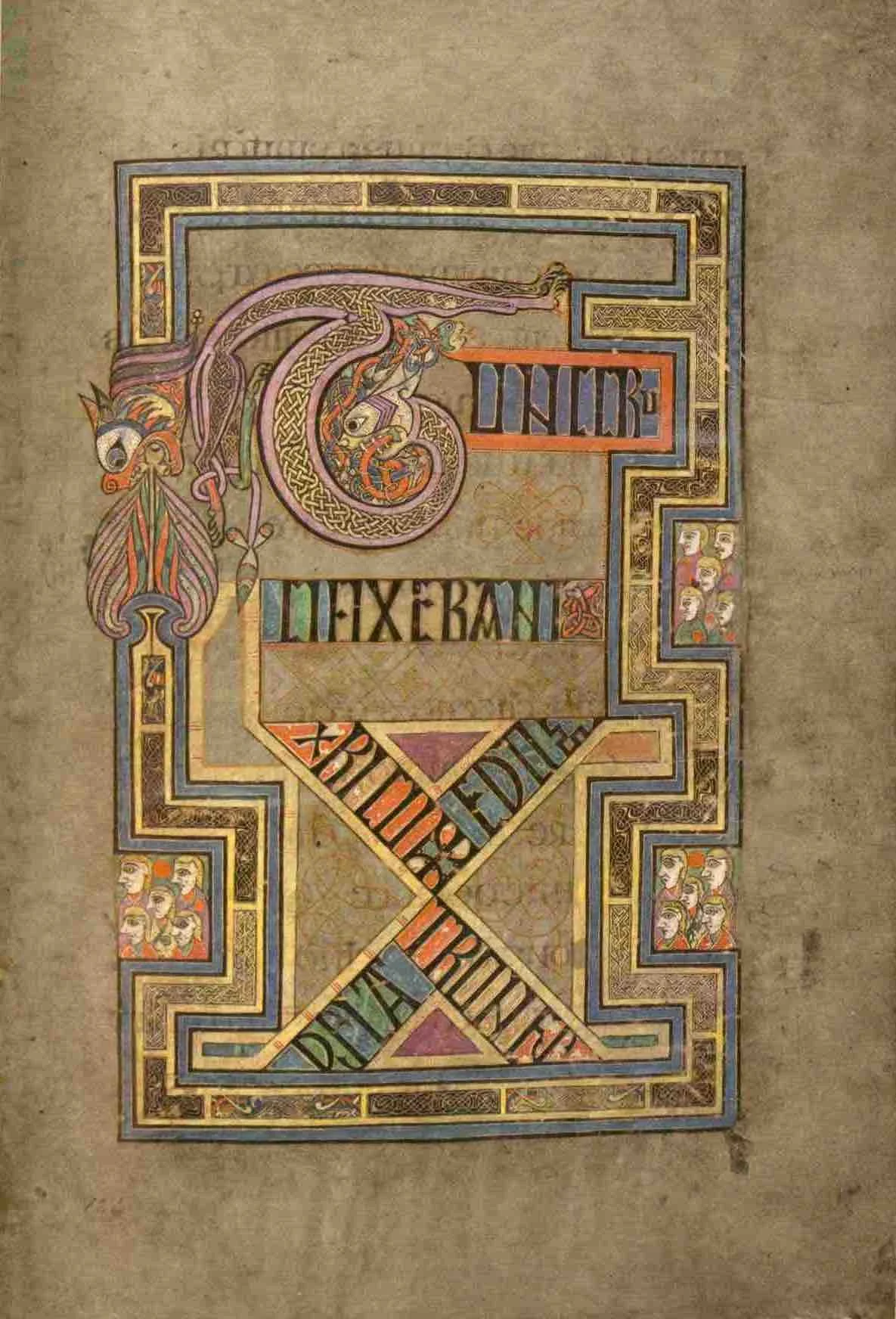
Cited: Marshall McLuhan. The Gutenberg Galaxy: The Making of Typographic Man (1962). University of Toronto Press, 2011.